
Mallow moth
Crocidosema plebejana
Description
How to identify
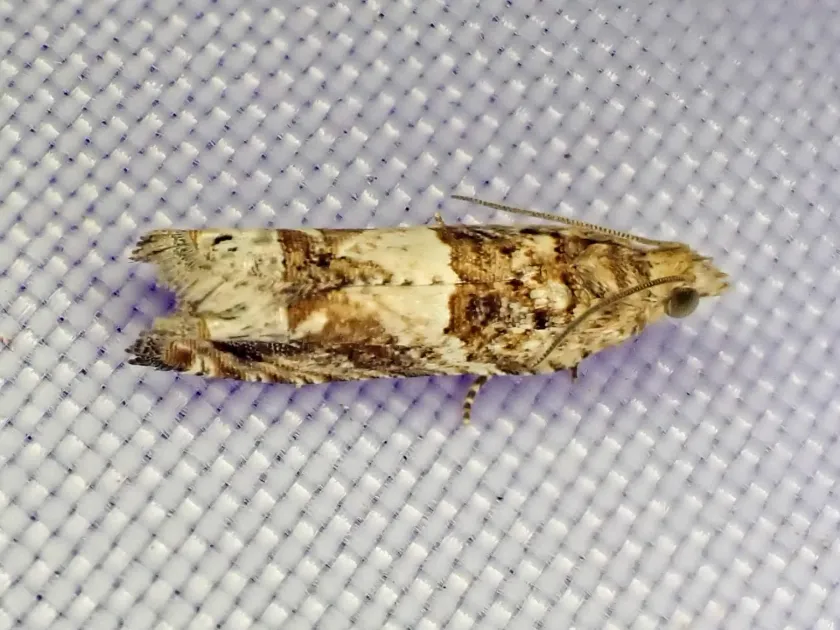
The mallow moth (Crocidosema plebejana) belongs to the Tortricidae family within the order Lepidoptera. The adult moths are small, with a wingspan of approximately 12–15 mm and greyish-brown forewings.
Larvae undergo several developmental stages, evolving from pale yellow to a greenish or pinkish hue with a dark head capsule. They are relatively sparsely haired.
Females typically oviposit singly on buds, leaves, or young cotton bolls. The lifecycle from egg to adult can be completed in about three to four weeks under optimal summer conditions.
Pupation occurs in protected sites, often inside damaged buds, within leaf rolls secured by silk, or in plant debris on the soil surface.
The species typically overwinters as a pupa, hiding in plant residues or the topsoil, allowing it to survive through colder dormant periods.
What it damages
The primary host plants are members of the Malvaceae family, with cotton (Gossypium) being the most economically significant crop affected by this species.
The pest also utilizes wild malva species, hollyhocks, and hibiscus as alternative hosts, which supports high population levels throughout the season.
Larvae focus their feeding on the reproductive organs of the plants, causing direct losses in crop yield and decreasing the fiber quality of cotton.
The moth's high mobility and ability to feed on various malvaceous plants ensure it can persist in agroecosystems even when cotton is not currently present.
By consuming the internal tissues of buds and bolls, the larvae induce significant plant stress, which can stunt vegetative and reproductive growth.
Signs of infestation
The most visible indicator of an infestation is the presence of larval frass on buds, often held together by silk webbing produced by the caterpillars.
Excessive shedding of flower buds and young bolls is a common consequence of larval feeding activity, significantly reducing potential harvest volume.
Internal examination of cotton bolls often reveals tunnels and galleries carved out by the larvae, which frequently leads to secondary bacterial or fungal rot.
Affected leaves often exhibit curling or distortion, as caterpillars use silk to fold foliage around themselves for protection.
- Entrance holes on the surface of cotton bolls.
- Presence of webbing on reproductive plant organs.
- Premature dropping of fruit and flowers.
- Deformed or damaged apical growth points.
Control measures
Effective management begins with strict field sanitation, including the deep plowing of soil after harvest to bury and destroy overwintering pupae.
Eliminating weeds belonging to the Malvaceae family from the vicinity of fields is a critical cultural practice to limit the pest's host reservoir.
Chemical control involving selective insecticides or broad-spectrum compounds should be timed according to pheromone trap monitoring of adult flights.
Biological control methods, such as the strategic release of Trichogramma wasps, can significantly reduce egg survival rates without harming beneficial insects.
Regular field scouting for early signs of webbing on buds allows for localized interventions, helping to maintain population density below economic injury levels.
Taxonomy
- Latin name
- Crocidosema plebejana
- Order
- Lepidoptera (butterflies)
- Family
- Tortricidae
- EPPO code
- CRODPL
Discussion
No discussions yet — be the first.