
Crocidosema
Crocidosema
Description
How to identify
Crocidosema is a genus of moths belonging to the family Tortricidae. The most significant species of this genus is Crocidosema plebejana, widely known in agriculture as the cotton tipworm or stem borer.
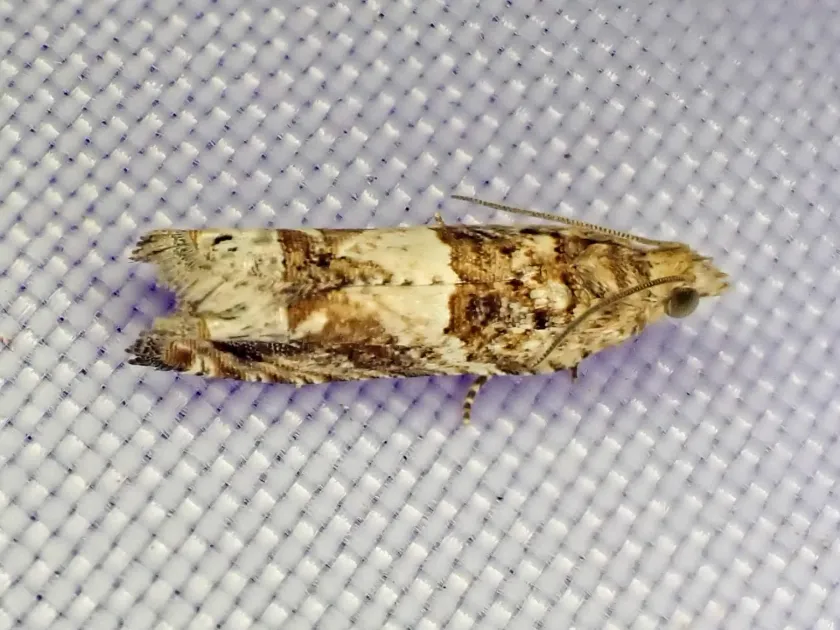
Adult moths are relatively small, with a wingspan ranging from 12 to 15 mm. Their forewings feature a mottled pattern of grey and brown, providing effective camouflage against the stems and bark of host plants.
The larvae progress through several instars, varying in colour from pale yellow to greenish or pinkish, depending on the host plant tissue they consume. The dark head capsule of the larvae is a key diagnostic feature.
The pupae are typically reddish-brown and are often found sheltered within damaged plant tissues or spun together inside rolled leaves, protected by silk webs.
The life cycle is heavily influenced by ambient temperatures. In warmer regions, these insects can complete several generations throughout a single growing season, leading to rapid population growth.
What it damages
The primary hosts of this pest are plants in the Malvaceae family, including cotton, mallow, hibiscus, and hollyhock. Some species may also attack tomatoes and certain leguminous crops.
Early-stage larvae typically feed on buds, young leaves, and developing flower shoots. This activity often leads to the destruction of the reproductive parts of the plant, preventing normal fruit formation.
Later-stage larvae frequently bore into the stems of the plant. By creating internal tunnels, they disrupt the flow of nutrients and water, which results in the wilting and death of the upper plant parts.
Damage caused by Crocidosema creates entry points for secondary infections. Pathogenic fungi and bacteria often invade the plant through larval entry holes, causing further rot and disease.
The economic impact is most severe during the flowering and fruiting stages, as damage to these parts leads to direct yield reduction and, in severe cases, the death of the plant.
Signs of infestation
The presence of fine frass (larval excrement) appearing as tiny dark specks on leaves or at the base of buds is one of the earliest signs of infestation.
Wilting of terminal shoots is a classic indicator that a larva is feeding internally within the stem, having severed the vascular system of the shoot.
Leaves tied together with silk webbing to form a shelter are highly characteristic of the feeding behavior of many Tortricidae larvae, including Crocidosema.
Prematurely yellowing or dropping flower buds, which may exhibit small holes at their base, indicate that the larvae have shifted their attention to reproductive tissues.
Careful inspection of the wilted stems will usually reveal an entry hole and the larva feeding inside, which serves as definitive evidence of an active infestation.
Control measures
Cultural control practices, such as deep ploughing after harvest, are essential to destroy pupae and overwintering larvae residing in plant debris.
Sanitation is a critical step; manually removing and destroying infested plant shoots helps to curb the spread of the pest within the field or garden.
Biological control methods, particularly the application of Bacillus thuringiensis, have proven effective against young larvae without disrupting beneficial insect populations.
Chemical control involving systemic or contact insecticides may be necessary during periods of high pest pressure, ensuring application aligns with the larval feeding schedule.
Using pheromone traps is recommended to monitor adult moth activity. This data helps agronomists time insecticide applications precisely for maximum efficacy.
Taxonomy
- Latin name
- Crocidosema
- Order
- Lepidoptera (butterflies)
- Family
- Tortricidae
- EPPO code
- CRODSP
Discussion
No discussions yet — be the first.