
Crepidodera fulvicornis
Crepidodera fulvicornis
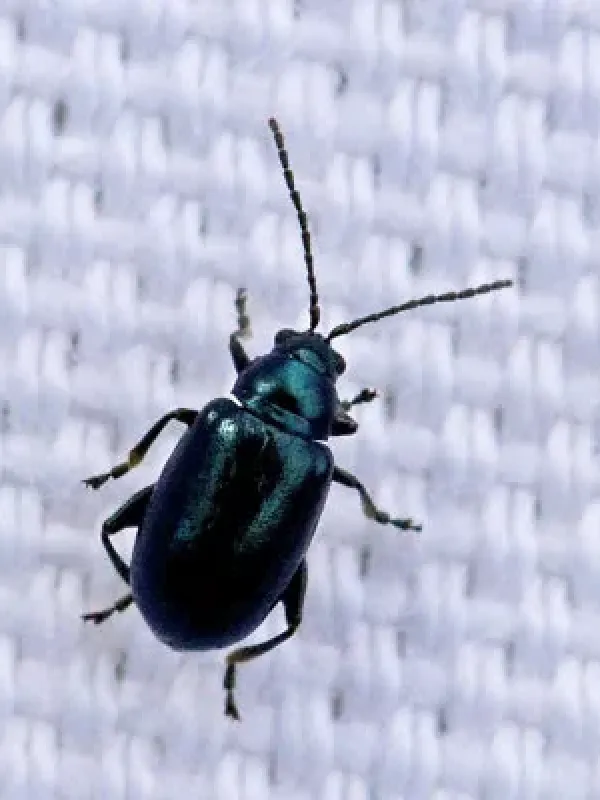
Description
How to identify
Crepidodera fulvicornis is a species of leaf beetle belonging to the family Chrysomelidae and the subfamily Alticinae, commonly known as flea beetles.
Adult beetles are small, typically measuring between 3 to 4 millimeters in length, characterized by their metallic sheen and distinct brownish-orange antennae and legs.
The body is compact and oval-shaped, typical for the tribe Alticini, which are known for their ability to jump using enlarged hind femora.
While the adults are easily observed on foliage, the larval stages are often cryptic, developing in concealed environments such as soil or leaf tissues.
Identification is often confirmed by the presence of these small, jumping metallic beetles on the host plants during the early spring growth period.
What it damages
This beetle species primarily affects various woody plants, showing a strong preference for members of the Rosaceae family, including apples and pears.
Adults feed on young foliage, creating numerous small, circular holes in the leaf blades, a symptom often referred to as shot-hole damage.
Significant infestations can lead to heavy defoliation, which severely stresses the tree and reduces its capacity for photosynthesis during critical growing periods.
The feeding activity can extend to young shoots and buds, resulting in stunted growth and a general decline in the vitality of the plant.
In cases of severe infestation, the cumulative damage can lead to premature leaf drop, affecting the overall health and productivity of the orchard.
When it appears
Adults emerge from overwintering sites in early spring, synchronized with the onset of bud break and the emergence of new leaves on host trees.
Their activity period is heavily influenced by temperature, with peak emergence occurring during the first warm days of the season.
During late spring and early summer, the beetles are most active in feeding and reproduction, leading to the rapid increase of the local population.
By late summer, the beetles prepare for diapause, gradually retreating into sheltered areas to escape the upcoming winter conditions.
The overwintering phase typically occurs in the leaf litter, plant debris, or the top layer of the soil near the base of the host plants.
Signs of infestation
The most diagnostic sign of an infestation is the presence of a ‘shot-hole’ pattern on the foliage, which is clearly visible on newly expanded leaves.
A simple field test involves gently shaking a branch; if the beetles are present, they will often jump or drop from the leaves, allowing for quick detection.
The margins of the feeding holes may become necrotic or brown, as damaged plant tissues become susceptible to secondary infections or environmental stress.
Stunted shoot development and wilting of young tips are indicators that the infestation level may be causing physiological stress to the tree.
Clusters of small, metallic-colored beetles on the underside of leaves or on succulent stems during sunny weather are clear signs of active colonization.
Control measures
Sanitation is a primary control measure; removing and destroying leaf litter and weeds around the base of trees eliminates essential overwintering habitats.
In professional orchards, timing insecticide applications to coincide with early adult emergence is crucial for preventing significant damage to developing buds.
Biological control strategies can be encouraged by maintaining habitats for natural predators, such as predatory bugs and parasitic wasps that target beetle life stages.
Monitoring using sticky traps can help assess population density, allowing growers to make informed decisions regarding the necessity of chemical intervention.
- Regular tilling of the soil in autumn to disrupt overwintering stages.
- Application of contact insecticides during peak beetle activity.
- Promoting diverse orchard ecosystems to support natural pest enemies.
Taxonomy
- Latin name
- Crepidodera fulvicornis
- Order
- Coleoptera (beetles)
- Family
- Chrysomelidae
- EPPO code
- CHADFU
Discussion
No discussions yet — be the first.