
Grape curculio
Craponius inaequalis
Description
How to identify
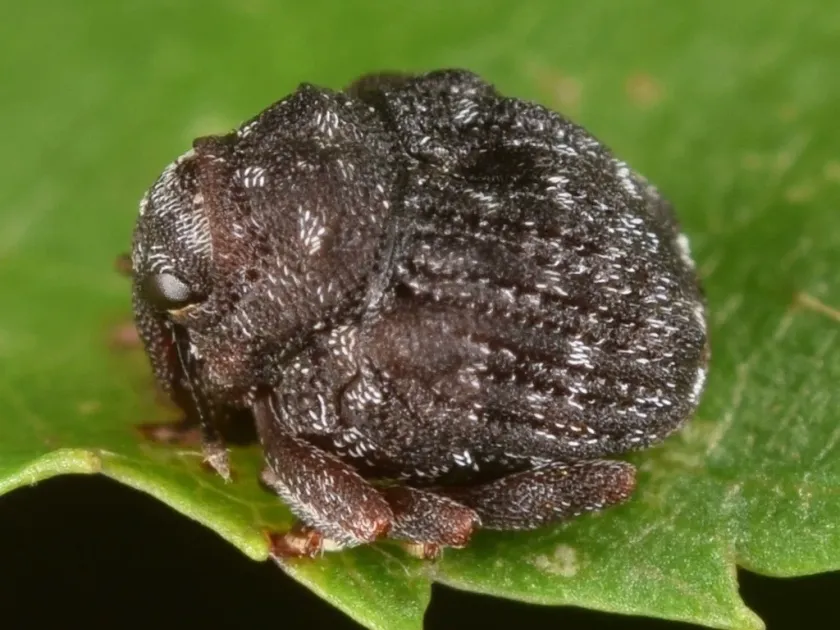
The grape curculio (Craponius inaequalis) is a small weevil in the order Coleoptera and the family Curculionidae, known for its distinct snout used for feeding.
Adults are small, dark, rounded beetles that blend perfectly with the bark of grapevines, making them difficult to spot during the day.
The larvae are legless, C-shaped grubs with a creamy white body and a brown head, typically found inside the grape berries during the growing season.
The life cycle involves complete metamorphosis, progressing through egg, larval, pupal, and adult stages, with each stage uniquely interacting with the vine.
Adult beetles are capable fliers, which enables them to spread rapidly throughout a vineyard, especially during warm and humid spring weather.
What it damages
The grape curculio is a specialized pest that feeds primarily on various grape species, causing economic losses in both home and commercial vineyards.
Adults cause damage by feeding on young leaves and buds, leaving small puncture marks that disrupt photosynthetic activity and hinder shoot growth.
The larvae cause the most significant damage by boring into the grape berries, where they feed on the pulp, leading to premature drop and yield loss.
These puncture wounds serve as entry points for pathogens, frequently resulting in fungal infections such as black rot or gray mold on the fruit clusters.
Severe infestations can lead to substantial destruction of the crop, significantly reducing both the quality and the quantity of the harvested grapes.
When it appears
Adult curculios emerge from their hibernation sites in the soil or under debris as soon as the temperature warms up in early spring.
Initial feeding activity occurs when buds begin to swell and open, making this a critical period for monitoring the pest population in the vineyard.
The egg-laying period corresponds with fruit set, as females create holes in the young berries to deposit eggs, ensuring food for emerging larvae.
Larval development occurs throughout the summer months, ending with the larvae dropping to the soil to pupate and complete their life cycle.
As fall approaches, the new generation of adults seeks protected environments to overwinter, often hiding in leaf litter or soil crevices until next year.
Signs of infestation
Visual identification starts with the appearance of small, circular feeding punctures on leaves, indicating that the adults have begun feeding on the vine.
As the season progresses, look for small, distinct scars on the berries where the female curculio has inserted her eggs into the fruit.
Premature shriveling or dropping of berries from the cluster is a strong indicator that larvae are present and feeding inside the fruit.
If you suspect an infestation, try placing a white cloth under the vine and shaking it; the beetles often drop and "play dead" when disturbed.
- Puncture holes on young foliage.
- Egg-laying scars on the surface of berries.
- Premature cluster drop or shriveling.
Control measures
Sanitation is key; collecting and destroying fallen fruit and leaves helps reduce the number of larvae and pupae within the vineyard environment.
Regular cultivation of the soil under the vines can disrupt the pupal stages of the insect, significantly lowering the population for the next season.
Chemical control can be implemented using labeled insecticides during the adult emergence phase, typically before the berries reach full size.
Integrated pest management (IPM) practices, including the use of beneficial insects, can help maintain the population below the economic threshold.
Always follow label instructions regarding application timing and pre-harvest intervals to ensure safety and effectiveness of the chosen treatment.
Taxonomy
- Latin name
- Craponius inaequalis
- Order
- Coleoptera (beetles)
- Family
- Curculionidae
- EPPO code
- CRAPIN
Discussion
No discussions yet — be the first.