
Grape weevil
Craponius
Description
How to identify
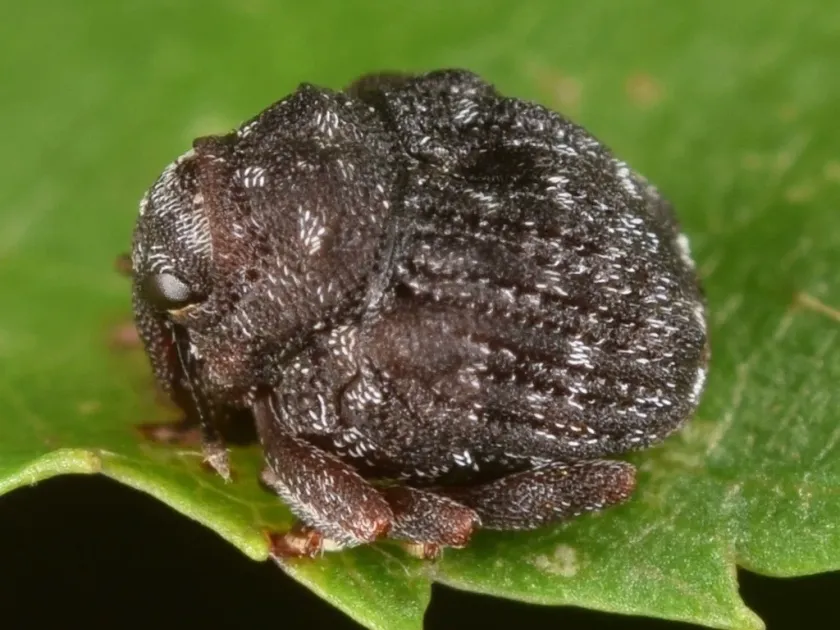
The Grape weevil (scientific name Craponius inaequalis) is a small beetle belonging to the Curculionidae family, order Coleoptera. Adult beetles are typically oval-shaped, measuring about 3 to 4 mm in length, and possess a dark brown to black coloration with mottled patterns on their elytra.
The head of the beetle extends into a characteristic snout, which is the defining feature of all weevils. The larvae are legless, C-shaped, white in color, and have a distinctive brown head capsule, specialized for internal feeding within plant tissues.
These insects are secretive and nocturnal by nature. During the day, they remain hidden in dense foliage, bark crevices, or soil debris to avoid predators and extreme temperatures, often playing dead when disturbed.
The life cycle involves complete metamorphosis (egg, larva, pupa, adult). Each stage is adapted to specific environmental conditions, with humidity playing a crucial role in their survival and reproductive success throughout the growing season.
Early identification of the Grape weevil is difficult due to their cryptic habits, often requiring the use of cloth traps or nocturnal scouting to assess the density of the population within the vineyard.
What it damages
The primary host of the Grape weevil is the grapevine (genus Vitis). Both adult beetles and larvae are specialized feeders that cause significant economic losses by targeting the most vulnerable parts of the vine.
Larvae are responsible for the most severe damage as they develop inside berries or tender shoots. By feeding on the internal tissues, they disrupt nutrient flow, causing fruit to rot, shrivel, or drop prematurely before harvest.
Adult beetles primarily feed on developing buds, young leaves, and blossoms. Damage to buds in early spring is particularly devastating as it directly reduces the vine's capacity for leaf expansion and fruit cluster development.
In addition to direct feeding, the weevil facilitates secondary infections. The wounds caused by the beetle's snout serve as entry points for various fungal and bacterial pathogens that further degrade the quality of the grape crop.
Chronic infestations weaken the vine, leading to reduced vigor, lower cold tolerance, and decreased longevity, which negatively impacts the sustainability of the vineyard over time.
When it appears
The Grape weevil overwinters in the adult stage, hiding in the soil, leaf litter, or under the thick bark of mature grapevines. As spring temperatures rise, the beetles emerge to begin their feeding activities.
The period of peak adult activity coincides with the bud-swell and bud-burst stages of the grapevine. This is when the insects cause the most immediate and visible harm to the plant's future growth.
Egg-laying typically occurs from late spring through mid-summer. Females create small punctures in the skin of developing berries or leaf petioles and deposit their eggs, ensuring the larvae have immediate access to food.
Larval development takes place during the summer months. After the larvae complete their feeding cycle inside the host tissue, they drop to the ground to pupate in the soil, eventually emerging as the next generation of adults.
The new generation of adults appears by late summer or early autumn. They feed intensely for a short period before seeking sheltered locations to survive the winter, effectively closing the annual cycle.
Signs of infestation
The most prominent sign of infestation in early spring is the presence of hollowed-out or completely destroyed buds that fail to develop into shoots or leaves.
Leaves often display characteristic round holes, frequently referred to as "shot-hole" damage, caused by the feeding habits of adult beetles. If the population density is high, the foliage can appear heavily ragged.
Damage to berries is indicated by small, darkened depressions or exit holes on the surface of the fruit. In some cases, tiny traces of frass (insect excrement) may be visible around these feeding sites.
A high rate of berry drop during the summer is a major indicator that larvae are present inside the fruit, necessitating immediate intervention to prevent further spread.
- Stunted or dried grape buds.
- Small, circular holes in the foliage.
- Premature fruit drop and deformation.
- Presence of adults during nocturnal surveys.
Control measures
Cultural management is the first line of defense, starting with sanitation. Removing leaf litter and tilling the soil under the vines in the fall can destroy pupae and reduce winter survival rates.
Mechanical control, such as shaking the vines over a white sheet during the early morning hours, can be an effective way to manage population numbers in small or organic vineyards.
Proper vine canopy management, including timely pruning and thinning, improves air circulation and reduces the amount of sheltered, humid habitat available for the beetles to thrive.
Chemical control involving the application of insecticides is often necessary during the peak activity period. Treatments should ideally be applied before bloom to protect the essential fruit-bearing tissues.
Integrated Pest Management (IPM) practices, including the rotation of chemical classes to prevent the development of insecticide resistance, are vital for long-term control of this pest.
Taxonomy
- Latin name
- Craponius
- Order
- Coleoptera (beetles)
- Family
- Curculionidae
- EPPO code
- CRAPSP
Discussion
No discussions yet — be the first.