
Cossonus parallelepipedus
Cossonus parallelepipedus
Description
How to identify
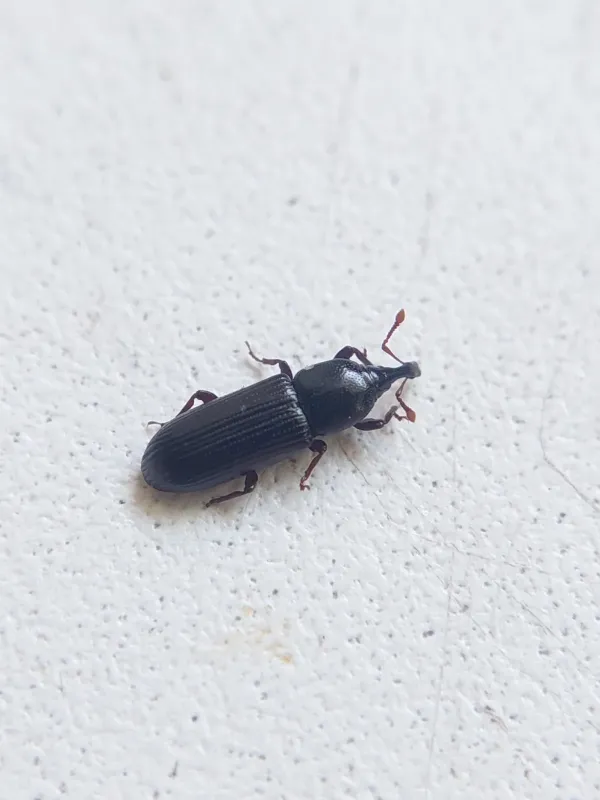
Cossonus parallelepipedus is a species of beetle belonging to the family Curculionidae (true weevils). This insect is relatively small, with an elongated, flattened body that is typically black or dark brown, allowing it to move efficiently under tree bark.
Adult beetles possess a distinctive head shape, extending into a short and broad rostrum. The wing covers (elytra) are marked by clear longitudinal grooves, giving the insect a rugged texture perfectly adapted for life within tight, wood-based crevices.
The larvae are legless, white to yellowish, with a prominent dark head capsule. They live a cryptic lifestyle, developing deep within the wood, which makes early detection of the infestation challenging for forest managers.
The life cycle involves complete metamorphosis, including egg, larva, pupa, and adult stages. These beetles typically overwinter in wood remnants or under bark, resuming activity as soon as spring temperatures begin to rise.
As a secondary pest, this species primarily targets wood that is already compromised, playing a significant role in the natural decomposition of weakened or fallen deciduous trees.
What it damages
The primary hosts for this weevil include various deciduous trees, such as poplar, willow, oak, and elm. They are commonly found in natural forests, urban parks, and windbreak plantations.
Infestations typically occur in the basal part of the trunk or larger limbs, especially where the wood is damp or shows signs of initial rot. In rare cases of high population density, they can attack stressed but still living trees.
Larval feeding creates extensive galleries within the sapwood and heartwood. This tunneling activity disrupts the tree's structural integrity, causing it to weaken and eventually die or succumb to wind-throw.
The damage caused by these larvae acts as an entry point for secondary fungal infections and bacterial rots, which further degrade the wood quality and accelerate the tree's decline.
In forestry, this beetle poses a significant risk to logs left in the forest for long periods, as it can colonize stacked timber and cause substantial economic loss if not removed in time.
Signs of infestation
The most reliable sign of an infestation is the presence of small exit holes in the bark, created by emerging adults. These are often accompanied by piles of "frass" or boring dust resembling sawdust.
Peeling back the bark reveals intricate, longitudinal, or zigzag galleries packed with larval excrement. The wood in these areas often takes on a darkened appearance due to subsequent fungal colonization.
The host tree often shows signs of overall decline, including premature yellowing and leaf shedding, thinning of the canopy, and dieback of individual branches or the entire crown.
During warm summer months, adults may be seen crawling on the bark surface of infested trees, particularly on sun-exposed sections, which is an indicator of active reproduction.
The presence of other wood-boring insects, such as bark beetles or longhorn beetles, is a strong secondary indicator that the tree has already been compromised by initial pests like Cossonus parallelepipedus.
Control measures
The cornerstone of control is effective forest hygiene, primarily the removal and disposal of infested, fallen, or deadwood. This limits the breeding habitat and reduces the local population density.
Strict management of timber harvesting is essential; logs should be removed from the forest promptly, especially during the spring and summer months when adult beetles are actively seeking new hosts.
Pheromone traps and visual monitoring programs can be used to track population levels and identify hotspots within plantations, allowing for targeted interventions before an outbreak occurs.
For high-value ornamental trees, systemic insecticides or trunk injections may be utilized to prevent infestation during periods of high beetle activity.
- Sanitary logging and removal of deadwood
- Prompt timber extraction
- Monitoring of beetle activity
- Maintaining overall tree vigor
Taxonomy
- Latin name
- Cossonus parallelepipedus
- Order
- Coleoptera (beetles)
- Family
- Curculionidae
- EPPO code
- COSOPA
Discussion
No discussions yet — be the first.