
Cosmobaris
Cosmobaris
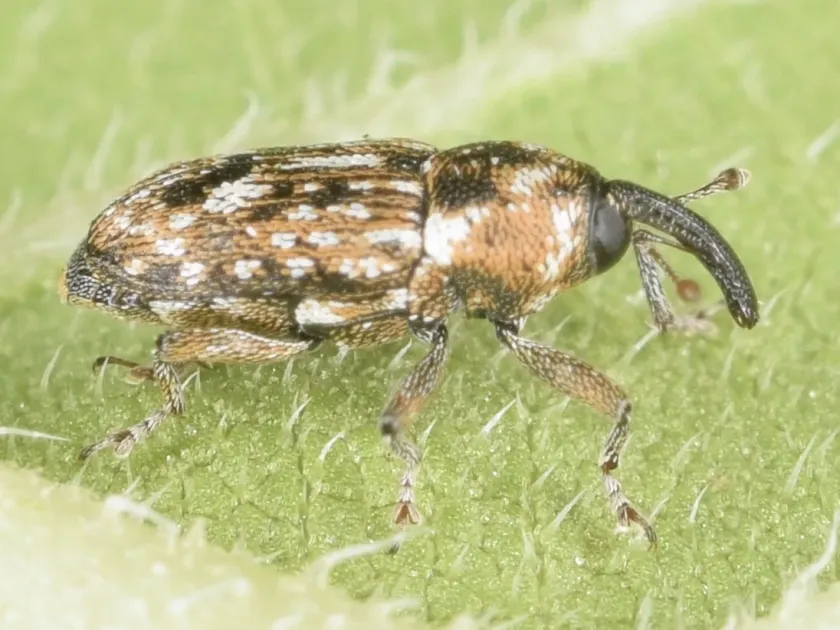
Description
How to identify
Cosmobaris is a genus of insects belonging to the order Coleoptera and the family Curculionidae, commonly known as weevils.
Adult specimens typically reach 3–5 mm in length and feature the distinct elongated snout characteristic of the weevil family.
The body is usually dark, ranging from dark brown to black, providing camouflage against the soil and plant tissues.
The larvae are legless, with a creamy-white body and a hardened, brown head capsule, which allows for distinct identification.
These insects are widespread in regions where sugar beet and other related crops are cultivated under moderate climatic conditions.
What it damages
The primary hosts of this pest include various beet species, such as sugar, table, and fodder beets, as well as several wild weeds.
Adults cause damage by feeding on the leaf tissues, creating small, irregular holes or notches on the leaf blades.
The most severe damage is caused by the larvae, which bore into the stems or roots, disrupting the plant's vascular system.
Larval galleries weaken the plant structure, leading to stunted growth, reduced root mass, and decreased sugar content in the harvest.
Severe infestations can cause premature wilting and, in extreme cases, the death of young seedlings during the initial establishment phase.
When it appears
Adult weevils overwinter in the soil or protected areas under crop residues, emerging in early spring as temperatures rise.
The peak activity period of the pest usually coincides with the germination and early growth stages of the beet crop.
Females lay eggs in the tissues of the host plant, and the larvae develop throughout the summer months within the host tissues.
The life cycle is completed within a single growing season, after which the new generation of adults seeks shelter for hibernation.
Weather conditions, particularly mild and humid springs, can significantly influence the speed of development and population density.
Signs of infestation
Early warning signs include the presence of feeding notches on the cotyledons or young true leaves during the seedling stage.
Yellowing of the foliage or sudden wilting of the plant tops indicates internal damage caused by larval feeding in the roots or stems.
When inspecting root crops, one can find internal tunnels packed with frass, which serves as a definitive sign of infestation.
Stunted development of individual plants within the field row compared to adjacent plants is a strong indicator of localized pest pressure.
Observing adult beetles during the early morning hours on the leaves can also confirm the presence of a pest population.
Control measures
Effective management begins with rigorous crop rotation to prevent the buildup of pest populations in a single location.
Deep autumn tillage is a crucial agrotechnical practice that disturbs the overwintering sites and reduces the next year's population.
Systemic insecticides applied during the critical window of adult migration are often necessary to protect seedlings from excessive damage.
Controlling alternative host plants, particularly weeds in the Amaranthaceae family, helps reduce the reservoir of the pest.
Regular field scouting and monitoring using traps allow growers to time their insecticide applications for maximum efficacy.
Taxonomy
- Latin name
- Cosmobaris
- Order
- Coleoptera (beetles)
- Family
- Curculionidae
- EPPO code
- COSBSP
Discussion
No discussions yet — be the first.