
Corynothrips
Corynothrips
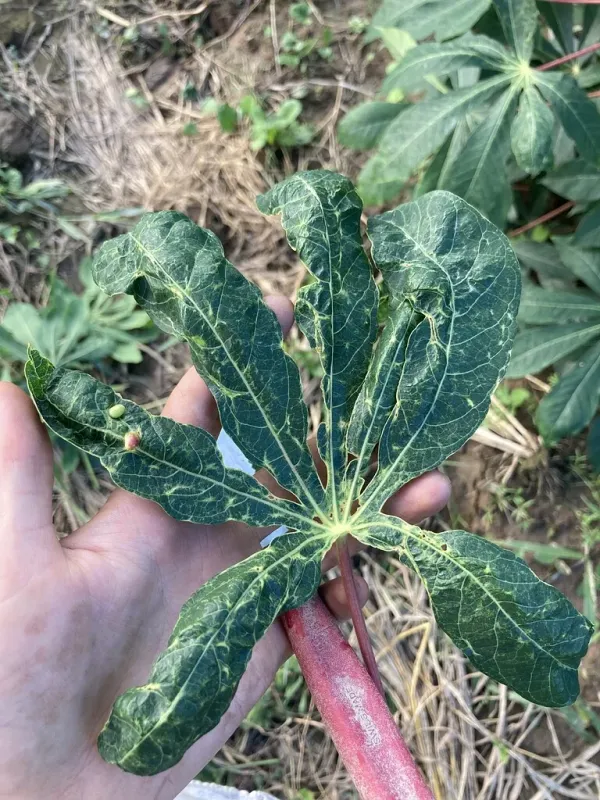
Description
How to identify
Corynothrips is a genus belonging to the order Thysanoptera and the family Thripidae. These are tiny, slender-bodied insects, typically measuring between 1 and 2 millimeters in length.
Adults possess two pairs of narrow wings fringed with long hairs, which is a characteristic feature of the order. Their coloration ranges from light yellow to dark brown, aiding in camouflage on plant surfaces.
They have piercing-sucking mouthparts designed to extract cell sap from plants. Larvae look similar to adults but are smaller, wingless, and generally paler in color.
The life cycle includes the egg, larva, propupa, pupa, and adult stages. The speed of their development is highly dependent on ambient temperature and humidity levels.
Accurate species identification often requires microscopic examination of structural features, as Corynothrips shares many morphological similarities with other common thrips.
What it damages
Corynothrips is a significant pest for various tropical and subtropical plants, with a preference for legumes and certain ornamental species.
The pest targets young leaves, buds, and flowers. Using their piercing-sucking mouthparts, they extract cellular fluid from the epidermis and mesophyll layers of plant tissues.
Feeding sites exhibit small white or silvery spots, which eventually coalesce into larger necrotic lesions, severely impacting the plant's photosynthetic capacity.
Damaged plants show signs of deformation and stunted growth. In severe infestations, the shedding of flowers and buds leads to significant yield losses in commercial farming.
Besides mechanical damage, Corynothrips can act as a vector for various plant viruses, further compromising the overall health and productivity of the crop.
When it appears
The peak activity of Corynothrips occurs during warm and dry periods. Favorable conditions for rapid population growth include high temperatures combined with moderate humidity.
In greenhouse conditions, the pest can remain active year-round, continuously producing overlapping generations as long as the host plants are present.
In outdoor settings, migration typically begins with the arrival of stable warm weather. Insects are known to disperse via air currents, making local containment challenging.
Adults and larvae tend to hide in secluded areas such as leaf axils or closed flower buds, which protects them from environmental stressors and pesticides.
As temperatures drop at the end of the growing season, reproductive activity slows down, though the pest is capable of overwintering in soil or plant debris.
Signs of infestation
The primary symptom of a Corynothrips infestation is the appearance of tiny, light-colored flecks or stippling on the upper surface of the leaves.
Clusters of dark, liquid excrement found on the underside of leaves or near the base of the plant are a reliable diagnostic sign of their presence.
Flower damage often manifests as wilting, curling of petals, and a premature loss of the blossom. A silvery sheen on the leaves indicates cell death and loss of turgor pressure.
A noticeable decline in growth rate compared to healthy plants is a common indicator that a crop is struggling with a thrips infestation.
Careful visual inspection of terminal shoots and unopened buds during early morning or evening hours may reveal the movement of these minute insects.
Control measures
Effective management of Corynothrips requires an integrated pest management (IPM) approach that combines cultural, biological, and chemical methods.
- Regular weeding to remove host plants that harbor the pest.
- Crop rotation and spatial separation of susceptible varieties to break the pest cycle.
- Deployment of yellow sticky traps to monitor population density and catch adults.
- Application of systemic insecticides only when the economic threshold is reached.
- Release of natural predators such as minute pirate bugs or predatory mites in enclosed environments.
Deep plowing after harvest is a vital cultural practice that helps destroy pupae overwintering in the soil surface.
When chemical control is necessary, rotating between different insecticide classes is essential to delay or prevent the development of pesticide resistance.
Taxonomy
- Latin name
- Corynothrips
- Order
- Thrips
- Family
- Thripidae
- EPPO code
- COROSP
Discussion
No discussions yet — be the first.