
Colombian timber beetle
Corthylus columbianus
Description
How to identify
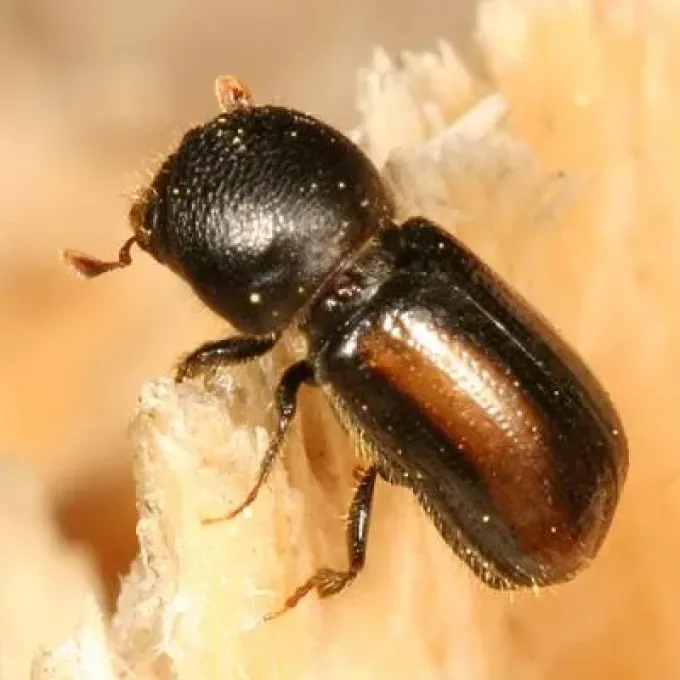
The Colombian timber beetle (Corthylus columbianus) is a small wood-boring insect belonging to the Curculionidae family and Scolytinae subfamily.
These beetles are typically 4–5 mm long, characterized by a cylindrical body and a dark brown to black coloration, often covered in dense setae.
As members of the ambrosia beetle group, they do not consume wood tissues directly but live in a symbiotic relationship with specific fungi cultivated within their galleries.
The taxonomic position of this insect highlights its role as a specialized pest capable of penetrating deep into the heartwood of host trees.
Identifying them is primarily done through the presence of their small circular entry holes and the associated signs of sawdust or fungal presence.
What it damages
The primary hosts for Corthylus columbianus are various hardwood species, including maple, beech, oak, and hornbeam, which are economically significant.
The beetles bore radial tunnels into the trunk, which significantly disrupts the tree's vascular system and can weaken the structural integrity of the timber.
By introducing ambrosia fungi into the galleries, the beetles cause staining of the wood, which severely reduces its market value and utility for fine woodworking.
In forest stands, sustained attacks can lead to the decline of individual trees, making them susceptible to secondary infestations and pathogens.
Economic damage is primarily measured by the degradation of lumber quality, as the galleries and fungal staining render the wood unsuitable for high-quality finished products.
When it appears
The life cycle of the Colombian timber beetle is synchronized with the seasonal climate, with the peak flight period occurring in the early summer months.
Adult beetles emerge, mate, and seek out suitable host trees to establish new galleries during the warm June to August window.
The female bores into the trunk, creating a complex system of galleries where she deposits eggs and inoculates the area with fungi to feed the larvae.
Development from egg to adult depends on regional temperatures, with some areas supporting multiple generations within a single favorable season.
Overwintering typically occurs within the wood galleries of the host tree, providing the beetles with protection from harsh environmental conditions.
Signs of infestation
The most reliable sign of an active infestation is the presence of fine wood dust, often called "frass," at the base of the trunk or caught in bark crevices.
Look for small, perfectly round entrance holes approximately 1.5–2 mm in diameter that penetrate directly into the trunk.
- Darkened, discolored areas around entry holes indicating fungal growth.
- Small streaks of sap or moisture emerging from the entry points.
- Premature yellowing or thinning of the tree's canopy during the growing season.
- Presence of sawdust piles following light wind or rain events.
- Deterioration of bark health in localized patches surrounding the gallery entrances.
Early detection is crucial to prevent the establishment of deep, wood-damaging gallery networks within the tree stand.
Control measures
Sanitation is the most effective control measure, involving the removal and proper disposal of infested trees to stop the spread to healthy neighboring trees.
Maintaining vigorous and healthy stands through proper forest management reduces the attractiveness of trees to colonizing beetles.
Pheromone monitoring can be utilized to track population levels and determine the optimal timing for intervention strategies.
In ornamental or high-value landscapes, preventative trunk sprays with approved systemic insecticides may be used to deter beetles from boring into the bark.
Conserving natural predators and parasitoids that attack bark and timber beetles helps to keep pest populations at ecologically sustainable levels.
Taxonomy
- Latin name
- Corthylus columbianus
- Order
- Coleoptera (beetles)
- Family
- Curculionidae
- EPPO code
- CORHCL
Discussion
No discussions yet — be the first.