
Corthylus
Corthylus
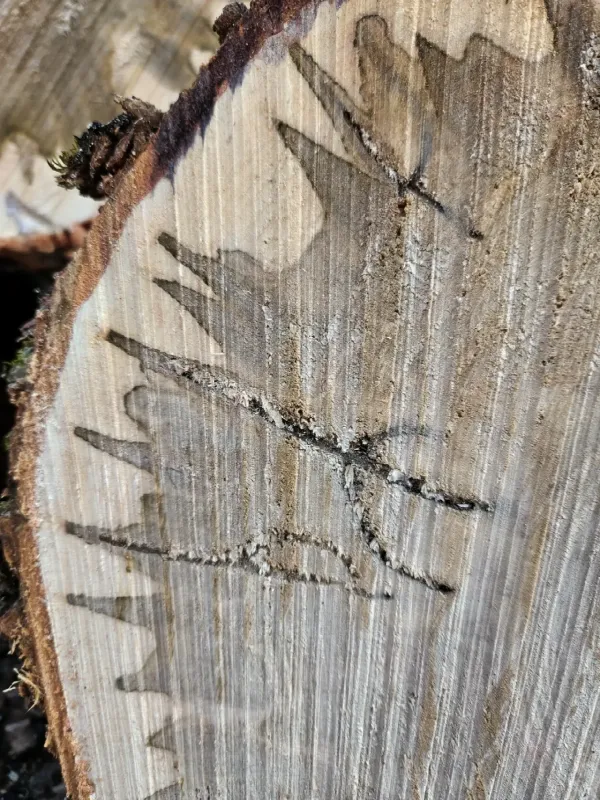
Description
How to identify
Corthylus is a genus of beetles within the Curculionidae family, specifically belonging to the Scolytinae (bark beetle) subfamily. Adult beetles are typically cylindrical, ranging from 2 to 5 mm in length, and are usually dark brown or black in color.
A key identifying feature is the pronotum and elytra, which are often covered with fine setae or scales. The head is usually retracted under the pronotum, a common trait among many members of this insect group.
The larvae are apodous (legless), white or yellowish, and possess a curved body shape. They develop deep within the wood, which makes them highly protected against many standard contact-based insecticide applications.
Systematically, this genus is part of the extensive Curculionidae family, which includes thousands of species specialized in feeding on the tissues of living or stressed plant hosts.
Professional identification of specific species within the genus often requires microscopic examination of antenna morphology and the arrangement of denticles on the elytra declivity.
What it damages
Corthylus poses a significant threat to a variety of deciduous and coniferous tree species. It is particularly destructive to young saplings in nurseries, where infestations can lead to total tree mortality.
The pest attacks the trunks and branches of trees by boring galleries, which disrupt the normal flow of nutrients and sap. This physiological stress leads to the gradual dieback of individual branches and eventually the entire tree.
In addition to direct mechanical damage, the galleries created by Corthylus serve as entry points for various fungal pathogens, which can exacerbate the tree's decline through vascular wilt or necrosis.
The host range includes ornamental trees and important forest species such as oak, maple, beech, and occasionally fruit trees, especially when the host is already weakened by environmental factors.
The level of damage tends to increase during periods of drought, as stressed trees lack the internal resources and defensive compounds to resist the boring attacks of the beetles.
When it appears
The activity of adult Corthylus beetles typically begins in the spring when average daily temperatures consistently exceed 15°C, triggering the emergence of the beetles from their overwintering sites.
Depending on regional climatic conditions, the pest may complete several generations within a single growing season. Peak activity is generally observed between mid-June and early August.
Beetles overwinter primarily as adults, remaining deep within the wood or under the bark, which protects them from extreme freezing temperatures during the winter months.
Reproduction and egg-laying occur inside the galleries constructed by the parents, where specialized chambers are created to support the development of the offspring.
The autumn period marks the completion of the final generation's development, followed by the transition of the adult beetles into a dormant state for the winter.
Signs of infestation
The primary symptom of a Corthylus infestation is the presence of "frass" — fine, sawdust-like particles pushed out of the tree by the beetles as they bore their entrance holes.
Visually, one can observe perfectly circular entrance holes, approximately 1–2 mm in diameter, often clustered on the lower trunk or primary branches of the host tree.
As the infestation progresses, the tree's foliage or needles begin to exhibit discoloration, turning dull, then yellowing, and ultimately dropping off prematurely in the season.
When the bark is carefully peeled away, an intricate network of galleries can be observed; these tunnels often exhibit a distinct fungal growth, which the beetles cultivate as a food source for their larvae.
In advanced cases, the bark may begin to slough off, and the underlying cambium layer undergoes necrosis, making the tree structurally weak and prone to snapping during high winds.
Control measures
The most fundamental control measure is timely sanitation: removing and destroying infested trees from the plantation before the new generation of beetles has the chance to emerge.
Proactive cultural management is highly effective; maintaining tree vigor through proper irrigation, fertilization, and avoiding mechanical injuries helps the host maintain natural resistance.
The use of systemic insecticides, particularly those based on imidacloprid, can be effective in protecting trees when applied to the trunks during the period of peak adult flight activity.
Pheromone traps are essential tools for monitoring population levels, allowing forest managers and nursery operators to determine the optimal timing for protective applications.
- Consistent monitoring of stand and nursery health.
- Rapid disposal of logging slash and infested wood.
- Biological control using native entomophagous insects.
Taxonomy
- Latin name
- Corthylus
- Order
- Coleoptera (beetles)
- Family
- Curculionidae
- EPPO code
- CORHSP
Discussion
No discussions yet — be the first.