
Corthylocurus
Corthylocurus
Description
How to identify
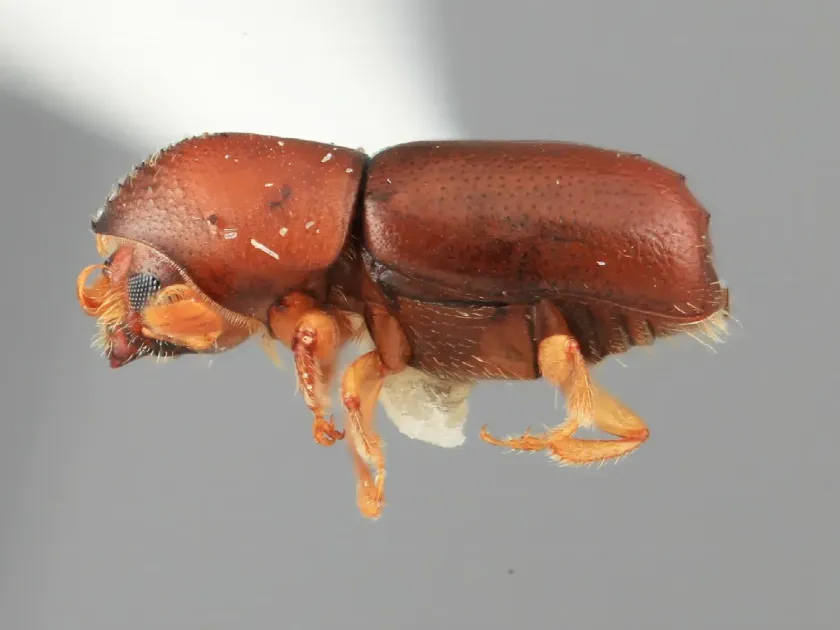
Corthylocurus is a genus of beetles belonging to the family Curculionidae and the subfamily Scolytinae (bark beetles). These insects are recognized as wood-boring pests that inhabit various types of trees.
Adult beetles are typically small, cylindrical, and dark in color, ranging from brown to black. Their anatomy is specifically adapted for navigating and drilling galleries through tree tissues.
Systematically, this genus is a member of the tribe Corthylini. Identification often requires expert entomological analysis of thoracic and elytral structures due to the high level of similarity between different bark beetle species.
Corthylocurus beetles are known for their symbiotic relationship with ambrosia fungi. These fungi are carried by the beetles to establish food sources for their larvae within the wood galleries.
Because they spend most of their life cycle hidden under the bark, direct observation of the beetles is rare unless performed during their short dispersal flights.
What it damages
Corthylocurus primarily attacks stressed, weakened, or dying trees. In forestry, they are considered secondary pests, as they usually target trees already compromised by drought, disease, or other damage.
The beetles bore into the cambium and sapwood, creating a network of galleries that disrupt the tree's vascular system. This nutrient transport interruption leads to the gradual decline and eventual death of the host tree.
The severity of the damage depends on the population density. During outbreaks, even relatively healthy trees can be overwhelmed by mass attacks, leading to significant economic losses in timber production.
The introduction of ambrosia fungi by these beetles often leads to wood staining and structural degradation. This rot significantly lowers the commercial quality and value of the affected wood.
In ornamental or orchard settings, Corthylocurus can pose a threat to fruit-bearing trees, causing loss of vitality and reduction in seasonal yields.
When it appears
The flight period of these beetles generally begins in the spring when temperatures consistently reach favorable levels. The exact timing depends on the local climate and the host tree species.
Developmental cycles can vary based on the geographic region. In warmer climates, multiple generations can emerge per year, whereas cooler regions may limit the insect to one generation annually.
Winter is typically spent as adults within the galleries of the host tree. In some cases, they may overwinter in the soil or forest litter near the base of the infested tree.
Activity levels subside as autumn approaches, with the final generation preparing for diapause. During this period, the adults seal their exit holes with boring dust to protect against winter elements.
Environmental factors like prolonged droughts are primary triggers for population explosions, as trees become less capable of producing defensive resins.
Signs of infestation
One of the most diagnostic signs of infestation is the presence of fine boring dust, or frass, found at the base of the tree or caught in crevices of the bark.
Small, perfectly circular entry holes indicate where the beetles have penetrated the bark. These holes are often concentrated in specific zones depending on the beetle's preference.
Crown dieback, characterized by the yellowing or browning of needles or leaves, serves as a major indicator that the tree's internal circulation system is failing due to larval or adult feeding.
If the bark is carefully removed, the galleries appear as branching tunnels, often dark in color due to the growth of symbiotic fungi within the wood.
In some conifers, resin droplets or "pitch tubes" may appear around the entry holes as the tree attempts to push the beetles out and seal the breach.
Control measures
Sanitation is the most effective management strategy. Removing and disposing of infested trees before the next generation of beetles emerges is crucial to curbing the local population.
Maintaining high forest health standards is the best preventative measure. Ensuring trees receive adequate water and nutrients helps them maintain the vigor needed to resist beetle attacks.
Fheromone traps are widely used for monitoring population spikes and timing of the flight period, which allows for more efficient application of control measures.
Chemical control is generally reserved for high-value ornamental trees and must be conducted by professionals. In industrial forests, chemical spraying is usually impractical and ecologically restricted.
- Regular monitoring of tree health and stand conditions
- Rapid extraction of infested or fallen timber
- Protection of natural predators like woodpeckers
- Use of pheromone lures for early detection
- Management of stand density to improve individual tree resistance
Taxonomy
- Latin name
- Corthylocurus
- Order
- Coleoptera (beetles)
- Family
- Curculionidae
- EPPO code
- CRTYSP
Discussion
No discussions yet — be the first.