
Stem weevil
Copturus
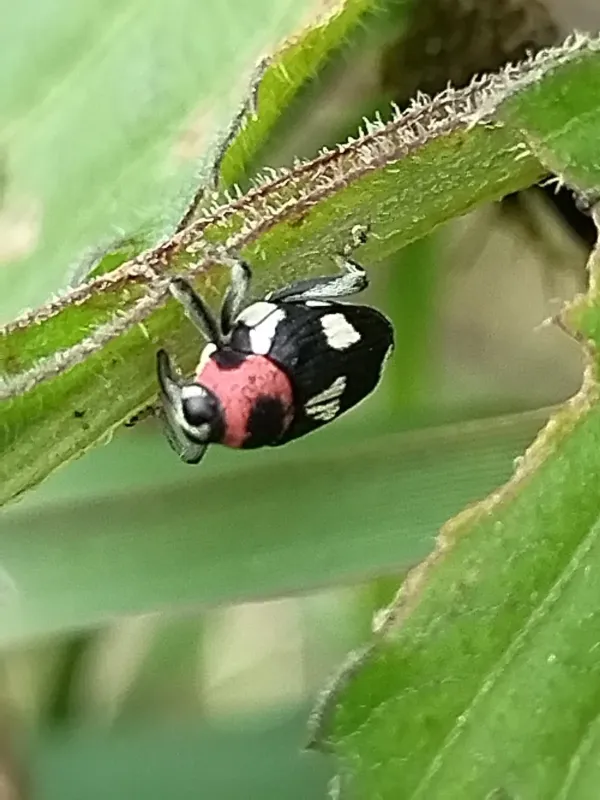
Description
How to identify
The stem weevil, specifically those of the genus Copturus, belongs to the family Curculionidae. These insects are characterized by a prominent snout (rostrum) used for boring into plant tissues and an exoskeleton often covered with mottled scales that mimic their environment.
The larval stage is the most destructive, occurring entirely within the plant structure. Larvae are typically legless, fleshy, and exhibit a distinct head capsule, allowing them to tunnel through woody or herbaceous stems effectively.
What it damages
Copturus species attack various plants, including fruit trees, vegetables, and ornamental shrubs. The primary damage occurs when larvae feed on the internal vascular tissues of the stem, effectively girdling the plant from the inside.
This feeding behavior disrupts the transport of water and nutrients, leading to stunted growth, leaf chlorosis, and in many cases, the death of the distal part of the plant or the entire stem.
When it appears
The life cycle of the stem weevil is synchronized with the phenology of its host plants. Adult weevils emerge from hibernation in the spring when temperatures rise sufficiently to allow for feeding and mating activities.
Depending on the climatic zone, the insect may produce multiple generations per year. The larval stage is most prevalent during the peak growing season, causing cumulative damage as the larvae mature and tunnel deeper into the host.
Signs of infestation
Early detection is vital for effective management. Signs include the presence of small entry holes on the bark or stem surface, often accompanied by frass (bore dust) or exudation of plant sap from the injury site.
- Wilting or yellowing of foliage despite adequate irrigation.
- Noticeable swellings or galls on the stem where larval activity is localized.
- Breakage of stems at the site of severe larval boring activity.
Control measures
Control strategies for the stem weevil emphasize integrated pest management. The primary method involves the sanitation of plantations, specifically the removal and destruction of infested plant parts to reduce the overwintering population.
Chemical control focuses on the use of systemic insecticides during the peak activity period of adult weevils, aiming to prevent egg-laying. It is crucial to monitor field conditions to time applications correctly.
Cultural practices, such as maintaining plant health through proper irrigation and fertilization, enable crops to recover more effectively from mechanical damage caused by boring larvae.
Taxonomy
- Latin name
- Copturus
- Order
- Coleoptera (beetles)
- Family
- Curculionidae
- EPPO code
- COPUSP
Discussion
No discussions yet — be the first.