
Coptoborus
Coptoborus
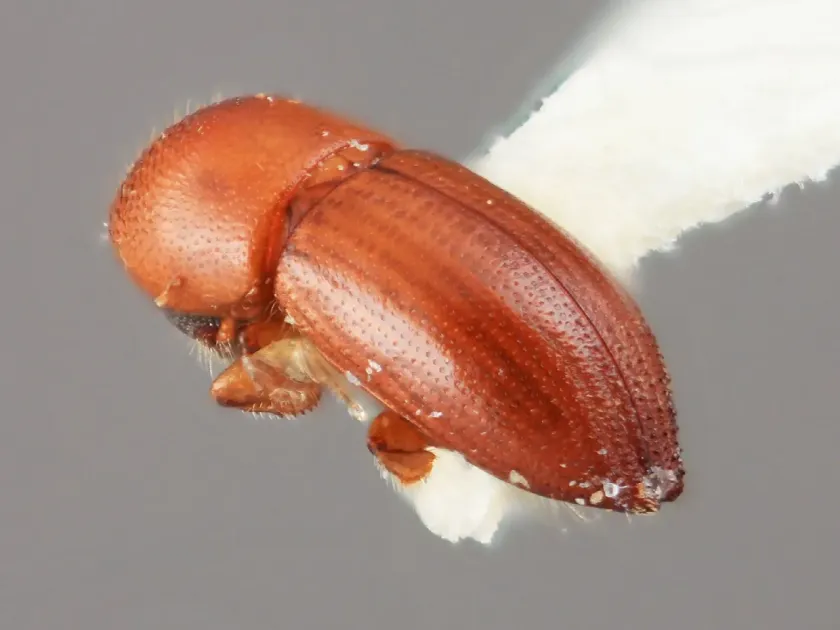
Description
How to identify
Coptoborus is a genus of bark beetles within the family Curculionidae. These beetles are typically very small, characterized by a cylindrical body structure adapted for tunnel boring.
The coloration of these beetles is usually dark brown or black. Their morphology allows them to navigate narrow galleries within the plant tissue effectively.
A key biological trait of this genus is the symbiotic relationship with fungi. Beetles carry fungal spores in specialized structures called mycangia to colonize their galleries.
These fungi serve as the primary nutritional source for the beetle larvae, which makes the presence of the beetle inextricably linked to the presence of specific fungal growth.
Identification to the species level usually requires professional entomological examination, as many species within the genus appear visually similar to the untrained eye.
What it damages
Coptoborus species primarily target tropical and subtropical trees. Significant damage is often reported in economically important crops such as coffee, cocoa, and various fruit trees.
By boring into the sapwood, the beetles create complex systems of galleries. This activity physically disrupts the vascular system responsible for transporting water and nutrients.
The associated fungi cause systemic infections within the wood, which further weaken the tree's health and accelerate the decay of the infested branches or stems.
Infested trees show reduced vigor, stunted growth, and decreased fruit production. Severe infestations can result in the total death of the tree.
Economic losses arise not only from the loss of trees but also from the degradation of timber quality and the high costs associated with plantation management and removal.
When it appears
The lifecycle of Coptoborus is heavily influenced by regional climate conditions. In tropical environments, the beetles can remain active and reproduce throughout the year.
Active flight periods often coincide with high humidity levels, which trigger the dispersal of adults to new host plants where they initiate the boring process.
The generation time varies based on temperature and host plant susceptibility. Warmer conditions typically lead to faster maturation of larvae into adults.
Because these insects can have overlapping generations, the pest population can be present on a tree at various developmental stages simultaneously.
Continuous monitoring throughout the growing season is essential, as the absence of a distinct dormant period makes year-round vigilance necessary for effective management.
Signs of infestation
The most visible sign of an infestation is the appearance of tiny entry holes on the bark surface, often accompanied by piles of frass, or "sawdust."
This frass is produced by the beetles as they excavate their galleries and is pushed out through the entry holes, indicating active tunneling within the wood.
Some host plants exhibit resinosis, where the tree produces sap in response to the injury as an attempt to expel the beetle from the bore hole.
Foliage decline, such as yellowing, wilting, or premature leaf drop, is a critical indicator that the tree's vascular system has been compromised by the beetle colony.
Removing a section of the bark reveals the internal damage, characterized by branching tunnels, the presence of fungal mycelium, and larvae or adult beetles inside.
Control measures
Sanitation is the most effective control measure. Infested trees or branches must be pruned and destroyed immediately to prevent the spread of the beetles to healthy plants.
Maintaining optimal tree health through proper fertilization, irrigation, and soil management increases the tree's resistance to beetle attacks.
Chemical control is often difficult due to the beetles living deep within the wood, making them shielded from most contact-based insecticide applications.
Pheromone traps are used as a monitoring tool to determine population density and to time management interventions when adult activity is at its peak.
Integrated Pest Management (IPM) strategies, which combine cultural practices, biological controls, and regular monitoring, are the gold standard for managing Coptoborus.
Taxonomy
- Latin name
- Coptoborus
- Order
- Coleoptera (beetles)
- Family
- Curculionidae
- EPPO code
- COPBSP
Discussion
No discussions yet — be the first.