
Hickory nut curculio
Conotrachelus hicoriae
Description
How to identify
The hickory nut curculio (Conotrachelus hicoriae) is a member of the Curculionidae family, commonly known as true weevils. These insects are significant pests of various species of the Carya genus, including pecans and hickories.
Adult weevils are small, characterized by their robust bodies and a distinct, elongated snout (rostrum) used for feeding and oviposition. Their coloration, typically brownish or greyish, provides excellent camouflage against tree bark.
The insect undergoes a complete metamorphosis involving four distinct stages: egg, larva, pupa, and adult. The lifecycle is highly synchronized with the phenology of their host trees.
Larvae are legless, white, and possess a dark, hardened head capsule. They are specifically adapted to feed on the internal tissues of nuts or tender shoots, remaining well-protected from environmental stressors.
While often difficult to spot due to their nocturnal behavior, they can cause substantial damage to orchard production if the population is left unmanaged.
What it damages
The primary damage is caused by the larvae as they burrow into the developing nut meat. This feeding process destroys the kernel, rendering the nut entirely unusable for harvest.
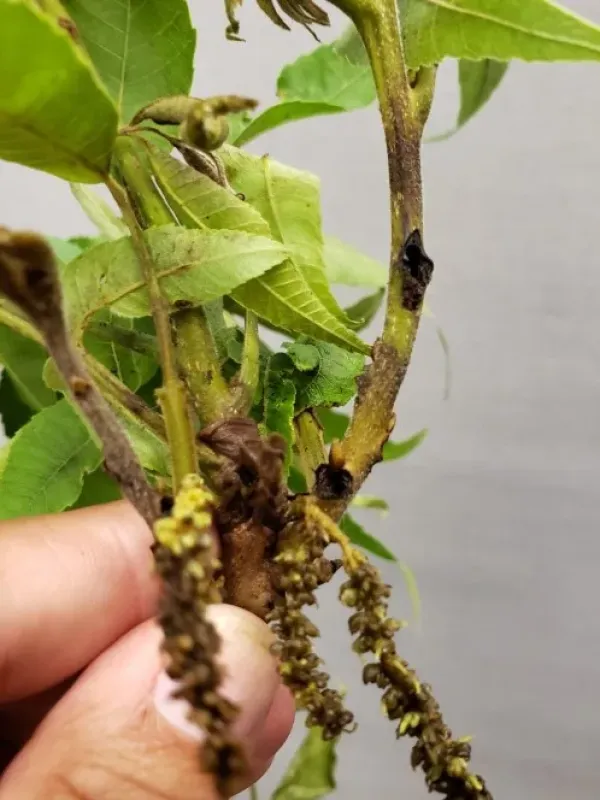
In addition to nut destruction, the hickory nut curculio attacks new vegetative growth. This can lead to shoot dieback, stunted growth, and the loss of potential fruit-bearing wood for the following season.
Heavy infestations can result in the loss of a significant percentage of the seasonal yield, leading to substantial economic losses for commercial growers.
The feeding sites created by the adults and larvae also serve as entry points for secondary fungal infections and pathogens, which can exacerbate tree health issues over time.
Nut damage often remains hidden until the harvest period, making it a frustrating pest to control for those who do not monitor their trees throughout the spring and summer.
When it appears
The lifecycle begins in early spring when adult weevils emerge from the soil beneath the canopy of host trees. This emergence is triggered by warming temperatures and soil moisture levels.
The most critical period for control is during the nut-filling stage, when adult females use their snouts to pierce young nuts to deposit eggs. The feeding activity of these adults also damages young shoots.
After hatching, the larvae spend several weeks feeding inside the nut. Once their development is complete, they exit the fruit and drop to the ground to pupate in the soil.
The pupal stage occurs in the topsoil layers. This is a vulnerable point in their lifecycle, as environmental factors and soil management practices can significantly impact survival rates.
Depending on geographical location, the weevil may complete one or more generations per year, necessitating a sustained monitoring program from spring through harvest.
Signs of infestation
The first indicator of an infestation is the presence of small, puncture-like wounds on young nuts or succulent shoots. These punctures often exhibit minor sap exudation.
Premature nut drop is a major red flag. If fallen nuts are collected and inspected, larvae or internal tunnels filled with frass will usually be visible upon cutting the nut open.
Damage to shoots is visible as localized wilting or deformities, where the tips of the branches begin to turn brown and dry out due to the internal tunneling of the larvae.
At harvest time, signs of an infestation include small, circular exit holes in the nutshell, indicating that the larvae have already completed their development and escaped.
- Small, pin-sized punctures on developing nuts.
- Increased rate of premature nut drop.
- Wilting and necrosis of shoot tips.
- Presence of larvae or tunneling inside the shell.
Control measures
Sanitation is the cornerstone of hickory nut curculio management. Regularly gathering and destroying fallen nuts (the "mummies") prevents the larvae from exiting and entering the soil.
Cultivating the soil beneath the canopy in late summer or autumn can expose pupae in the soil to predators and desiccation, effectively reducing the overwintering population.
Chemical control involving targeted insecticide applications should be timed to coincide with the peak emergence of adults. Consult local extension services for recommended products and timing.
Utilizing pheromone traps or light traps can help monitor adult population densities, allowing for more precise and cost-effective management decisions throughout the season.
Maintaining optimal tree vigor through balanced fertilization and irrigation helps the trees withstand minor levels of damage and improves overall orchard resilience against pest outbreaks.
Taxonomy
- Latin name
- Conotrachelus hicoriae
- Order
- Coleoptera (beetles)
- Family
- Curculionidae
- EPPO code
- CONHHI
Discussion
No discussions yet — be the first.