
Conotrachelus carinifer
Conotrachelus carinifer
Description
How to identify
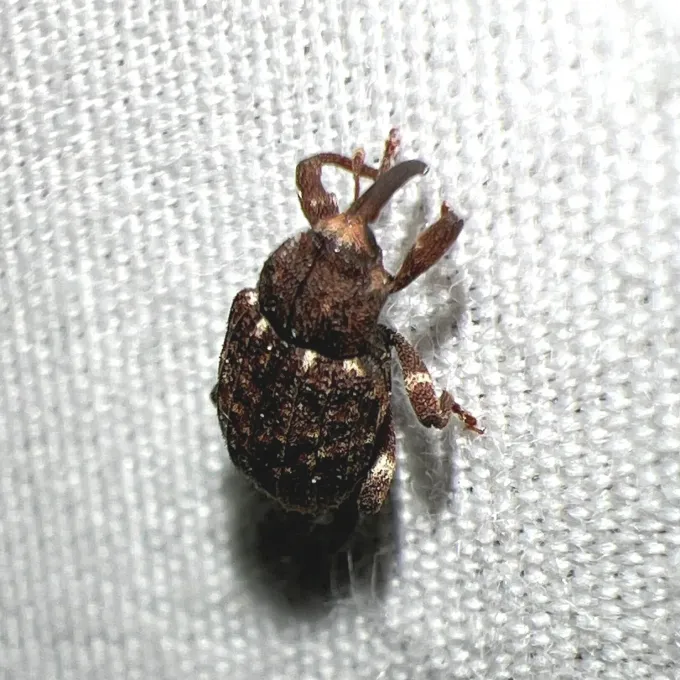
Conotrachelus carinifer belongs to the family Curculionidae, commonly known as weevils. This insect is characterized by a prominent rostrum (snout) and distinct ridges on its elytra, which serve as its primary diagnostic features.
The adult beetle usually exhibits a dark brown or grayish color, providing effective camouflage against the bark of host trees. Their body structure is adapted for survival in complex plant environments.
Larvae are typically legless, white to yellowish grubs with a dark, hardened head capsule, specialized for boring into fruits and seeds to obtain nutrition.
The life cycle encompasses several stages: egg, larval instars, pupa, and adult. Pupation frequently takes place in the soil under the host tree, making the subterranean environment a critical phase of its development.
The development speed of the population is highly dependent on ambient temperature and soil moisture levels, which influence the timing of emergence for the next generation.
What it damages
This pest is a major threat to various fruit trees, specifically targeting young fruits and ovaries. It is known for its ability to cause significant economic losses in commercial orchards.
Larval feeding inside the fruit destroys the interior tissues, which leads to fruit drop and renders the remaining crop unsalable due to internal damage.
Adult beetles also contribute to damage by feeding on buds, flowers, and young foliage during the spring, which weakens the overall vigor and physiological state of the trees.
Fruit infestation often facilitates secondary decay, as the boring activity creates entry points for fungal and bacterial pathogens that further ruin the yield.
Severe infestations, if left unmanaged, can lead to the loss of a large percentage of the total harvest, significantly affecting the profitability of the agricultural enterprise.
Signs of infestation
The most reliable sign of infection is the presence of small puncture marks on young developing fruits, often accompanied by discoloration or sap exudation around the site.
A sudden, widespread drop of immature fruit in late spring or early summer is a classic indicator that larvae have been active within the tree canopy.
Visual inspection of the tree during the early season may reveal beetles feeding on tender leaves or the undersides of flower buds, confirming the presence of the active pest population.
Cutting open dropped fruits will typically reveal the larvae or the tunnel systems they have created, which is the definitive diagnostic evidence of the species.
- Fruit deformation and stunted growth.
- Early fruit drop occurring before reaching maturity.
- Presence of sawdust-like frass on the fruit surface.
Control measures
Sanitation is the cornerstone of control: the collection and proper disposal of dropped fruit are essential to prevent larvae from exiting the fruit and pupating in the soil.
Tilling or cultivation of the soil around the base of the trees helps disrupt the pupation sites, exposing the dormant stages to predators and harsh weather conditions.
Chemical control must be timed precisely to target the adult stage before egg-laying occurs, typically aligning with the period of petal fall or early fruit development.
Pheromone traps are highly recommended for monitoring purposes, as they allow producers to determine the exact peak of pest activity and apply treatments only when necessary.
Biological control, including the application of entomopathogenic fungi or the encouragement of natural parasitoids, is a sustainable approach for long-term population suppression.
Taxonomy
- Latin name
- Conotrachelus carinifer
- Order
- Coleoptera (beetles)
- Family
- Curculionidae
- EPPO code
- CONHCA
Discussion
No discussions yet — be the first.