
Plum curculio
Conotrachelus
Description
How to identify
The genus Conotrachelus belongs to the Curculionidae family (true weevils). The most significant pest within this group is the plum curculio (Conotrachelus nenuphar).
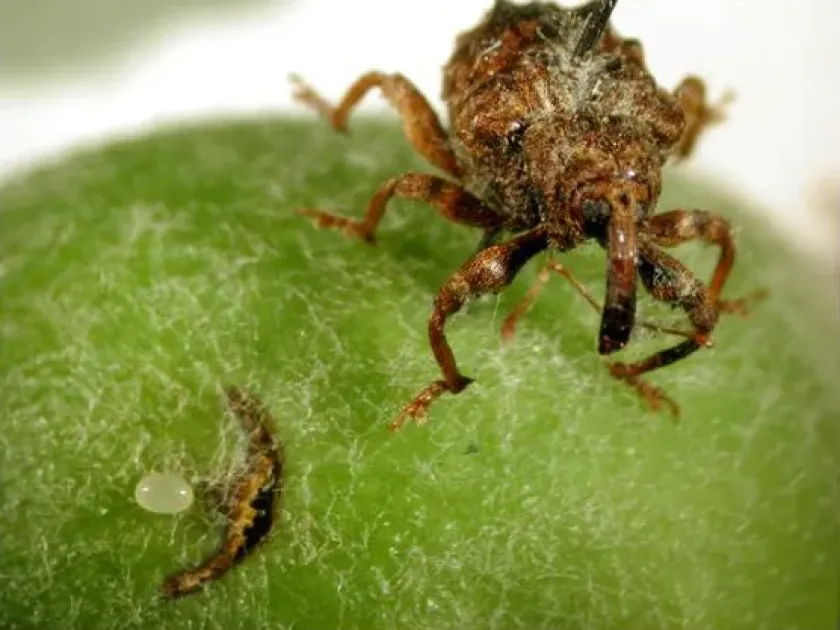
Adult beetles are approximately 5–6 mm long with a distinct, elongated snout. Their bodies are mottled brown, grey, and black, providing excellent camouflage against tree bark.
Larvae are legless, C-shaped grubs with a creamy-white body and a dark brown head capsule, which is a key diagnostic feature when examining infested fruit.
The lifecycle involves complete metamorphosis, consisting of four stages: egg, larva, pupa, and adult. Adults are known for playing dead (thanatosis) when disturbed.
Overwintering occurs primarily as adults, hidden in leaf litter, debris, or just beneath the soil surface in protected areas near orchards.
What it damages
The primary hosts are stone fruits, including plums, cherries, peaches, and apricots. Pome fruits like apples and pears are also frequently attacked.
Adults feed on opening buds, flowers, and developing fruit, causing holes and scarring that compromise the aesthetic quality and health of the fruit.
Larval damage is the most severe, as the grubs tunnel into the flesh and feed near the pit, leading to the premature drop of fruit before it reaches maturity.
Fruit that remains on the tree often develops scars and deformities from oviposition stings, which can also become entry points for brown rot fungi.
The economic impact is significant due to both direct yield loss from fruit drop and the reduced marketability of the remaining damaged harvest.
When it appears
Adults emerge from overwintering sites in early spring, coinciding with the pink stage of flower bud development and the initiation of fruit set.
The peak period for egg-laying occurs during the weeks following the blossom stage, when young, succulent fruit is most available.
Larval development takes about 2 to 3 weeks within the fruit before the larva exits and drops to the soil to pupate.
Pupation takes place in the soil, lasting several weeks until the next generation of adults emerges later in the summer.
Climate patterns significantly influence the number of generations per year, with warmer regions potentially seeing multiple cycles or prolonged emergence windows.
Signs of infestation
The most diagnostic sign of the plum curculio is the crescent-shaped scar left on the fruit skin, which the female creates to protect the egg after laying it.
Early-season fruit drop is a strong indicator of an infestation, as infested fruit typically falls to the ground while still green.
Dissecting dropped fruit will reveal internal tunneling and the presence of the characteristic white, legless grub.
Feeding punctures on buds or young leaves appear as small, dark spots, indicating the early presence of adult weevils in the canopy.
Jarring or shaking tree limbs over a white cloth sheet early in the morning is a standard monitoring technique to detect the presence of adults.
Control measures
Sanitation is critical; picking up and destroying fallen fruit daily prevents larvae from emerging and entering the soil to complete their lifecycle.
Cultivation of the soil under the tree canopy during the pupation period can disrupt the life cycle by killing pupae in the top layers of the soil.
Physical barriers such as bagging individual fruits on small-scale plantings can provide near-total protection from female oviposition stings.
Chemical control focuses on timely insecticide applications timed with the migration of adults into the trees during the fruit-set period.
- Daily removal of infested fruit drop.
- Mechanical tree jarring for adult collection.
- Soil tilling around the base of trees.
- Monitoring with pheromone traps.
- Strategic timing of insecticide sprays.
Taxonomy
- Latin name
- Conotrachelus
- Order
- Coleoptera (beetles)
- Family
- Curculionidae
- EPPO code
- CONHSP
Discussion
No discussions yet — be the first.