
Beet stem weevil
Conorhynchus
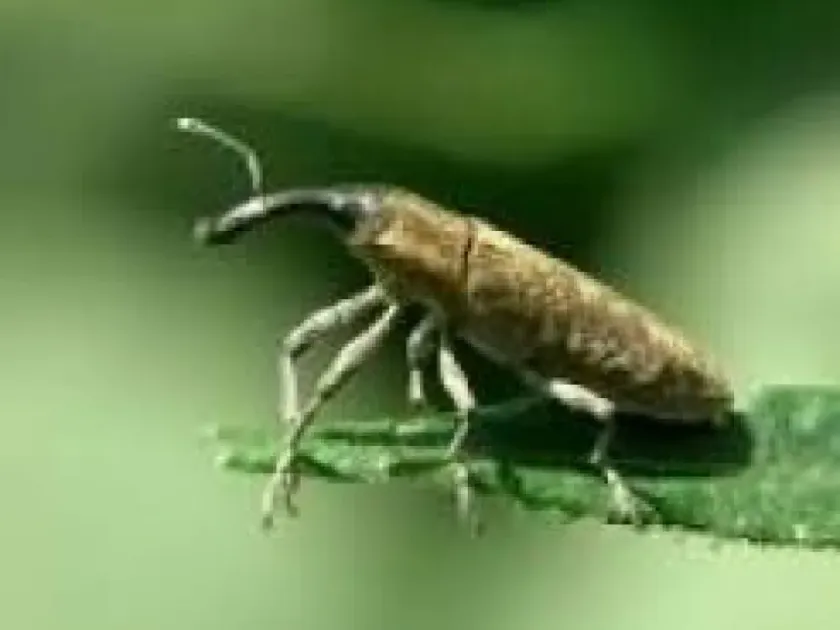
Description
How to identify
The beet stem weevil (Conorhynchus mendicus) belongs to the Curculionidae family and is a significant pest of various beet crops.
Adult beetles are robust insects, typically ranging from 10 to 16 mm in length, covered in grayish scales that mimic the color of the soil.
They possess a long, distinct snout (rostrum) equipped with powerful mandibles, which they use to feed on plant tissues and roots.
The larvae are legless, C-shaped grubs, white in color with a prominent brown head, living entirely within the soil profile.
Adults are known for their survival strategy of playing dead, which helps them avoid detection by natural predators during the day.
What it damages
The primary hosts of this insect are sugar, fodder, and table beets, as well as several species of wild Chenopodiaceae weeds.
Adults feed on young seedlings, causing severe mechanical damage to cotyledons and leaves, which often leads to seedling mortality.
Larvae are particularly destructive as they burrow into the taproot and stem base, significantly disrupting nutrient and water uptake.
These infestations create entry points for soil-borne pathogens, leading to root rot and further reducing the harvest quality.
High infestation rates lead to patchy stands, necessitating costly replanting or intensive chemical intervention to save the remaining crop.
When it appears
Adult beetles emerge from their overwintering sites in the soil when spring temperatures reach approximately 10–12 degrees Celsius.
The peak period of damage by adults occurs shortly after crop emergence, usually spanning from late spring to early summer.
Egg-laying takes place in the soil surrounding the host plant, followed by larval development throughout the warmer summer months.
Pupation occurs within the soil in protected chambers, where the insect completes its transformation before emerging as a new adult.
Adults of the new generation enter diapause, burrowing into the soil in late summer and autumn to survive the winter season.
Signs of infestation
Visual signs of adult activity include notched leaf edges and circular holes in the seedling cotyledons, clearly visible during field scouting.
Wilting of plants during the midday heat despite adequate soil moisture is a strong indicator of larval damage to the root system.
Stunted plant growth in specific areas of the field often indicates a localized infestation of the beet stem weevil.
Root deformations, including longitudinal furrows or tunneling observed during excavation, confirm the presence of larvae.
Observing adult beetles near the base of plants during early morning or evening hours provides direct evidence of the ongoing pest pressure.
Control measures
Crop rotation is the most effective cultural practice, ensuring that susceptible crops are not grown in the same field in successive years.
Deep autumn tillage disrupts the soil environment, significantly reducing the survival rate of the overwintering adult population.
Seed treatment with systemic insecticides is a crucial preventative measure to protect emerging seedlings from early adult attacks.
Effective weed control, particularly of the Chenopodiaceae family, reduces alternative food sources and breeding sites for the pest.
Foliar application of insecticides should be timed based on regular monitoring and economic injury levels to maximize effectiveness.
Taxonomy
- Latin name
- Conorhynchus
- Order
- Coleoptera (beetles)
- Family
- Curculionidae
- EPPO code
- CNRHSP
Discussion
No discussions yet — be the first.