
Red pine cone beetle
Conophthorus resinosae
Description
How to identify
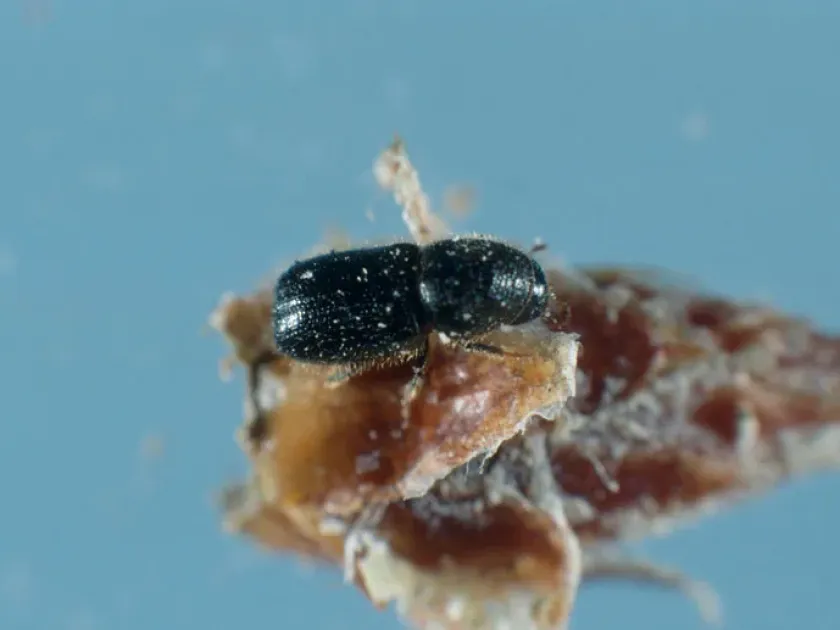
The red pine cone beetle (Conophthorus resinosae) is a destructive species of bark beetle belonging to the family Curculionidae. These small, cylinder-shaped insects typically measure approximately 3 to 4 millimeters in length and are dark brown to black in color.
Adult beetles possess a robust exoskeleton specifically adapted for boring into the woody tissues of pine cones. Their larvae are legless, grub-like, and pale in color, spending their entire developmental phase feeding within the protected environment of the host pine cone.
What it damages
This beetle primarily targets the red pine (Pinus resinosa), causing severe economic losses in seed orchards and forest nurseries. It selectively attacks the developing cones, which prevents seed maturation.
Damage is twofold: adult beetles cut off the nutrient supply by boring into the cone stalk, causing the cone to wither. Subsequently, the larvae feed on the internal structures and developing seeds, effectively destroying the entire seed crop within the infested cones.
When it appears
The life cycle begins in early spring when overwintered adult beetles emerge to attack newly developing cones. This timing is critical, as the beetles select cones that are just beginning to grow rapidly.
Larval development occurs throughout the summer months within the host cones. As autumn approaches, the new generation of adults matures. Some may emerge to overwinter in the bark of trees, while many stay within the infested cones on the ground until the following spring.
Signs of infestation
The most visible sign of an infestation is the premature browning and drooping of immature cones during the summer. These cones often fail to reach their full size and drop to the forest floor prematurely.
Examination of an infested cone reveals a small entry hole at the base, often marked by a hardened resin pitch tube. Inside, the core of the cone is riddled with larval tunnels and packed with frass, indicating a complete interior collapse.
Control measures
Sanitation is the most recommended management practice to reduce local populations. Collecting and destroying infested, fallen cones before the adults emerge in spring can significantly curtail the pest cycle.
Integrated Pest Management (IPM) programs may include the use of pheromone traps to monitor adult flight activity and time specific treatments. Furthermore, maintaining tree vigor and selecting resistant genetic stock can help mitigate the impact of the beetle on future seed crops.
Taxonomy
- Latin name
- Conophthorus resinosae
- Order
- Coleoptera (beetles)
- Family
- Curculionidae
- EPPO code
- CONPRE
Discussion
No discussions yet — be the first.