
Lodgepole cone beetle
Conophthorus contortae
Description
How to identify
The Lodgepole cone beetle (Conophthorus contortae) belongs to the family Curculionidae and the subfamily Scolytinae, typical of many wood-boring insects.
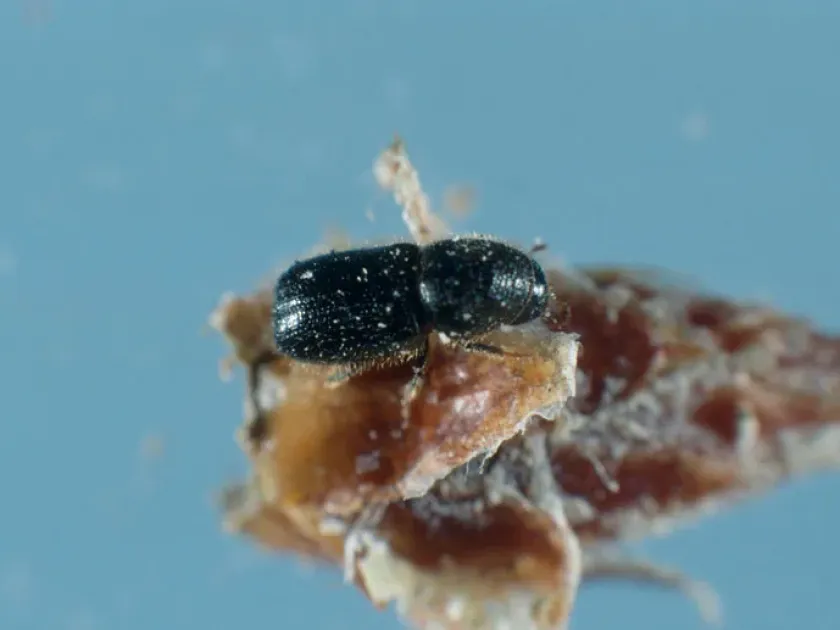
Adult beetles are quite small, generally measuring between 3 to 4 millimeters in length, with a robust and cylindrical body structure.
Their coloration is typically a dark brown to black, which allows them to blend in with the bark of their host pine trees effectively.
The larvae are legless, white grubs with a brown head capsule, specialized for life and feeding within the protected environment of a cone.
As a specialized forest pest, this insect has evolved to utilize the reproductive structures of Pinus contorta and related pine species.
What it damages
Adult beetles primarily attack young pine cones by boring into the base, which severs the vascular connection and causes the cone to wither.
Larvae feed internally on the cone tissue, destroying seeds and seed scales, which directly impacts the natural regeneration capacity of the forest.
This beetle is considered a major pest in seed orchards, as it can cause significant reductions in the yield of viable pine seeds for forestry.
The damage often results in the premature death of the cone, preventing it from maturing or releasing seeds, thereby disrupting the ecological cycle.
Widespread infestations can lead to substantial losses in seed availability, which hampers reforestation efforts in affected geographic areas.
When it appears
The life cycle of the beetle is closely tied to the phenological development of the host tree's cones during the warmer months of the year.
Adults overwinter inside infested cones that have fallen to the forest floor or occasionally within the bark of standing trees.
In late spring, as temperatures rise, the beetles emerge to seek out newly developing cones for feeding, mating, and egg-laying purposes.
The development of the offspring occurs throughout the summer months, with larvae maturing inside the safety of the cones they inhabit.
By late summer, the new generation of adults is typically fully developed and begins preparing for the dormant winter period.
Signs of infestation
One of the most visible signs of infestation is the premature browning and shriveling of young cones while the rest of the tree appears healthy.
Entrance holes at the base of the cone, often marked by resin droplets, are a clear indication of successful colonization by the beetle.
On the forest floor, a carpet of prematurely dropped, underdeveloped cones is a strong indicator of an active population of this beetle species.
Internal examination of suspected cones will reveal extensive galleries, sawdust-like frass, and the presence of larvae or pupae inside the structure.
Empty cones that fail to open or show signs of internal tissue consumption are hallmark symptoms of Lodgepole cone beetle activity.
Control measures
Sanitation is the most effective control method, involving the collection and destruction of infested cones before the new adults emerge.
Monitoring using pheromone-based traps helps forest managers track beetle activity and determine the timing for necessary interventions.
In managed seed orchards, the application of systemic insecticides may be employed to protect the cone crop from significant damage.
Maintaining forest health through proper silvicultural practices, such as density control, helps reduce the susceptibility of stands to beetle attacks.
Biological control, such as the preservation of natural predators and parasitoids, plays a vital role in keeping beetle populations under control.
Taxonomy
- Latin name
- Conophthorus contortae
- Order
- Coleoptera (beetles)
- Family
- Curculionidae
- EPPO code
- CONPCT
Discussion
No discussions yet — be the first.