
Coneworm beetle
Conophthorus
Description
How to identify
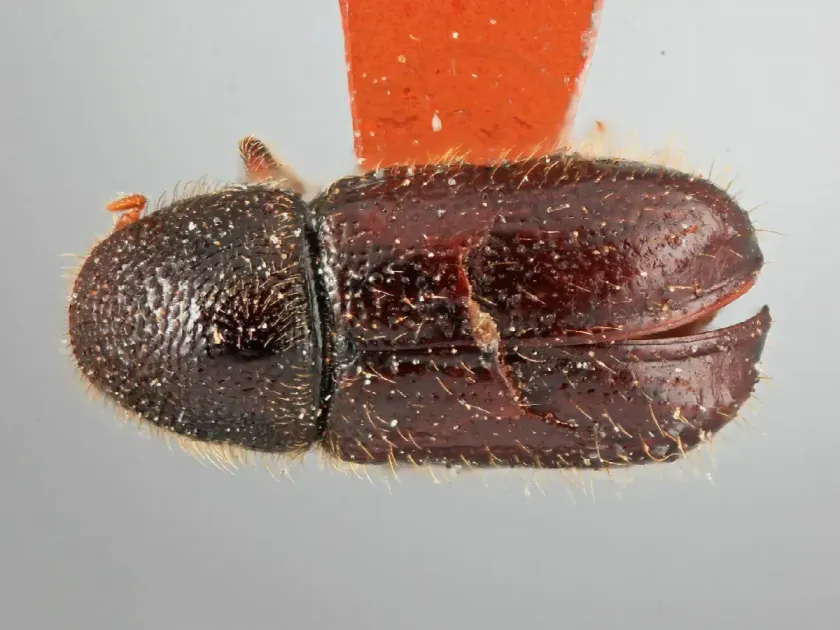
The Conophthorus genus includes small beetles known as cone beetles, which belong to the Curculionidae family. Adults typically measure between 2 and 4 millimeters in length and possess a cylindrical body shape, often dark brown or black.
These insects are characterized by a head equipped with a short snout, which distinguishes them from typical wood-boring beetles. Their elytra are often textured with punctures and fine hairs, helping them navigate inside the scales of cones.
The larvae are legless, C-shaped, and usually creamy-white. They are specialized for internal feeding, spending their entire larval stage within the reproductive organs of host trees where they remain concealed.
Life cycles are highly synchronized with the phenology of specific conifer species. Adult beetles overwinter either within fallen cones on the forest floor or under the bark of standing trees.
Taxonomic identification is specialized, as different species within the genus have evolved to target specific host tree species, making precise identification essential for effective management.
What it damages
Conophthorus beetles primarily infest conifer trees, with pine species (Pinus) being the most common hosts. They attack developing cones, which causes immediate growth cessation and often complete destruction of the seeds.
This damage is particularly devastating in seed orchards and forest nurseries, where the production of high-quality seeds is vital for reforestation efforts and maintaining genetic diversity.
During years of low cone production, even a moderate beetle population can lead to the loss of a significant percentage of the annual seed crop, posing severe economic impacts for the forestry sector.
Damaged cones typically deform and drop prematurely, preventing the tree from effectively dispersing its seeds and potentially weakening the overall reproductive capacity of the stand.
Repeated infestations can lead to substantial long-term losses, as the beetle population thrives by utilizing the host's reproductive organs as both a food source and a nursery for offspring.
When it appears
Beetle activity generally commences in early spring, synchronized with the onset of favorable temperatures and the development of new cones on the host trees. This is the period when adults emerge from wintering sites.
Following emergence, females initiate boring into the base of young cones to deposit eggs. This colonization phase is critical and often lasts for several weeks, depending on local weather conditions.
The larval stage occurs throughout the summer months, during which the larvae consume the internal tissues of the cone. Development concludes with pupation, which takes place inside the gallery system of the cone.
New adults typically emerge by the end of the summer or early autumn. These individuals then seek out suitable overwintering sites, such as fallen cones or bark crevices, to survive the winter.
Understanding the precise timing of emergence is crucial for forestry managers, as applying preventative measures must be timed exactly to the beetles' initial flight and colonization phase.
Signs of infestation
The earliest sign of infestation is the presence of small entry holes at the base of the cone, frequently accompanied by the exudation of pitch or resin in the form of white, hardened droplets.
Affected cones often show premature discoloration, turning brown or black long before they reach maturity. Significant distortion, such as bending or shriveling, is also a classic indicator of damage.
Mass premature shedding of cones onto the forest floor during mid-summer is a major indicator of an active infestation, as the damaged structures are often cast off by the host tree.
Internal inspection of damaged cones reveals complex galleries filled with "frass" (boring dust). Often, seeds inside are found to be completely consumed or damaged by the larvae.
A noticeable lack of healthy cones on the upper canopy by the end of the season can indicate a widespread infestation, signaling the need for an immediate assessment of the forest stand.
Control measures
Sanitation is a primary management strategy, involving the collection and destruction of fallen cones. By removing these, managers can effectively eliminate the overwintering population of the beetles.
Pheromone-baited traps are highly effective for monitoring adult activity and population density, allowing managers to time interventions precisely to when beetles are most vulnerable.
In high-value areas like seed orchards, systemic insecticide applications can be utilized during the peak flight period to protect the developing cone crop from initial colonization.
Encouraging natural biological control agents, such as parasitic wasps that attack beetle larvae, can help stabilize populations in managed forest ecosystems without heavy reliance on chemicals.
Regular forest health monitoring and site-specific inventories are essential to detect outbreaks early, ensuring that appropriate actions can be taken before the population reaches damaging levels.
Taxonomy
- Latin name
- Conophthorus
- Order
- Coleoptera (beetles)
- Family
- Curculionidae
- EPPO code
- CONPSP
Discussion
No discussions yet — be the first.