
Conchaspis
Conchaspis
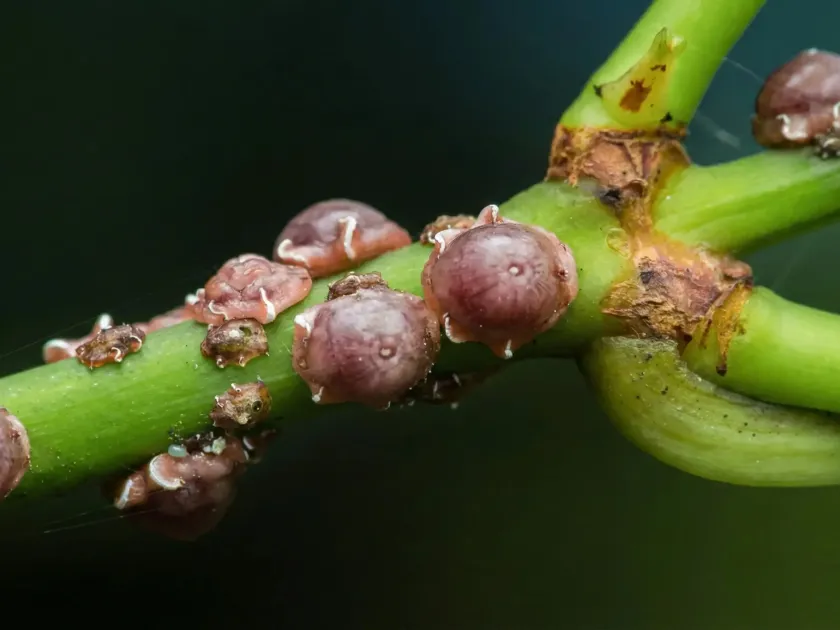
Description
How to identify
Conchaspis is a genus of scale insects within the family Conchaspidae. These insects are characterized by their unique, cone-shaped waxy tests (shells), which serve as a permanent protective covering for the adult females during their sedentary stage.
The life cycle of Conchaspis is primarily dominated by stationary females that remain attached to the host plant, constantly feeding on the sap. Their white or pale conical shells often blend in with the texture of the bark or leaf tissue.
Unlike some other scale insects, Conchaspis species often reproduce through parthenogenesis, allowing for rapid population growth even when male insects are entirely absent from the colony.
The mobile stage of the insect is known as the crawler. These tiny larvae are the only individuals capable of active movement, allowing them to disperse to new parts of the plant or even onto neighboring plants.
Correct identification is vital for successful management. Because these insects are small and often cryptic, using a hand lens is recommended to observe the characteristic conical shape of their protective armor.
What it damages
Conchaspis primarily affects ornamental plants in tropical and subtropical regions. It is a frequent inhabitant of greenhouses and indoor plant collections, where it targets various broad-leaved species.
The damage is caused by the insertion of stylets into the plant vascular system to extract phloem sap. This feeding process continuously deprives the plant of essential nutrients and fluids necessary for growth.
As the infestation progresses, the host plant exhibits signs of severe stress, including stunted development, chlorosis (yellowing of the leaves), and eventual necrosis of affected tissues.
Heavy infestations can lead to premature leaf drop and the overall decline of the plant. If left untreated, the cumulative damage often results in the death of the ornamental specimen.
The excretion of honeydew by the insects creates a sticky film on the plant surface, which acts as a substrate for sooty mold, further hindering photosynthesis and degrading the plant's aesthetic value.
Signs of infestation
The most distinctive sign of a Conchaspis infestation is the presence of small, cone-shaped, whitish or yellowish bumps on the stems, leaf petioles, and the undersides of leaves.
The sticky honeydew residue is a secondary indicator. If you notice a shiny, tacky film on leaves or nearby surfaces, it is a clear sign that sap-sucking insects are active on the plant.
- Conical, waxy tests attached to the plant stem.
- Shiny, sticky honeydew on foliage.
- Dark sooty mold growth on leaves.
- Yellowing or curling of affected leaves.
- Visible decline in overall plant vigor.
Affected leaves may show localized yellow spotting where the insects have been feeding. In advanced cases, the foliage becomes distorted, and new growth may appear withered.
Regular inspection of the plant's structural joints and the undersides of leaves is crucial, as these insects tend to aggregate in sheltered areas where they are less exposed to environmental factors.
Control measures
Managing Conchaspis requires a targeted approach, as their protective waxy shells make them resistant to many standard contact insecticides. Systemic treatments are generally more effective.
Systemic insecticides, particularly those containing neonicotinoids, should be applied to the soil or as a foliar spray. The plant absorbs the chemical, poisoning the insects as they feed on the sap.
Manual removal is a useful strategy for minor infestations. Using a soft-bristled brush dipped in a mild soapy solution or rubbing alcohol can physically dislodge and kill the insects.
Cultural practices are essential for prevention. Always quarantine new plants for at least 3-4 weeks before introducing them to an established collection to ensure no pests are present.
Maintaining optimal plant health through balanced fertilization and appropriate light exposure helps plants resist pest attacks. Avoid over-fertilizing with nitrogen, as this often leads to softer, more vulnerable plant tissue that encourages scale proliferation.
Taxonomy
- Latin name
- Conchaspis
- Order
- Hemiptera (bugs, aphids, leafhoppers)
- Family
- Conchaspididae
- EPPO code
- CONQSP
Discussion
No discussions yet — be the first.