
Compsus weevil
Compsus
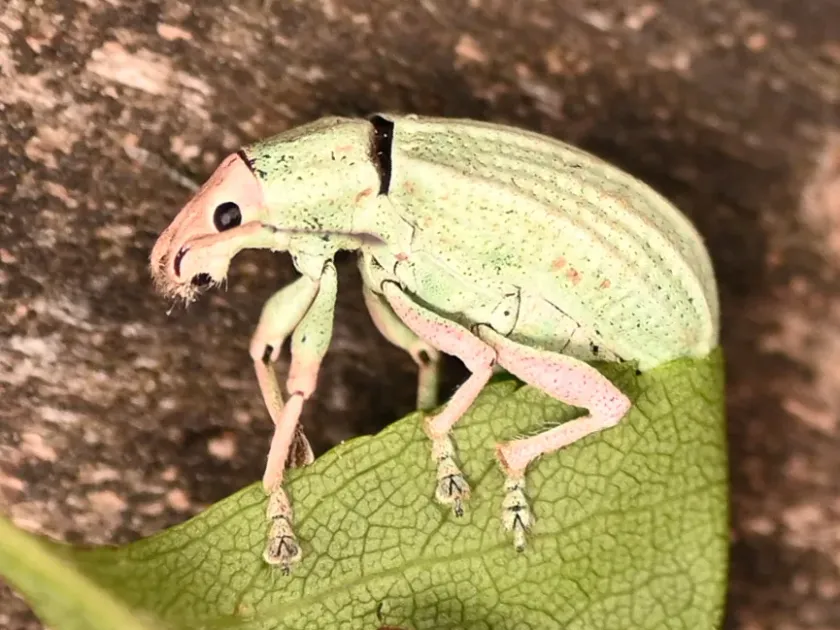
Description
How to identify
The genus Compsus belongs to the family Curculionidae, commonly known as true weevils, which is part of the order Coleoptera.
These beetles are distinguished by their prominent rostrum, which is a key feature used for piercing plant tissues or laying eggs.
The body of the adult Compsus is typically robust, often adorned with scales that provide camouflage against the foliage of their host plants.
Larvae are legless, white or yellowish, and possess a heavily sclerotized head capsule, adapted for burrowing in soil or roots.
Identification at the species level requires an examination of morphological traits, such as the arrangement of scales and antenna structure.
What it damages
Compsus weevils are known to cause significant damage to various tropical and subtropical crops, particularly in plantation settings.
Citrus trees are among the most frequently cited hosts, with the pest targeting both foliage and the root system during different life stages.
Beyond citrus, they can infest a wide range of fruit-bearing trees and ornamental plants, affecting both commercial and domestic gardens.
Adult feeding results in characteristic leaf-notching, significantly reducing the tree's photosynthetic capacity and overall health.
The larval stage is particularly damaging to the underground root architecture, which can lead to stunted growth and increased susceptibility to disease.
Signs of infestation
The most visible sign of an infestation is the ragged, notched appearance of leaf margins caused by adult feeding activity.
Premature leaf drop and wilting of young twigs often indicate that the plant is under stress due to the feeding activities of the weevil population.
Evidence of larval presence can be found by inspecting the soil and root zone, where damaged bark or root tissue may be visible.
An increased presence of ants in the canopy can sometimes be an indirect indicator, as they may be attracted to damaged plant tissues or secretions.
Stunted growth or chlorosis in otherwise well-watered and fertilized plants often points to root damage caused by soil-dwelling larvae.
Control measures
Effective management includes the use of contact insecticides during the peak activity period of the adult beetles to prevent leaf damage.
Cultural control practices, such as soil cultivation around the tree base, help expose larvae and pupae to predators and environmental stress.
Biological control agents, including entomopathogenic nematodes or fungi, can be applied to the soil to target the larval stages of the pest.
Regular monitoring of tree canopies using visual inspections or trap systems is essential for early detection and rapid response.
Maintaining strict phytosanitary measures is crucial to prevent the accidental spread of these weevils to new, uninfested areas.
Taxonomy
- Latin name
- Compsus
- Order
- Coleoptera (beetles)
- Family
- Curculionidae
- EPPO code
- CMSSSP
Discussion
No discussions yet — be the first.