
Colaspis quatuordecimcostata
Colaspis quatuordecimcostata
Description
How to identify
Colaspis quatuordecimcostata is a member of the Coleoptera order and the Chrysomelidae family. This insect is a known pest characterized by the typical body structure of leaf beetles, which are specialized feeders on vegetation.
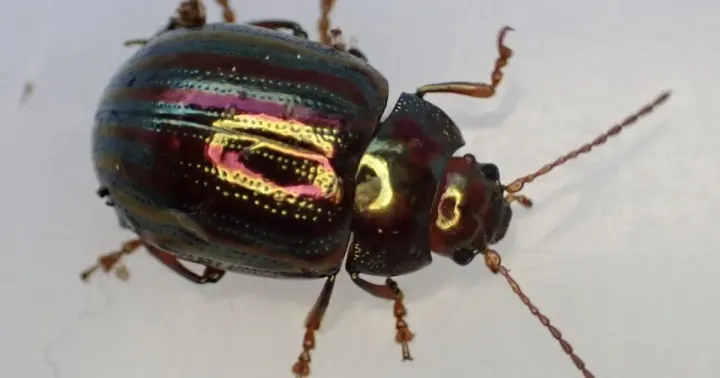
Adult beetles are generally oval-shaped, typically measuring between 4 to 7 millimeters in length. Their coloration often ranges from bronze to copper-brown, occasionally displaying a metallic sheen that acts as camouflage within the plant canopy.
The specific name of this species is derived from the fourteen distinct longitudinal ribs present on its elytra (wing covers). These ridges are the primary morphological diagnostic feature that differentiates it from other related species within the genus.
The larvae live within the soil, possessing an elongated, slightly curved, and pale-colored body with a well-developed head capsule. Because they reside underground, they remain hidden from initial field inspections, making early detection a significant challenge.
The insect undergoes a complete metamorphosis, including egg, larval, pupal, and adult stages. Adult beetles are diurnal, actively feeding on foliage, while larvae focus their feeding activity on the root systems of host plants in the upper soil profile.
What it damages
The primary host plant for this pest is corn, although adults can also feed on legumes, including soybeans, and various common weeds. This broad host range allows the pest to persist in diverse agricultural environments.
Adult beetles cause damage by feeding on the leaves, where they create irregular, small holes. This defoliation reduces the photosynthetic capacity of the plant, potentially slowing down growth and development during critical vegetative stages.
Larval damage is focused on the root system, where they prune and feed on smaller lateral roots. This root pruning interferes with the plant's ability to uptake water and essential nutrients, which can be particularly damaging during periods of drought.
Severe infestations during the early stages of growth can result in stunted development or lodging of the corn plants. Reduced plant vigor directly correlates with lower overall yield at harvest, as the plant struggles to recover from root stress.
In addition to direct feeding, the damage caused by these insects often provides entry points for secondary pathogens. Fungi and bacteria can infiltrate the damaged roots and leaves, leading to infections that further compromise plant health.
When it appears
The emergence of overwintered adults typically begins in late spring, as temperatures rise and the soil warms up. This period aligns with the germination and early vegetative development of the primary host crops.
Peak adult activity is generally observed during the early summer months. During this period, field monitoring is crucial, as the population density can rapidly exceed the economic threshold, requiring prompt intervention to protect the crop.
Egg laying occurs in the soil adjacent to the base of the plants, ensuring that the neonate larvae have immediate access to food upon hatching. The timing of this egg-laying process can be extended, leading to overlapping generations in the field.
Larval development occurs throughout the summer months, with the larvae passing through several instars. The speed of their lifecycle is heavily dependent on soil temperature and moisture levels, which can cause significant annual variation in pest pressure.
The species typically overwinters as larvae deep within the soil. This behavioral adaptation provides them with significant protection against freezing temperatures and makes them resistant to surface-applied agricultural treatments during the dormant season.
Control measures
Integrated pest management strategies begin with crop rotation, which is the most effective way to disrupt the life cycle of the beetle. Avoiding consecutive years of corn in the same field prevents the buildup of larval populations.
Tillage operations, particularly deep plowing in the autumn, are highly effective in disrupting the overwintering habitat. This process exposes the larvae to environmental stress and mechanical injury, significantly reducing the survival rate for the next season.
Seed treatments with systemic insecticides are a standard approach for managing early-season larval damage. These products provide a protective zone around the germinating seed and roots, preventing significant root pruning in the early stages of growth.
When adult populations reach critical levels, foliar insecticide applications may be necessary. These treatments should be timed precisely with the period of peak adult emergence to maximize efficacy and minimize the number of applications required.
- Utilize light traps to monitor the timing and density of adult emergence.
- Maintain clean fields by removing weeds that serve as alternative hosts.
- Monitor soil health to promote vigorous root growth that can withstand minor damage.
Taxonomy
- Latin name
- Colaspis quatuordecimcostata
- Order
- Coleoptera (beetles)
- Family
- Chrysomelidae
- EPPO code
- COLAQU
Discussion
No discussions yet — be the first.