
Colaspis favosa
Colaspis favosa
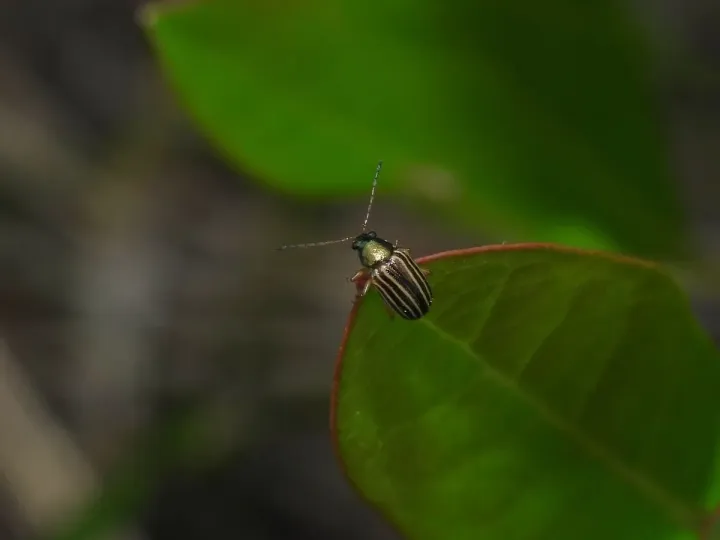
Description
How to identify
Colaspis favosa is a species of beetle belonging to the family Chrysomelidae (leaf beetles) within the order Coleoptera. Adult beetles are typically 4 to 6 mm in length and possess a characteristic oval, convex body shape that makes them easily recognizable in the field.
The coloration of these beetles ranges from bronze-brown to metallic gold. A distinct feature of this species is the punctation on the elytra, which resembles a honeycomb pattern, providing the basis for the specific epithet favosa.
The larval stage lives in the soil and is cream-colored with a darker, hardened head capsule. These larvae are equipped with strong mandibles adapted for feeding on the root systems of various host plants, representing a significant subterranean threat.
The life cycle involves complete metamorphosis (egg, larva, pupa, and adult). Adults emerge in the summer months, actively spreading across fields and laying eggs near the roots of host plants, where the next generation will develop.
For accurate field identification, agronomists often use sweep nets during early morning hours, as these beetles tend to hide during the heat of the day and exhibit a "drop-off" reflex when disturbed.
What it damages
Colaspis favosa is a polyphagous insect, meaning it feeds on a wide range of plants. It impacts several important agricultural crops, including vegetables, legumes, and certain forage crops, causing damage at both the larval and adult stages.
Adult beetles primarily attack the foliage. By feeding on the leaves, they create numerous small, irregular holes, which reduce the photosynthetic capacity of the plant and can significantly stunt its overall development.
Larvae cause subterranean damage by feeding on the roots and root hairs. This destructive feeding restricts the plant's ability to uptake water and essential nutrients, often leading to chlorosis, wilting, and plant decline.
Seedlings are particularly vulnerable to this pest. Early-season infestations can cause substantial thinning of crop stands, leading to decreased yields and sometimes necessitating replanting efforts by farmers.
Furthermore, feeding sites on the roots serve as entry points for soil-borne pathogens, potentially leading to secondary infections that exacerbate the stress on the crop and increase overall economic losses.
Signs of infestation
The most visible sign of an adult Colaspis favosa infestation is the "perforated" appearance of the leaves, where the leaf surface is covered in tiny, numerous holes resulting from their feeding activity.
Wilting of plants, particularly during the middle of the day despite adequate soil moisture, is a strong indicator of larval root feeding. This suggests that the root system has been compromised and cannot supply the foliage with water.
A decline in plant vigor or the presence of patches of stunted growth in the field should prompt an inspection of the root zone. Digging up affected plants often reveals the presence of larvae in the immediate rhizosphere.
The observation of beetles dropping from foliage when the plant is shaken is another behavioral sign of their presence. During the day, they may be found hiding under leaf debris or in the soil near the plant base.
Reduced crop stand density and yellowing of the lower leaves on young plants are common indicators that a population of Colaspis favosa is actively feeding, requiring immediate assessment for control measures.
Control measures
Effective management begins with proper crop rotation. By avoiding the cultivation of favored host plants in successive years, farmers can starve the larval population and reduce the overwintering success of the pest.
Cultural practices, such as deep fall plowing, are highly effective. This exposes larvae and pupae to extreme weather conditions and natural predators, such as ground beetles and birds, which can significantly lower their density.
Biological control options, including the application of entomopathogenic nematodes or fungi like Beauveria bassiana, offer an environmentally friendly way to suppress soil-dwelling larval populations.
Chemical control should be implemented only when scouting confirms that the population has crossed the economic threshold. Applying systemic or contact insecticides during peak adult activity can help prevent further foliage damage.
Consistent monitoring using yellow sticky traps or visual field checks is essential to determine the timing of beetle emergence. This data-driven approach ensures that pesticide applications are timely, targeted, and economically viable.
Taxonomy
- Latin name
- Colaspis favosa
- Order
- Coleoptera (beetles)
- Family
- Chrysomelidae
- EPPO code
- COLAFV
Discussion
No discussions yet — be the first.