
Flax tortrix
Cochylis epilinana
Description
How to identify
The flax tortrix (Cochylis epilinana) is a moth belonging to the family Tortricidae, known for being a specialized pest of flax crops.
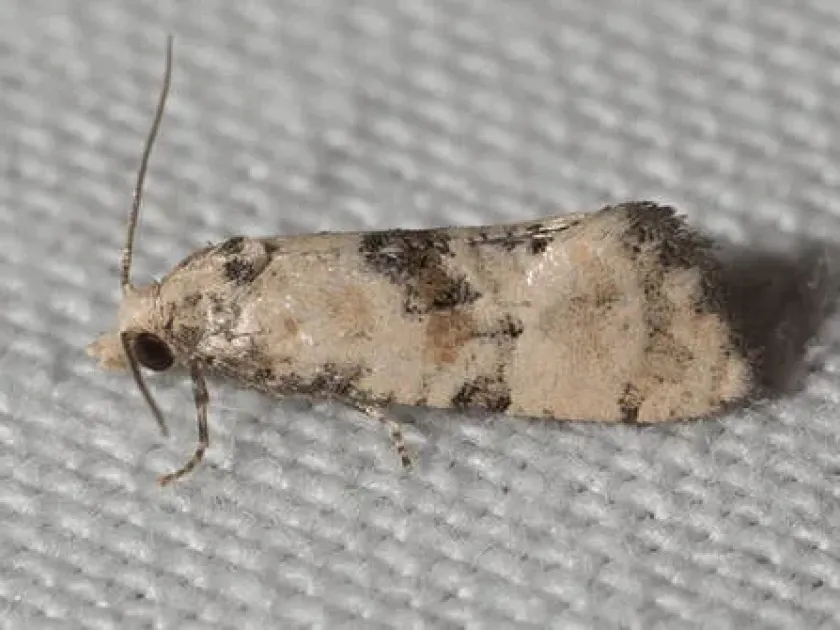
The adult moth is small, typically measuring 10–14 mm in wingspan, with ochre-yellow wings featuring darker, indistinct patterns.
The larvae are about 10–12 mm long, characterized by a pale body and a dark brown or black head capsule, making them identifiable upon inspection.
These pests undergo complete metamorphosis, with pupae usually spending the winter in cocoons within the soil or plant debris.
The moth's biology is closely linked to the phenology of flax, ensuring that larvae have immediate access to food sources upon hatching.
What it damages
The larvae primarily target the reproductive organs of flax, specifically feeding on the developing seeds within the capsules.
By consuming the seeds, the larvae cause direct yield reduction, which can be devastating for commercial linseed and fiber flax production.
Damaged capsules often become sites for secondary infections, such as mold or fungi, which can degrade the quality of the surrounding seeds.
High infestation levels can lead to significant economic losses, sometimes affecting a large portion of the harvest if not managed properly.
The presence of larvae inside the capsules stops the maturation process of the seeds, resulting in shriveled or completely destroyed grain.
When it appears
Adult moths typically emerge during the flowering stage of flax, which is the period when they seek out plants to lay their eggs.
The damaging larval stage occurs from early summer to mid-summer, coinciding with the crucial period of seed capsule formation and filling.
The pest has one to two generations per year, depending on the geographical location and the ambient temperature conditions.
In autumn, fully grown larvae move into the soil to prepare for overwintering, creating sturdy cocoons that protect them from winter frost.
Monitoring should be most intense during the transition from flowering to the early green capsule stage to prevent initial infestation.
Signs of infestation
Fine webbing on the flax flowers or early seed capsules is one of the earliest and most reliable signs of infestation.
Visible entrance holes on the capsules, often accompanied by discolored patches on the hull, indicate that larvae are feeding inside.
The interior of a damaged capsule is usually filled with larval excrement, which serves as a definitive confirmation of the pest's presence.
Plants affected by the flax tortrix may show premature yellowing of the pods while the rest of the plant remains green.
- Presence of silken webs on pods.
- Entrance or exit holes on the capsule wall.
- Frass (excrement) found inside the seed pod.
- Empty or hollowed-out seeds upon examination.
Control measures
Integrated pest management includes strict crop rotation to ensure the pest population does not build up in the same field over successive years.
Deep plowing after the harvest helps disrupt the lifecycle by burying the overwintering pupae and exposing them to natural predators.
Maintaining clean fields free of weeds that could serve as alternative hosts is vital for lowering the initial pest pressure.
Chemical control using registered insecticides should be timed with the peak flight of the adult moths and before the larvae enter the capsules.
Regular scouting of flax fields during the flowering and pod-setting stages is essential for timely intervention and crop protection.
Taxonomy
- Latin name
- Cochylis epilinana
- Order
- Lepidoptera (butterflies)
- Family
- Tortricidae
- EPPO code
- PHAOEP
Discussion
No discussions yet — be the first.