
Cochlostoma
Cochlostoma
Description
How to identify
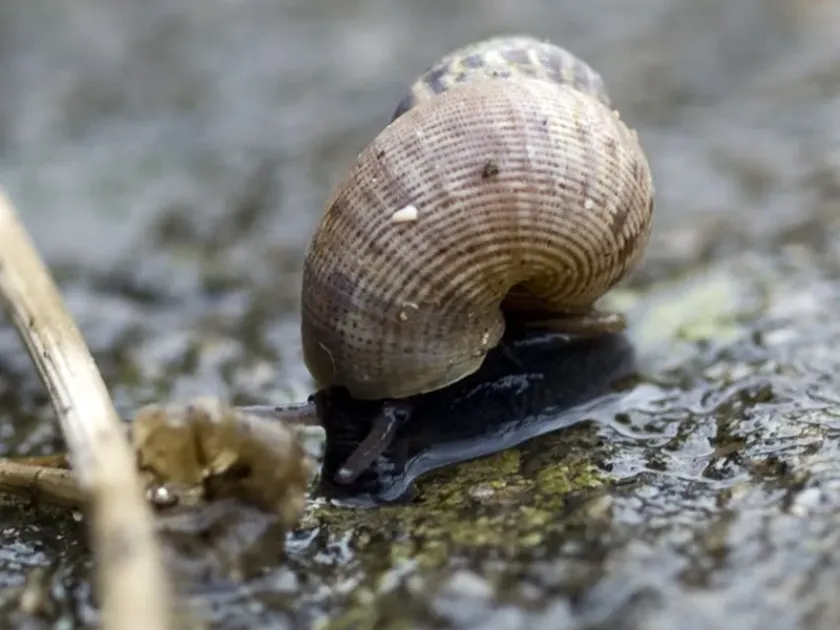
Cochlostoma is a genus of land snails belonging to the family Cochlostomatidae. Their shell has a characteristic conical or elongated tower-like shape, typically ranging from 7 to 12 millimeters in height with a finely ribbed surface.
The shell color varies from grayish-brown to yellowish, providing excellent camouflage against limestone rocks and leaf litter. The snail's body is light-colored, featuring clearly visible tentacles.
These snails primarily inhabit rocky areas, dry slopes, and wooded terrains rich in calcium. They prefer humid environments that are protected from direct sunlight.
Unlike many other land snails, Cochlostoma possess a well-developed operculum, a trapdoor that allows them to tightly seal the shell opening during adverse dry conditions.
Biologically, they belong to the group Prosobranchia, distinguishing them from common garden snails and enabling them to better tolerate environmental fluctuations.
What it damages
Cochlostoma mainly damages young seedlings of ornamental plants, vegetable transplants, and the tender leaves of garden flowers growing near rocky substrates.
The snails scrape away the leaf epidermis using their radula, resulting in holes and weakening the plant. In severe cases, they can destroy the entire growth point of a young crop.
While Cochlostoma are not considered mass field pests, in gardens adjacent to natural habitats, they can significantly reduce the ornamental value of flower beds.
They pose a particular threat during periods of prolonged rain, when the activity of land snails increases significantly, and they migrate to cultivated crops in search of food.
Damaged plant tissues become vulnerable to secondary infections, such as gray mold and other fungal diseases, which thrive in areas of mechanical injury.
When it appears
The activity of Cochlostoma is directly dependent on environmental humidity and temperature. Their most active periods occur during spring and autumn.
During the summer heat or prolonged droughts, the snails enter an estivation state, hiding in deep soil layers or under stones, keeping their shells tightly sealed.
Reproduction occurs under moderate humidity. After eggs are laid in the soil, the larvae develop slowly, reaching sexual maturity after several months.
The peak of damage usually occurs in May-June and September, when the snails' nocturnal activity is at its most intense.
Seasonal migrations of these snails are limited to short distances, meaning damage to plants is typically localized.
Signs of infestation
The first sign of Cochlostoma presence is specific mucus trails on the soil surface or plant stems, although their tracks are often less prominent than those of slugs.
Characteristic uneven feeding on leaf margins or numerous small holes on the underside of leaves indicate the presence of these gastropod pests.
Finding empty or live shells in the root zone, especially near stone garden borders or rock gardens, is a clear signal to inspect the area.
Wilting or stunted growth of seedlings without visible root damage often indicates that the snails are feeding on the tissue near the stem base, disrupting sap flow.
- Searching for individuals at night using a flashlight.
- Identifying damage on young leaves and buds.
- Observing mucus trails on damp soil during morning hours.
Control measures
To effectively manage Cochlostoma, it is recommended to keep the garden clean by promptly removing plant debris where snails might hide during the day.
Creating physical barriers using gravel, crushed eggshells, or wood ash around vulnerable flower beds can hinder snail movement toward plants.
Using special traps filled with beer or fermented juice, buried flush with the soil, helps significantly reduce the population density in the garden.
In cases of heavy infestation, molluscicides based on iron phosphate can be applied, as they are relatively safe for pets and beneficial insects.
Agricultural practices such as regular soil cultivation and controlled root-zone irrigation make the environment less favorable for snail survival.
Taxonomy
- Latin name
- Cochlostoma
- Order
- Molluscs
- Family
- Cyclophoridae
- EPPO code
- CCLMSP
Discussion
No discussions yet — be the first.