
Slippery moss snail
Cochlicopa lubrica
Description
How to identify
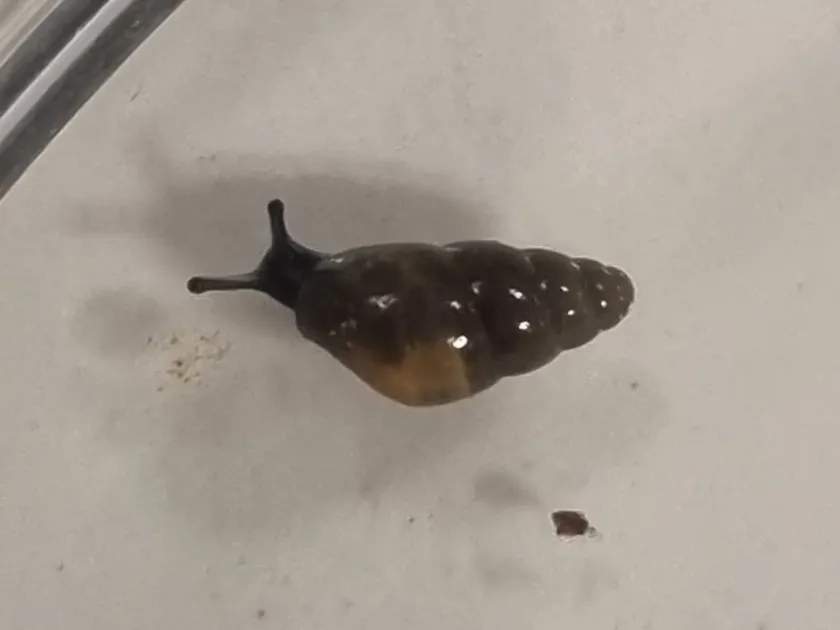
Cochlicopa lubrica, commonly known as the slippery moss snail, is a small land snail species within the Cochlicopidae family. Its shell is elongated, cylindrical, and glossy, making it distinct from other garden snails.
The shell typically measures between 5 and 7 millimeters in height. It has a smooth, horn-colored surface without a visible umbilicus, which is a key identification feature for agricultural professionals scouting fields.
This species is highly adaptable, inhabiting damp leaf litter, soil crevices, and agricultural gardens. Its greyish soft body allows it to blend seamlessly into the substrate, making it hard to spot during the day.
As a member of the Stylommatophora order, it possesses a sophisticated radula, allowing it to feed efficiently on delicate plant tissues. This biological structure is the primary reason why it can cause rapid damage to seedlings.
While often acting as a decomposer in forest ecosystems, the slippery moss snail can transition into a significant pest in agricultural settings when favorable moisture conditions prevail.
What it damages
The snail primarily damages young seedlings, including vegetable crops and ornamental plants. It consumes the epidermis and inner tissues of leaves, often leaving only the veins behind in extreme cases.
Greenhouse environments are particularly vulnerable to this pest, as the controlled humidity levels provide an ideal habitat for the snail to flourish and feed continuously on young greens.
Young transplants are often decimated at the seedling stage, leading to significant yield losses. The loss of the apical meristem or growing tip causes the plant to stunt or perish completely.
Beyond direct feeding, the snail leaves slime trails across foliage. This residue significantly lowers the marketability of crops like lettuce or spinach, rendering them unfit for retail or human consumption.
The damage caused often facilitates secondary infections. Wounds left by the snail become entry points for various fungal and bacterial pathogens that further degrade the plant health.
When it appears
Activity levels of Cochlicopa lubrica are closely tied to moisture and ambient temperature. Spring is the peak period for damage, coinciding with the emergence of young vegetable seedlings.
During dry summer months, these snails retreat deep into the soil or under protective covers like mulch or stones to avoid desiccation. Their metabolism slows down until favorable moisture levels return.
Autumn brings a second wave of activity, especially after rainfall. This period is critical for their reproductive cycle, as they prepare their egg clutches for the overwintering phase.
As hermaphrodites, these snails can reproduce effectively within a single growing season. Eggs are typically deposited in damp soil where they are protected from environmental extremes.
Winter survival is high, as the snails hibernate in soil or organic debris, allowing them to remain a persistent challenge for farmers in subsequent growing seasons.
Signs of infestation
Small, irregular holes in the leaves are the most common sign of an infestation. The edges of these holes often appear ragged and may have a thin coating of dried mucus.
Silvery, glistening trails of dried slime on the soil surface or plant stems are clear indicators of nocturnally active mollusks. These paths are usually visible in the early morning.
Wilting of young seedlings for no apparent reason often indicates that the snails have been feeding on the roots or the stem base just below the soil line.
If you discover numerous small, empty, glossy shells under pots, boards, or thick vegetation, this is a strong sign of a high population density requiring immediate intervention.
Monitoring during the evening hours with a flashlight is the most accurate way to confirm their presence, as they are most active when the light is low and humidity is high.
Control measures
Cultural control is the first line of defense; frequent soil cultivation helps disrupt snail breeding sites and exposes eggs to desiccation and natural predators.
Weed management is essential, as tall vegetation provides the humidity and shade necessary for the survival of the slippery moss snail. Keeping field margins clean helps minimize the local population.
Physical barriers such as crushed eggshells, wood ash, or gravel rings around sensitive seedlings can discourage snails from reaching the plants, although these require maintenance after rain.
Beer traps or bait stations using fermented fruit juice are effective for small-scale monitoring and population reduction without introducing chemical residues into the garden.
Chemical control involving molluscicides, specifically those containing metaldehyde or iron phosphate, should be applied according to label instructions during the peak activity periods in infested areas.
Taxonomy
- Latin name
- Cochlicopa lubrica
- Order
- Molluscs
- Family
- Cochlicopidae
- EPPO code
- KOCHLU
Discussion
No discussions yet — be the first.