
Tanganyika fruit bark beetle
Coccotrypes tanganus
Description
How to identify
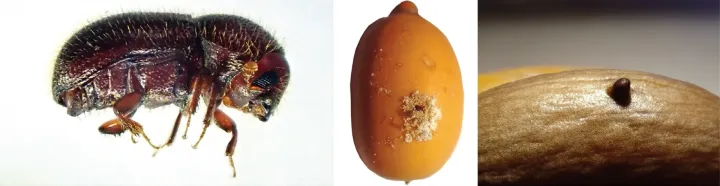
The Tanganyika fruit bark beetle (Coccotrypes tanganus) is a member of the Curculionidae family, specifically the Scolytinae subfamily. It is a tiny insect, typically measuring between 1.5 and 2.5 mm in length.
The beetle possesses a cylindrical body shape and a dark brown to black coloration. The elytra are covered in dense, fine setae, which serves as a key diagnostic feature for identification under magnification.
The larvae are legless, white-colored, and equipped with a yellowish head. They are specifically adapted to tunnel through the hard endosperm of palm seeds and nuts.
Adult beetles are capable of flight, allowing them to disperse and find suitable fruits or seeds for oviposition, making them a significant challenge for plant health inspectors.
This species is frequently identified during port-of-entry inspections on imported seeds, as they can survive long periods within the dry tissues of the host fruits.
What it damages
The primary hosts for this bark beetle are various species of palm trees. The pest specializes in boring into the seeds, causing severe damage to the reproductive structure of the plant.
The most critical impact is the destruction of seeds intended for germination. When the adult beetles bore into the seed, they often reach and consume the embryo, rendering the seed completely non-viable.
Beyond the physical damage caused by tunneling, the entry holes serve as entry points for pathogens. Fungal and bacterial infections often follow, leading to rapid rotting of the seed interior.
In nursery settings, a small population can quickly infest large batches of expensive palm seeds, leading to total loss of viability and significant economic impact on the industry.
Although the beetle is native to tropical and subtropical regions, its ability to survive in stored products makes it a high-risk pest in global trade and distribution networks.
When it appears
The life cycle of Coccotrypes tanganus is closely synchronized with the maturation of its host fruits. In tropical environments, breeding is continuous throughout the year.
The female beetle bores an entrance hole into the fruit and lays eggs directly within the endosperm, creating a small chamber where the larvae will develop and feed.
The entire developmental process from egg to adult occurs within the confined space of the seed. This internal development provides protection from environmental extremes and predators.
After reaching maturity, new adults may remain inside the host for a short period before emerging through new exit holes to seek out new fruits for the next generation.
Mass emergence typically correlates with the period when fruits naturally drop to the ground, where the beetles encounter a fresh supply of material to continue their cycle.
Signs of infestation
The most visible sign of infestation is the presence of tiny, circular exit holes on the surface of the fruit or nut, which are often overlooked due to their small size.
Frass, which appears as fine sawdust or powder, is often found around the entrance holes, indicating recent activity and boring work by the adult beetles.
Dissecting an infested seed reveals a network of irregular tunnels, packed with waste material and larvae or dormant adults depending on the time of inspection.
Seeds infested by the beetle are typically lighter than healthy ones and may show localized darkening or mold growth where the skin integrity has been compromised.
Because the beetles spend most of their life cycle inside the seed, random destructive sampling or X-ray inspection is required for effective pest detection in trade shipments.
Control measures
Rigorous quarantine and inspection protocols at international borders are the primary lines of defense against the introduction of this beetle into new geographical areas.
If an infestation is confirmed in a batch of seeds, fumigation is the most effective treatment, as the gases can penetrate the hard seed coat to kill larvae and adults.
Storage management is crucial; keeping palm seeds in low-humidity and cool environments can significantly inhibit the development and reproductive rate of the beetles.
Sanitation practices, such as the regular removal and destruction of fallen or damaged fruits in nurseries, are essential to minimize available breeding sites and reduce population pressure.
Heavily infested consignments should be rejected and destroyed through incineration to ensure that the pest does not escape into the local environment.
Taxonomy
- Latin name
- Coccotrypes tanganus
- Order
- Coleoptera (beetles)
- Family
- Curculionidae
- EPPO code
- COCOTA
Discussion
No discussions yet — be the first.