
Palm fruit borer
Coccotrypes insularis
Description
How to identify
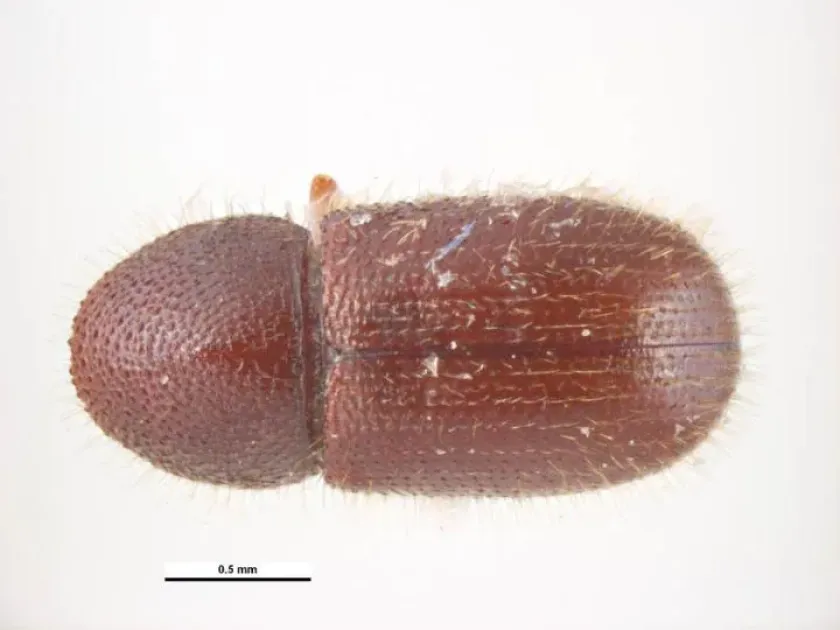
The palm fruit borer (Coccotrypes insularis) is a small beetle belonging to the Scolytinae subfamily within the Curculionidae family, commonly known as bark beetles.
Adult beetles are typically 2 to 3 millimeters long, characterized by a cylindrical, dark-colored body adapted for boring into tough plant materials like seeds and fruit tissues.
The larvae are small, legless, cream-colored grubs with a C-shaped posture and a hardened head capsule, specifically evolved to consume the interior of seeds.
Identification is usually confirmed by finding the insects within the fruits or seeds of host palms, as their external morphology is very similar to other related species.
These insects are capable of flight, allowing them to locate suitable host fruits across plantations and greenhouses throughout the growing season.
What it damages
The palm fruit borer primarily targets the seeds and fruits of various palm species, rendering the seeds unviable for propagation in nurseries and breeding programs.
Damage occurs when adults bore through the fruit wall to reach the seed, followed by larval feeding which hollows out the endosperm, causing the seed to perish.
In commercial palm cultivation, the pest can cause significant yield loss, as infested fruits often drop prematurely and are unsuitable for the market.
The presence of the borer often invites secondary pathogens, such as fungi or bacteria, which exacerbate the rot and further diminish the quality of the harvest.
International trade of palm seeds is strictly regulated to prevent the spread of this pest, as it can easily hide inside seemingly healthy, dormant seeds.
Signs of infestation
The most reliable sign of an infestation is the presence of tiny, circular exit or entrance holes on the surface of the palm fruit or the outer shell of the seed.
Signs of frass (fine, sawdust-like powder) may be visible around the entrance holes, indicating active feeding by larvae inside the fruit or seed tissue.
Infested fruits may display premature ripening or yellowing and are prone to dropping from the tree earlier than healthy, uninfested fruits.
Internally, the fruit displays a network of galleries or tunnels filled with debris and excrement, confirming the activity of the borer colony.
A hollow sound or lack of weight in the seed is often a strong indicator that the endosperm has been largely consumed by the developing larvae.
Control measures
Strict phytosanitary inspections and quarantine measures are essential for all imported palm fruits and seeds to prevent the introduction of the pest into new regions.
Sanitation is a critical management practice: all fallen fruits should be collected and destroyed immediately to break the lifecycle of the beetle.
Fumigation of infested seeds using specialized chemicals in airtight chambers is the most effective method for killing larvae inside the hard shells of seeds.
In professional greenhouse settings, systemic insecticides may provide some protection, but their application must be managed carefully to avoid harming beneficial fauna.
Routine monitoring using visual inspections for entry holes and trapping adults during their flight periods can significantly help in managing populations early.
Taxonomy
- Latin name
- Coccotrypes insularis
- Order
- Coleoptera (beetles)
- Family
- Curculionidae
- EPPO code
- COCOIN
Discussion
No discussions yet — be the first.