
Coccotrypes
Coccotrypes
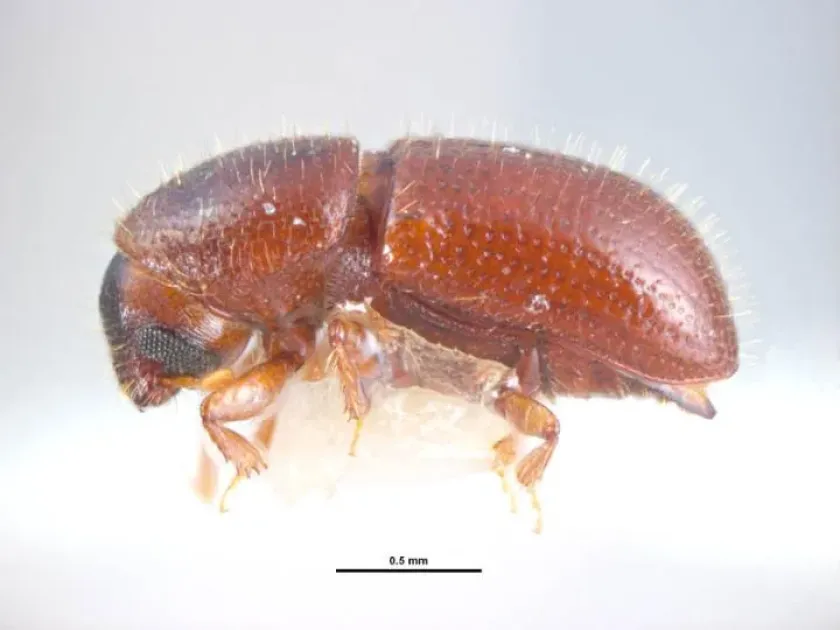
Description
How to identify
Coccotrypes is a genus of small beetles belonging to the subfamily Scolytinae (bark beetles) within the family Curculionidae. These insects are typically cylindrical in shape, ranging from 1 to 3 mm in length, and vary in color from dark brown to black.
These beetles are highly specialized, having evolved to develop entirely within the hard tissues of fruits, nuts, and seeds. The adults are capable of flight, allowing them to locate suitable hosts for reproduction across wide areas.
The larvae are legless, white in color, and possess a distinct dark head capsule. They spend their entire developmental period inside the seed, feeding on the endosperm, which makes them difficult to observe from the exterior.
The species' life cycle is heavily influenced by ambient temperature and humidity. While they are primarily tropical, they can easily thrive in greenhouses and warehouses where favorable conditions for breeding are maintained year-round.
Unlike many other bark beetles that target the cambium of trees, Coccotrypes are primarily seed-borers, showcasing a unique evolutionary adaptation to colonize hardened plant reproductive structures.
What it damages
The primary economic impact of Coccotrypes is the destruction of seeds and fruits. They are well-known pests of coffee beans, palm seeds, and various fruit pits, posing a major threat to both seed production and agricultural stocks.
The larvae consume the embryo and nutrient reserves of the seed, completely destroying its viability. This renders the seeds useless for planting and drastically lowers the commercial value of the harvested produce.
Because they bore into the seeds, these pests are often transported globally through international trade. Hidden inside the seeds, they bypass visual inspection until the damage is already significant upon arrival at the destination.
The tunnels created by the beetles provide entry points for secondary pathogens, such as fungi and bacteria. This often results in rot and mold development, further compromising the quality of the surrounding fruit.
High infestation rates can lead to the total loss of a harvest or planting material, necessitating rigorous quarantine procedures in affected agricultural zones.
When it appears
In tropical climates, Coccotrypes remains active throughout the year, with overlapping generations that ensure a constant threat to available seed sources. Breeding is restricted only by the availability of suitable host material.
Within climate-controlled storage facilities, the seasonal cycle is effectively eliminated. The beetles continue to thrive and reproduce as long as the internal moisture and temperature remain within their comfort range.
Adult migration typically peaks during the fruiting season of host plants. The beetles emerge from their original host to search for new, fresh fruits and seeds to establish their next generation of galleries.
In cooler climates, these insects are limited by temperature; however, they can easily overwinter inside infested seeds or dried fruit, which allows them to survive until favorable conditions return.
Managing the timing of the harvest is crucial, as delayed harvesting often provides the beetle with more time to penetrate the mature seeds and establish large colonies.
Signs of infestation
The most visible sign of an infestation is the presence of tiny, perfectly round entry holes on the surface of the fruit or seed. These holes are usually less than 1 mm in diameter.
Frass or 'boring dust,' which consists of pulverized seed particles and waste, is often found around the base of infested fruits or scattered underneath the storage bins where the insects are active.
Internally, the seed structure will be completely hollowed out or filled with a powdery residue. Careful dissection of the fruit will reveal intricate galleries where the larvae have been feeding.
Premature fruit drop in plantations is a strong indicator of an internal infestation. Since the seeds are damaged at their core, the plant may abort the fruit before it fully matures.
- Circular entry/exit holes on the seed surface.
- Accumulation of boring dust or frass around the host.
- Internal galleries filled with debris.
- Decreased seed weight and loss of germination potential.
Control measures
Strict quarantine measures are the most effective method to prevent the spread of Coccotrypes across borders. Rigorous inspection of imported agricultural goods is essential for early detection.
Fumigation is the standard treatment for infested warehouses and storage facilities. Sealed chambers allow for the use of gases that can penetrate the hard outer shells of the seeds to eliminate the pest.
In the field, consistent removal and destruction of fallen fruit are vital. By eliminating the 'bridge' from the ground back to the tree, farmers can significantly lower the overall population pressure.
Maintaining low temperatures and reduced humidity in seed storage areas creates an unfavorable environment for the beetles, effectively suppressing their reproductive rates.
Chemical control using systemic insecticides can be applied during peak flight periods, though it must be balanced with the requirements for food safety and the pre-harvest intervals for specific crops.
Taxonomy
- Latin name
- Coccotrypes
- Order
- Coleoptera (beetles)
- Family
- Curculionidae
- EPPO code
- COCOSP
Discussion
No discussions yet — be the first.