
Plum gouger
Coccotorus scutellaris
Description
How to identify
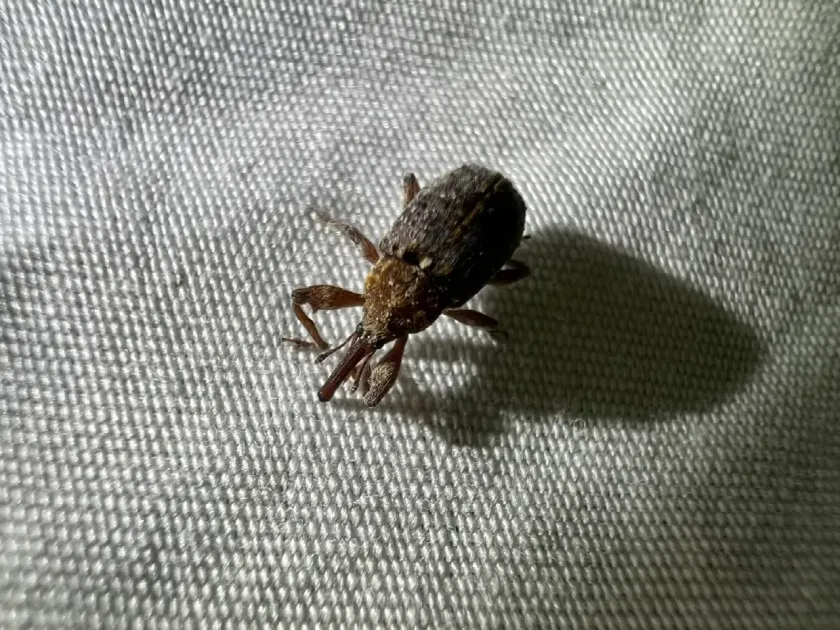
The plum gouger (Coccotorus scutellaris) is a member of the Curculionidae family, commonly known as a significant pest of stone fruits. Adult beetles are approximately 6 mm long with a mottled greyish-brown appearance, helping them blend into tree bark.
The most distinctive morphological feature of this insect is its long, slender snout (rostrum), which is used for both feeding and drilling holes into fruit for oviposition. The body is covered with dense, hair-like scales.
Larvae are legless, C-shaped grubs with creamy white bodies and distinct brownish heads. They are rarely seen outside of the fruit pits where they develop during the growing season.
Adults overwinter in protected areas, such as leaf litter, soil cracks, or deep crevices in the bark of fruit trees. They emerge in early spring as temperatures rise, signaling the start of the infestation cycle.
Understanding their life cycle is crucial for orchard management, as the timing of control measures must align with the emergence of the beetles from their winter dormancy.
What it damages
The primary hosts of the plum gouger are plums, although they frequently attack other stone fruits like apricots, peaches, and cherries. The damage is cumulative throughout the fruit development period.
Adults cause initial damage by feeding on flower buds and emerging foliage, often leaving small punctures that can cause buds to wither and drop before they have a chance to bloom.
The most severe damage occurs when the female oviposits inside a developing fruit. The larva hatches and bores directly into the soft pit (stone) of the fruit, feeding on the kernel, which destroys the seed's viability.
Infested fruit typically becomes deformed, ripens unevenly, and often drops prematurely. These damaged fruits are largely unsaleable and suffer from significant losses in both quality and quantity.
Openings created by larvae or adults in the skin of the fruit provide easy access for secondary pathogens, such as brown rot (Monilinia spp.), which can devastate an entire crop if left unchecked.
When it appears
Activity begins in early spring when air temperatures reach approximately 10-12°C. Beetles move from their hibernation sites into the canopy of the host trees, synchronizing their emergence with bud development.
During the blossom period, the beetles are highly active, feeding on pollen and floral tissues. Egg-laying occurs shortly after the fruit set when the pit is still soft enough for the female to drill.
The larval stage is spent entirely inside the fruit pit. This hidden development phase lasts for several weeks, during which the larvae consume the interior of the pit until it is completely hollowed out.
New generation adults emerge during mid-to-late summer. They chew their way out of the fruit, leaving a characteristic round exit hole, and feed briefly on the fruit surface before seeking overwintering sites.
As autumn approaches, the beetles become less active and eventually retreat into their winter dormancy locations, where they remain until the following spring cycle repeats.
Signs of infestation
The earliest signs of infestation are small, dark punctures on the surface of young fruit. These are often accompanied by droplets of sap or gumming, which are the tree's reaction to the feeding and egg-laying punctures.
Premature fruit drop is a reliable indicator that an infestation is present. If dropped fruit is collected and cut open, the presence of the cream-colored larvae inside the pit confirms the identity of the pest.
In early spring, look for small, ragged holes in flower petals or emerging buds. If adult beetles are present in high numbers, they can sometimes be observed clinging to the underside of leaves or branches.
Fruits that have been infested often exhibit distorted growth or uneven coloration. These fruits tend to ripen early and may feel hollow or soft to the touch compared to healthy ones.
Exit holes found on mature, fallen fruit indicate that the generation has completed its development and the adult beetles have already emerged, marking the end of the active infestation period for that season.
Control measures
Cultural control is a primary method for managing this pest. Promptly collecting and destroying all dropped fruit prevents larvae from completing their life cycle and returning to the soil to hibernate.
For smaller orchards, mechanical control via the "jarring" method is effective. By spreading a sheet under the tree and shaking the branches during cool morning hours, adults can be dislodged and collected for disposal.
Chemical control should be targeted during the period of beetle migration and pre-bloom feeding. It is essential to use insecticides that have minimal impact on bees and other beneficial pollinators during the flowering stage.
- Maintaining clean orchard floors by removing weeds and debris.
- Applying reflective or sticky barriers on tree trunks to trap emerging adults.
- Encouraging natural predators like birds and parasitic wasps.
- Thinning infested fruit early to reduce the local population density.
- Post-harvest orchard sanitation to eliminate wintering grounds.
Implementing an integrated pest management (IPM) program that combines orchard sanitation, mechanical intervention, and precise chemical timing will significantly reduce losses from the plum gouger.
Taxonomy
- Latin name
- Coccotorus scutellaris
- Order
- Coleoptera (beetles)
- Family
- Curculionidae
- EPPO code
- ANTHSC
Discussion
No discussions yet — be the first.