
Plum curculio
Coccotorus
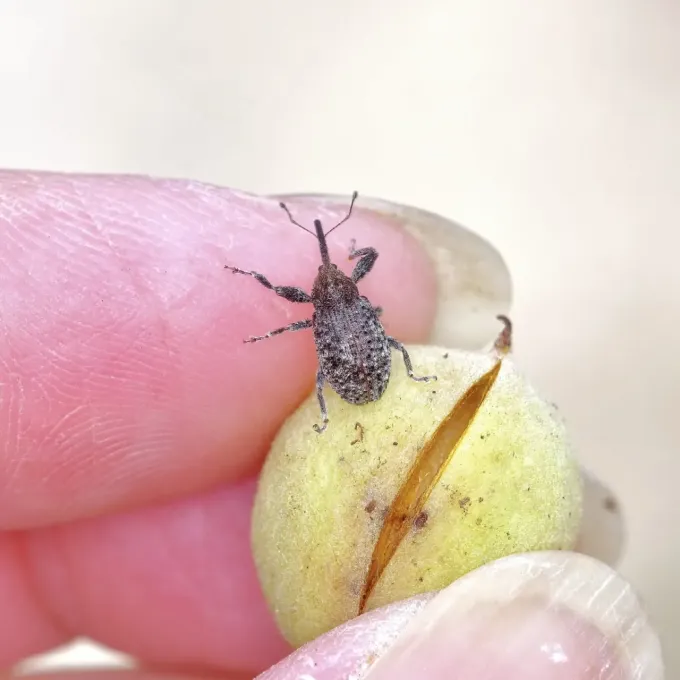
Description
How to identify
The plum curculio (Coccotorus scutellaris) is a destructive beetle belonging to the Curculionidae family. Adult beetles are characterized by their elongated snouts and a body length ranging from 5 to 7 mm. Their color is typically dark brown or black, often with grey or yellowish patches of hair across the elytra.
The larvae are legless, C-shaped grubs with a distinct, hardened brown head capsule. They grow to approximately 8 mm in length. The pupal stage typically takes place within the soil, where the insects remain until they emerge as new adults in the following season.
What it damages
This pest is a significant threat to stone fruits, primarily targeting plums, but also impacting apricots, cherries, and peaches. Adult beetles feed on emerging buds and young leaves, causing structural damage that can stunt the growth of the canopy and weaken the tree.
The most severe damage is caused by the larvae, which bore into the fruit to feed on the pulp and the developing pit. This feeding activity leads to fruit malformation, premature ripening, and heavy fruit drop. An infested crop is usually unmarketable due to internal decay and the presence of larval waste.
When it appears
Adult beetles overwinter in leaf litter or soil and emerge in early spring when temperatures exceed 10-12 degrees Celsius. During this period, they engage in spring feeding, which is essential for sexual maturation before mating commences.
Egg-laying begins shortly after fruit set. The female uses her snout to make a crescent-shaped incision in the fruit, placing an egg inside. After hatching, the larvae spend several weeks developing inside the fruit before exiting to drop into the soil for pupation, completing the life cycle.
Signs of infestation
Early identification is key to orchard health. Gardeners often notice small puncture wounds on buds and young fruit, which may be accompanied by sap bleeding. These visual signs indicate that female beetles are active in the canopy.
- Small, dark crescent-shaped scars on young fruit.
- Significant early-season fruit drop in late spring.
- Deformed or pitted fruit appearance.
- Presence of exit holes in fallen fruit.
Control measures
Cultural control is a primary management strategy. Keeping the orchard floor clean by removing debris and regular cultivation of the soil under the tree canopy helps destroy pupating larvae and reduces the survival rate of the pest population for the next season.
Physical removal is effective for small-scale operations. Shaking the branches over a tarp during the early morning hours, when the beetles are cold-stunned and less active, allows for the manual collection and destruction of the adults.
Chemical control focuses on timely applications of insecticides. Treatments should be timed to occur before bloom and immediately after petal fall to target adults before they can lay eggs in the new fruit set. Always follow local safety guidelines for pesticide use.
Sanitation remains the most critical preventative measure. By regularly collecting and disposing of all dropped fruit (fallen fruit management), growers can prevent larvae from entering the soil to pupate, effectively breaking the reproductive cycle of the plum curculio.
Taxonomy
- Latin name
- Coccotorus
- Order
- Coleoptera (beetles)
- Family
- Curculionidae
- EPPO code
- COCTSP
Discussion
No discussions yet — be the first.