
Camphor shoot borer
Cnestus mutilatus
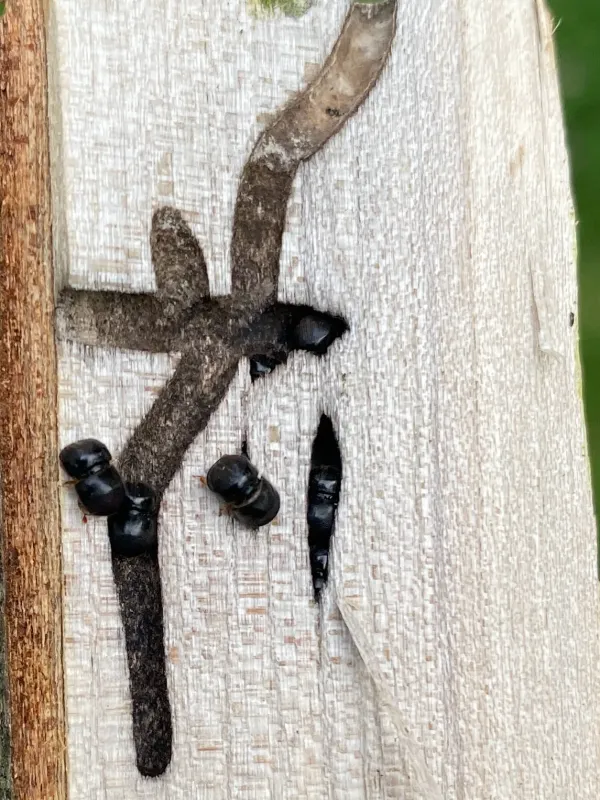
Description
How to identify
The Camphor shoot borer (Cnestus mutilatus) is a small beetle belonging to the Curculionidae family and the Scolytinae subfamily. Adults are cylindrical, about 3 mm long, and typically dark brown or black in color.
This species is a well-known ambrosia beetle, meaning it lives in a symbiotic relationship with fungi which they carry in specialized structures known as mycangia.
Adult females are the primary colonizers; they are highly mobile and fly to new hosts, where they bore into the xylem of trees to establish galleries.
Larvae are legless, white grubs that live within these tunnels, feeding not directly on the wood, but on the fungal spores cultivated by the parent female on the tunnel walls.
Because they spend most of their life cycle inside the wood, adults are difficult to observe unless they are in the dispersal phase or when exiting the galleries.
What it damages
This beetle is an aggressive polyphagous pest capable of infesting a wide range of woody hosts, including many economically important fruit and ornamental species.
Primary targets include persimmons, peaches, figs, citrus, as well as various hardwoods like maples, oaks, and other landscape trees.
The damage is particularly severe in nurseries and young plantations, where the tunneling can quickly cause limb dieback or the death of the entire plant.
In mature trees, the tunnels weaken the vascular structure, making the plant more susceptible to wind damage, drought, and secondary infections by pathogens.
The introduction of ambrosia fungi into the sapwood can also disrupt water transport, leading to localized wilting and general physiological decline.
When it appears
The activity of the Camphor shoot borer is largely temperature-dependent, typically occurring from late spring through early autumn.
In warmer climates, the species can complete multiple generations per year, leading to rapid population growth and increased infestation pressure.
The beetles overwinter inside their galleries within the wood, which provides significant protection against low temperatures and harsh winter conditions.
Mass dispersal and new colonization events often coincide with peak temperatures and favorable humidity levels, which stimulate beetle flight.
Environmental stress factors, such as drought, often act as triggers, making trees more attractive to host-seeking females.
Signs of infestation
The most characteristic sign of an infestation is the presence of small, round entry holes on the bark, sometimes accompanied by fine frass or "sawdust" protruding from the openings.
Sap exudation or gumming on the bark surface is a common host defense reaction, often indicating the site where the beetle attempted to bore into the wood.
Yellowing, flagging, or premature leaf drop on specific branches is a strong indicator that the vascular system is being compromised by the beetle's galleries.
If the bark is carefully peeled away, the galleries appear as systematic, branching tunnels that extend deep into the woody tissues.
A dark, discolored zone around the tunnels usually signifies the presence of the symbiotic ambrosia fungus, which is essential for larval development.
Control measures
Management of the Camphor shoot borer is challenging because larvae and adults are protected by the wood throughout their developmental stages.
- Sanitation: Regularly inspect trees and prune/destroy infested branches to reduce local beetle populations.
- Monitoring: Deploy pheromone-based traps to track beetle flight periods and determine the optimal timing for interventions.
- Cultural Practices: Maintain tree vigor through proper irrigation and fertilization, as healthy trees are less attractive to colonizing females.
- Chemical Control: Use systemic insecticides with preventive action applied during the peak flight season to deter beetles from entering.
- Exclusion: In nurseries, protective netting or specialized trunk wraps may prevent female beetles from accessing the bark surface.
Taxonomy
- Latin name
- Cnestus mutilatus
- Order
- Coleoptera (beetles)
- Family
- Curculionidae
- EPPO code
- XYLSMU
Discussion
No discussions yet — be the first.