
Grey flax tortrix
Cnephasia stephensiana
Description
How to identify
The grey flax tortrix, Cnephasia stephensiana, is a moth species belonging to the Tortricidae family, known for its status as an agricultural pest.
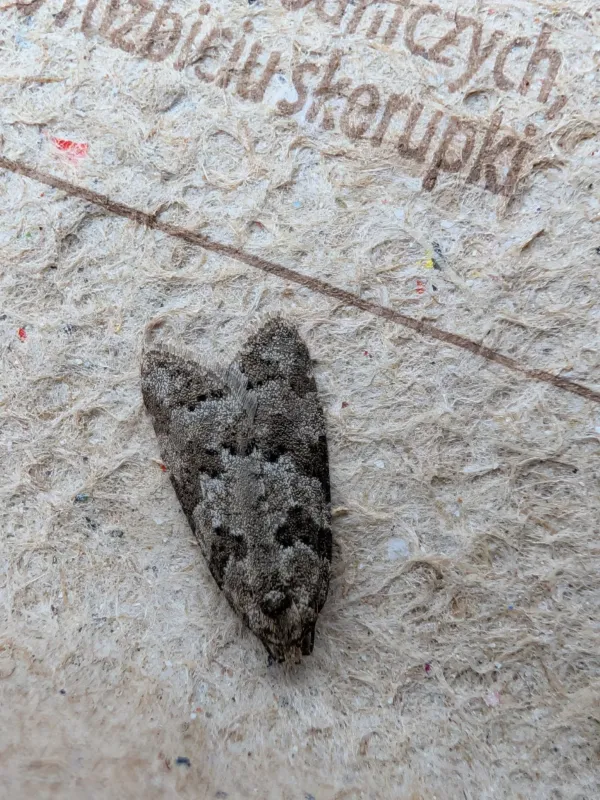
Adult moths feature a wingspan of approximately 18–22 mm, with forewings displaying a mottled greyish-brown pattern of dark lines and spots.
Larvae are typically 15–18 mm long when fully grown, presenting a dirty yellow or greenish-grey body with a distinct dark, often black, head capsule.
This species is univoltine, meaning it produces only one generation per year, with the first-instar larvae overwintering in silk cocoons.
Identification is often based on the moth's appearance and the characteristic webbing produced by larvae on their host plants.
What it damages
While polyphagous, the larvae are particularly damaging to flax Linum usitatissimum crops throughout their distribution range.
Larvae feed on leaves and apical buds, which stunts the plant growth and significantly reduces both yield and fiber quality.
Besides flax, the pest may affect various broad-leaved weeds, legumes, and umbelliferous plants present in the agricultural ecosystem.
Feeding damage leads to leaf skeletonization, which reduces the plant's photosynthetic capacity and weakens its general vigor.
Severe infestations can lead to substantial economic losses, especially when the pest density reaches a critical threshold in flax fields.
When it appears
Adult moth activity typically begins in late June and lasts through July, coinciding with the rapid vegetative growth phase of flax.
Females lay eggs on the upper surface of host plant leaves, which hatch into young larvae ready to commence feeding.
The larval stage lasts throughout the summer months, during which they grow through several instars within their protective webs.
By late summer, the larvae prepare for winter diapause, moving into sheltered areas such as bark crevices or soil debris.
Weather conditions significantly influence the timing of emergence and the survival rates of the overwintering population.
Signs of infestation
The most reliable sign of infection is the presence of leaves rolled or bundled together and secured with thin, white silk webbing.
Within these silk nests, larvae consume the leaf tissue, leaving behind visible damage and frass (waste material) inside the structures.
Visual inspection of the field reveals deformed plant tops and patches of yellowed or skeletonized foliage among healthy plants.
Infected crops often show signs of stunted growth, and in cases of heavy infestation, the entire apical part of the plant may die.
Scouting for these specific webbing patterns is the most effective way to detect the presence of the pest before significant damage occurs.
Control measures
Effective management begins with strict field sanitation to remove weeds that serve as alternative hosts for the moth.
Proper crop rotation practices help break the life cycle of the pest, preventing population buildup in consecutive planting seasons.
Chemical control involving systemic insecticides is applied when population monitoring indicates that threshold levels have been exceeded.
Applications should be timed to hit the larval stage before the web formation becomes too dense, providing better spray coverage.
- Deep plowing in autumn to bury overwintering pupae and larvae.
- Monitoring flight patterns using pheromone-based trap lures.
- Biological control measures, including beneficial parasitic wasps.
Taxonomy
- Latin name
- Cnephasia stephensiana
- Order
- Lepidoptera (butterflies)
- Family
- Tortricidae
- EPPO code
- CNEPST
Discussion
No discussions yet — be the first.