
Cnephasia pumicana
Cnephasia pumicana
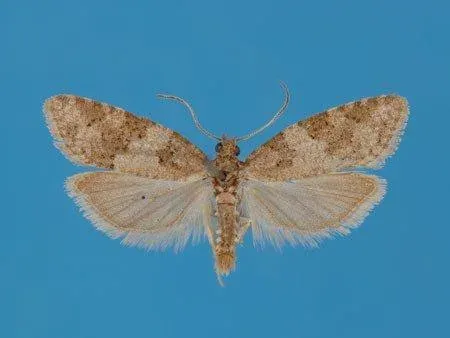
Description
How to identify
Cnephasia pumicana is a species of moth belonging to the family Tortricidae. The adult moth has a wingspan of approximately 15–20 mm.
The forewings are typically mottled grey-brown, providing excellent camouflage against the stems and leaves of host cereal plants.
The larvae, or caterpillars, reach lengths of 12–15 mm and are characterized by a light yellow to greenish body with a dark, sclerotized head.
Pupation occurs within a silken cocoon hidden inside rolled leaves or other protected areas on the plant stems.
This insect undergoes complete metamorphosis, with the larval stage being the primary cause of direct damage to agricultural crops.
What it damages
The pest primarily infests various cereal crops, including winter and spring wheat, barley, rye, and occasionally oats.
Wild grasses often serve as secondary hosts, allowing the pest to persist in the landscape even in the absence of cultivated grain.
Larvae consume leaf tissue and can damage the developing ear of the plant, which negatively impacts yield quality and quantity.
Heavy infestations reduce the photosynthetic capacity of the plants, leading to weakened stalks and stunted growth throughout the field.
Significant economic losses can occur in years with high pest pressure, particularly if the infestation coincides with the booting stage of the crop.
When it appears
Adult moths typically emerge in late spring or early summer, timing their appearance with the peak vegetative growth of cereals.
Eggs are laid on stems or leaves, and the resulting larvae become active shortly thereafter to begin feeding on young tissues.
The most damaging larval activity occurs during the jointing and heading stages of the cereal plants, when they are most susceptible.
The life cycle is usually completed by late summer, with pupation occurring just before the larvae finalize their development.
Environmental factors such as temperature and humidity significantly influence the survival rate of the larvae during the growing season.
Signs of infestation
The most visible symptom of an infestation is the presence of rolled or folded leaves held together by thin, silken webbing.
Feeding marks appear as irregular holes or longitudinal skeletonized sections on the leaf blades, caused by larvae consuming the green tissue.
- Wilting of the flag leaf or central shoot.
- Presence of silken webs inside rolled leaves.
- Damaged or underdeveloped grain ears inside the sheath.
In cases of severe infestation, the crop may appear patchy or chlorotic due to extensive defoliation by the feeding caterpillars.
Since larvae remain hidden inside leaves, regular scouting is essential for early detection before significant damage occurs.
Control measures
Proper crop rotation is the fundamental preventative measure to disrupt the life cycle of Cnephasia pumicana and prevent population buildup.
Deep plowing or stubble cultivation post-harvest helps destroy overwintering stages hidden in soil or plant debris.
Chemical control via systemic insecticides should be applied only when scouting confirms that pest levels exceed economic thresholds.
Effective weed management, especially targeting wild grasses, reduces the habitat available for the pest to survive between seasons.
Integrated Pest Management (IPM) practices, including the use of biological control agents, should be prioritized to maintain long-term sustainability.
Taxonomy
- Latin name
- Cnephasia pumicana
- Order
- Lepidoptera (butterflies)
- Family
- Tortricidae
- EPPO code
- CNEPPU
Discussion
No discussions yet — be the first.