
Cnephasia pasiuana
Cnephasia pasiuana
Description
How to identify
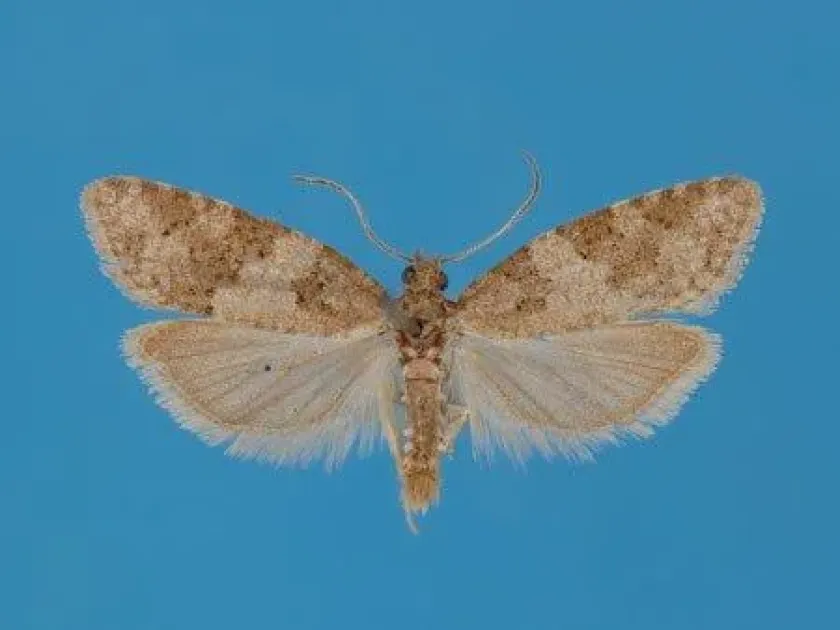
Cnephasia pasiuana is a species of moth belonging to the family Tortricidae. The adult moth has a wingspan of 14–22 mm, with greyish-brown forewings featuring indistinct darker markings that provide effective camouflage on plant stems and bark.
The life cycle consists of the egg, larval (caterpillar), pupal, and adult stages. The species overwinters primarily in the egg stage, which are laid on various plant surfaces, including tree bark and crop residues.
The larvae, which grow up to 20 mm, are greyish-green with a dark head. They are known for being highly mobile and typically hide within rolled leaves, held together by silk webbing for protection.
As a polyphagous insect, Cnephasia pasiuana can adapt to a variety of hosts. Its high ecological plasticity allows it to thrive in diverse agricultural environments, from cereal fields to orchards.
Temperature is the main driver of its development. Warm spring weather triggers the hatching of larvae, and the activity of adult moths usually peaks during the late spring and early summer months.
What it damages
This pest affects a wide range of crops, including cereals, legumes, and various vegetables. The damage caused by larvae can be significant, particularly when they target the growing points of young plants.
In cereal crops, larvae often bore into the stems, destroying the primary meristem, which leads to stunted growth, wilting, and in severe cases, the death of the main shoot.
Orchards and berry plantations also suffer, as the caterpillars feed on flower buds and emerging leaves. This reduces fruit set and can lead to lower overall yields and poorer quality produce.
Weed infestation plays a crucial role in the pest's life cycle. Many weed species within the Asteraceae family serve as secondary hosts, allowing the population to build up before migrating to commercial crops.
Indirect damage occurs when feeding sites become infected with secondary pathogens. The wounds created by larvae allow fungi and bacteria to enter the plant tissue, causing further necrosis.
When it appears
Adult moths typically fly from May to June. During this window, they mate and lay eggs, which will remain dormant throughout the winter until the following spring season.
The larval stage is the most active during the spring. As temperatures rise, larvae begin to feed, going through several instars while constantly increasing their consumption of plant tissue.
Maximum damage is usually observed during the late spring, which coincides with the rapid growth phase of many crops. This period is critical for monitoring the population density of the larvae.
Pupation takes place within the protection of silk-spun leaves or crevices in plant debris. This stage lasts for about two to three weeks before the next generation of adults emerges.
Overwintering survival is high due to the cold-resistant nature of the eggs. This ensures that the population can persist even after harsh winters, ready to emerge at the first sign of spring warmth.
Signs of infestation
The most visible sign of infestation is the presence of rolled or curled leaves fastened together with silk threads. Inspecting the inside of these leaf structures often reveals the presence of larvae.
In cereal fields, a common symptom is the yellowing or drying of the central leaf, often referred to as "dead heart." This is a direct result of the larva feeding on the stem's interior.
Larvae feeding on buds cause them to wither and fall off prematurely. Skeletonized leaves, where only the veins remain, indicate the presence of younger, more numerous larval populations.
The presence of fine webbing on shoots and flower clusters is a clear indicator of tortricid activity. In humid conditions, this webbing can catch debris and promote fungal growth.
- Curled or deformed leaves held by webbing.
- Wilting of central shoots in cereals.
- Skeletonization of leaf blades.
- Premature loss of flower buds and blossoms.
Control measures
The most effective management strategy is an integrated approach, starting with field sanitation. Removing weeds that act as host plants significantly reduces the pest population.
Deep autumn ploughing is highly recommended as it buries crop residues and destroys overwintering eggs, disrupting the lifecycle of the moth before the next growing season.
Chemical control should be timed to coincide with the period of mass larval hatching. Using insecticides with systemic properties can provide better control since larvae are often protected inside leaf folds.
Monitoring using pheromone traps is an essential practice for large-scale farming. It allows agronomists to determine the precise timing for intervention, optimizing pesticide use.
Biological control, including the use of entomopathogenic fungi or Bacillus thuringiensis, is becoming increasingly popular. These methods offer a safer alternative for the environment while effectively reducing pest numbers.
Taxonomy
- Latin name
- Cnephasia pasiuana
- Order
- Lepidoptera (butterflies)
- Family
- Tortricidae
- EPPO code
- CNEPPS
Discussion
No discussions yet — be the first.