
Omnivorous leaf tier
Cnephasia longana
Description
How to identify
The Omnivorous leaf tier (Cnephasia longana) belongs to the order Lepidoptera and the family Tortricidae. It is a moth species recognized for its adaptability to various host plants.
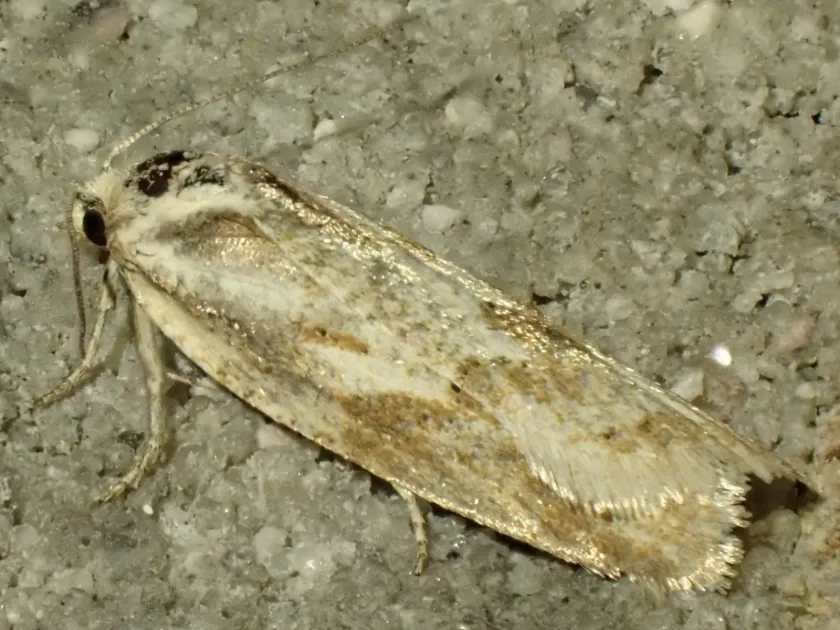
The adult moth has a wingspan of approximately 18–22 mm. The forewings are typically grayish-brown with darker irregular markings, providing camouflage against bark and plant foliage.
The larvae, or caterpillars, are about 15–18 mm long when fully grown. They usually appear dirty white or greenish-gray with a dark-colored head and a smooth, cylindrical body.
Pupation occurs within a silken nest constructed by the larva, often hidden between leaves or inside fruit clusters, making them difficult to spot during routine inspections.
The life cycle encompasses four stages: egg, larva, pupa, and adult, with the larval stage being the most active period for feeding and causing damage to crops.
What it damages
As a polyphagous pest, this species attacks a wide variety of crops, including strawberries, hops, legumes, and several vegetable species grown in open fields or greenhouses.
The larvae primarily feed on new growth, including terminal buds, young leaves, and flowers. By tying these parts together with silk, they protect themselves while consuming the plant tissue.
Feeding on flowers and developing fruit leads to significant losses in yield and quality, often resulting in deformed or unmarketable agricultural produce.
In nurseries, the pest can cause severe stunting in young plants by consuming the apical meristem, which destroys the plant's natural growth habit.
Large infestations can lead to substantial economic losses, as the damaged plant parts become susceptible to secondary fungal infections and tissue decay.
When it appears
Adult moths typically emerge in late spring and early summer, actively seeking suitable host plants to lay eggs on leaves or woody stems.
Larvae often overwinter in protected sites, such as bark crevices or dry leaf debris, entering a state of dormancy until environmental conditions improve.
Active feeding commences in early spring when the larvae migrate to emerging buds and unfolding leaves to begin their rapid development cycle.
The peak period of damage occurs during the vegetative stage of the host plant, coinciding with the availability of lush, nutrient-rich growth.
Environmental variables, particularly temperature and humidity, play a crucial role in the duration of each life stage and the timing of moth emergence.
Signs of infestation
The most diagnostic sign is the presence of tightly curled leaves or leaves webbed together with fine silk threads, forming protective nests for the larvae.
Small holes, skeletonized leaves, or missing petals are classic indicators of larval feeding activity occurring within these hidden environments.
Terminal shoots may become twisted or fail to elongate properly due to the destruction of the growing point by the feeding caterpillar.
Droppings (frass) left by the larvae inside the webbed nests are a clear indicator of a recent or ongoing infestation within the foliage.
Premature wilting or drying of buds and small fruits is often observed, which is caused by the disruption of vascular tissues by the larvae.
Control measures
Effective management includes monitoring populations using pheromone traps to determine the optimal timing for intervention against moth mating cycles.
Biological controls, such as the application of Bacillus thuringiensis or the introduction of parasitic wasps, are highly recommended for environmentally friendly suppression.
Cultural practices, such as removing infested plant parts and clearing weeds that act as alternate hosts, significantly reduce the resident pest population.
Chemical intervention should be reserved for high-threshold outbreaks and should use selective insecticides that minimize impact on beneficial pollinators and predators.
- Regular monitoring of terminal growth for webbing.
- Hand-picking and destroying larvae in small-scale gardens.
- Promoting natural predator populations like spiders and ladybugs.
- Maintaining field hygiene to prevent overwintering success.
Taxonomy
- Latin name
- Cnephasia longana
- Order
- Lepidoptera (butterflies)
- Family
- Tortricidae
- EPPO code
- CNEPLO
Discussion
No discussions yet — be the first.