
Garden leafroller
Cnephasia asseclana
Description
How to identify
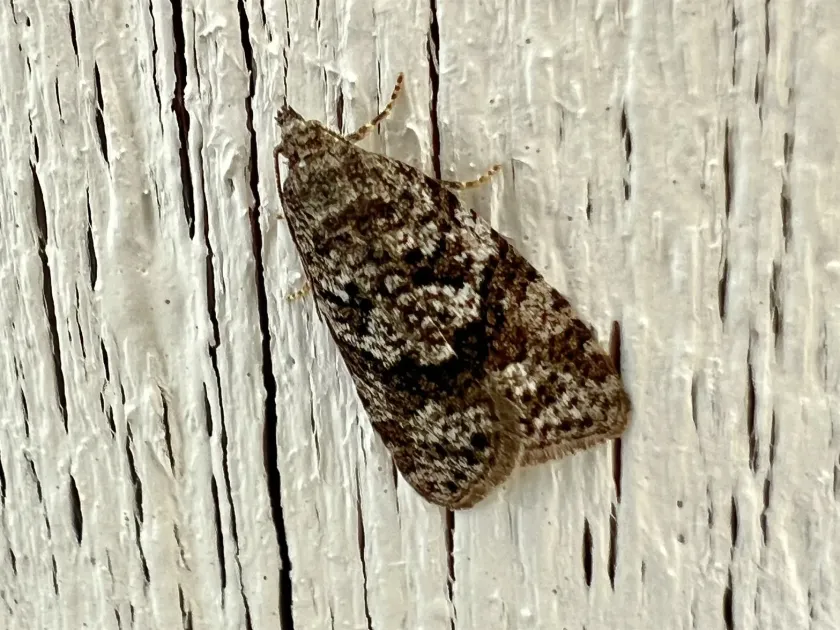
The garden leafroller (Cnephasia asseclana) belongs to the order Lepidoptera, family Tortricidae. The adult moth has a wingspan of approximately 15–20 mm and features greyish-brown forewings with a distinct pattern.
Larvae reach 15–18 mm in length. They are typically dirty white or yellowish-grey, with a dark head and thoracic shield. The body is sparsely covered with hairs anchored on small dark warts.
Eggs are small and laid in batches, often protected by scales from the female. The pupa is brown and develops within rolled leaves or silk nests, providing a natural defense against predators and pesticides.
This species is highly adaptable, allowing it to thrive in diverse climatic conditions. The garden leafroller is widely distributed across Europe and neighboring regions.
For accurate species identification, entomologists often examine the genitalia, as adults can be morphologically similar to other members of the Cnephasia genus.
What it damages
This pest is highly polyphagous, meaning it feeds on a wide range of host plants. Major agricultural crops, including cereals, legumes, and various vegetables, are susceptible to its feeding activity.
In orchards, the larvae consume buds, young leaves, and occasionally flower buds. They skeletonize the leaves by consuming the tissue while leaving the veins, significantly reducing the plant's photosynthetic capacity.
Damage to the growth points often causes stunted development, distorted stems, and a reduction in overall crop yield. Infected plants often show signs of stress and are more susceptible to secondary pathogens.
In cereal production, the pest may attack the flag leaf and the developing ear, directly impacting grain quality and quantity. Damaged tissues frequently become entry points for fungal infections.
High population densities on weeds allow the pest to easily migrate to cultivated crops, making integrated management in surrounding field margins essential for control.
When it appears
The garden leafroller typically has one generation per year. Adult flight usually commences in early summer, around June, and may extend into August depending on local temperature profiles.
Females lay eggs on tree bark, plant stems, or other stable surfaces. The overwintering stage is the first-instar larva, which emerges shortly after egg deposition and hides in a protected location.
In spring, larvae emerge to coincide with the start of plant growth, immediately feeding on buds and young foliage. This is a critical window for plant protection efforts.
Larvae are most active during daylight and dusk hours when they venture out to feed. Under harsh weather conditions, they remain inside their silk-spun nests for protection.
Pupation takes place inside rolled leaves secured with silk webbing. The pupal stage lasts approximately two to three weeks before the next generation of adults emerges.
Signs of infestation
The most recognizable sign of infestation is the presence of leaves rolled into tubes or clumps held together by silk. Inside these shelters, one can easily find the larva or its frass.
Damaged leaves often exhibit holes or complete skeletonization. If the infestation is severe, the entire crop may appear weakened, with significant foliage loss across the canopy.
Affected buds fail to bloom, turn brown, and eventually wither. Larval feeding on reproductive organs often results in flower drop or the development of deformed fruits.
The presence of webbing on shoot tips is a clear warning sign. Accumulation of frass (larval excrement) on the surface of leaves beneath the rolled sections further confirms the pest's activity.
- Leaves rolled into tight tubes or clumps.
- Silk webbing visible on shoots and leaves.
- Skeletonized leaves with large holes.
- Damaged buds and aborted fruits.
- Stunted growth of the main shoot.
Control measures
Cultural control measures include effective weed management in field margins, as weeds serve as reservoir hosts. Deep plowing and the destruction of crop residues help reduce the overwintering population.
Biological control can be achieved using Bacillus thuringiensis-based products, which are effective against young larvae while sparing beneficial insects and natural predators.
Chemical protection is most effective when applied just as larvae emerge from overwintering sites, before they have rolled the leaves. Once the leaves are rolled, the larvae are physically protected from pesticide coverage.
Systemic and contact insecticides are recommended, rotating modes of action to prevent the development of resistance. Always follow local labels regarding dosage and pre-harvest intervals.
Monitoring using pheromone traps is essential to determine the peak flight period of adult moths, allowing growers to time their insecticide applications for maximum efficacy.
Taxonomy
- Latin name
- Cnephasia asseclana
- Order
- Lepidoptera (butterflies)
- Family
- Tortricidae
- EPPO code
- CNEPVI
Discussion
No discussions yet — be the first.