
Cnephasia
Cnephasia
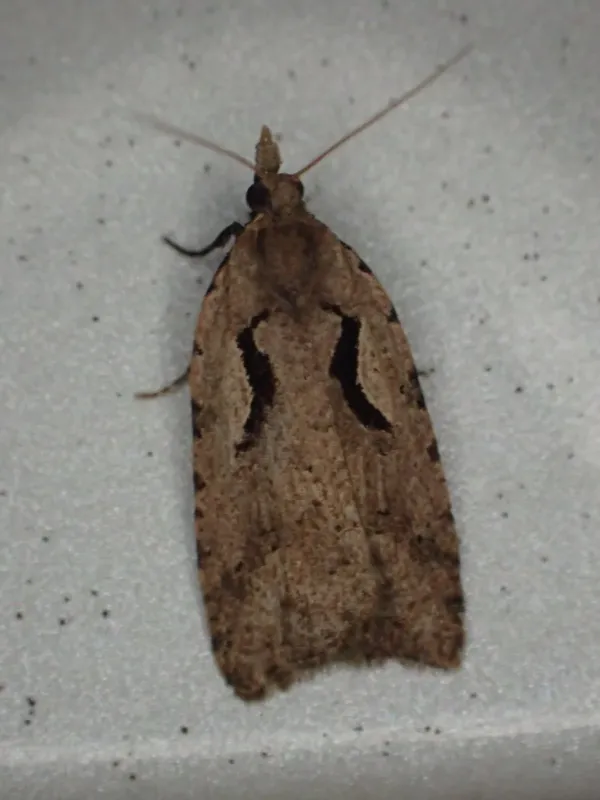
Description
How to identify
Cnephasia is a genus of moths belonging to the Tortricidae family, commonly known as leafrollers. These small, nocturnal insects have a wingspan of approximately 20 millimeters and exhibit cryptic coloration, usually in shades of gray and brown.
Adult moths are primarily active at night, while the larval stage causes the most significant agricultural damage. Larvae transition from a light yellow to a greenish color, often marked with dark spots and prominent setae.
These pests typically complete one generation per year. They overwinter in the egg stage, which is deposited in small clusters on tree bark or hidden in crevices, often covered by a protective substance secreted by the female.
Pupation occurs within leaves that the larvae have rolled and bound together with silk. Before the adult moth emerges, the pupa often pushes itself partially out of this leafy shelter.
The genus Cnephasia is taxonomically complex due to the high number of species. The gray leafroller (Cnephasia asseclana) is widely recognized as the most destructive member of this group in temperate regions.
What it damages
Cnephasia species are polyphagous, meaning they possess the ability to feed on a wide variety of plants. This makes them a threat to both broad-acre crops and various horticultural varieties.
In fruit orchards, the caterpillars feed on developing buds, blossoms, and young foliage. This damage can severely inhibit the growth of the tree and lead to significant reductions in fruit yield and quality.
Vegetable crops such as carrots, beets, and brassicas are also highly susceptible. Larvae often bore into stems or skeletonize leaves, creating entry points for secondary pathogens like bacteria and fungi.
In field conditions, Cnephasia can impact grains and perennial grasses. A large infestation can cause thinning of the plant stand, directly affecting the overall agricultural output of the field.
The damage caused by these insects is compounded by the plant's weakened state, making it more vulnerable to environmental stresses and secondary diseases, which often result in deformed plant organs.
Signs of infestation
The most reliable indicator of an infestation is the presence of curled or rolled leaves that are held together by fine, silken webbing. These structures act as protected feeding sites for the larvae.
Buds and flowers may appear ragged or fail to open entirely due to the feeding activity. Small piles of frass (caterpillar excrement) are often visible inside the silken webs, signaling the presence of an active pest.
On vegetables, feeding results in irregular patches where the fleshy part of the leaf is consumed, leaving behind thin, papery epidermis that eventually turns brown and brittle.
Egg masses can be found on tree bark during the dormant season, appearing as tiny, flat plates that resemble the surrounding texture of the bark. Careful scouting is required to locate these sites.
During the pupal stage, if a curled leaf is carefully opened, one may find the pupa tucked inside, providing definitive proof of the pest's identity and its current stage of development.
Control measures
Integrated Pest Management (IPM) is essential for controlling Cnephasia, utilizing a combination of cultural, mechanical, and chemical strategies to maintain populations below economic thresholds.
- Hand-picking and destroying rolled leaves in small-scale gardens.
- Installing sticky traps or pheromone traps to monitor adult flight activity.
- Using insecticide applications during the critical window of larval emergence.
- Encouraging the presence of natural predators and parasitoids.
- Maintaining good field hygiene by removing crop residues and weeds.
Chemical control is most effective during the pre-bloom or immediate post-bloom stages. Timing is crucial because insecticides have limited contact with larvae once they are protected inside rolled leaves.
Deep cultivation of soil in the autumn is a recommended practice. This disrupts the lifecycle of any larvae or pupae overwintering in the soil and reduces the overwintering success of the next generation.
By controlling weeds surrounding the planting area, growers can significantly reduce the alternative food sources for early-instar larvae, making it harder for the pest to establish itself in the main crop.
Taxonomy
- Latin name
- Cnephasia
- Order
- Lepidoptera (butterflies)
- Family
- Tortricidae
- EPPO code
- CNEPSP
Discussion
No discussions yet — be the first.