
Cliona
Cliona
Description
How to identify
Cliona is a genus of sponges in the family Clionaidae, belonging to the order Hadromerida. These organisms are exclusively marine and are commonly known as boring sponges.
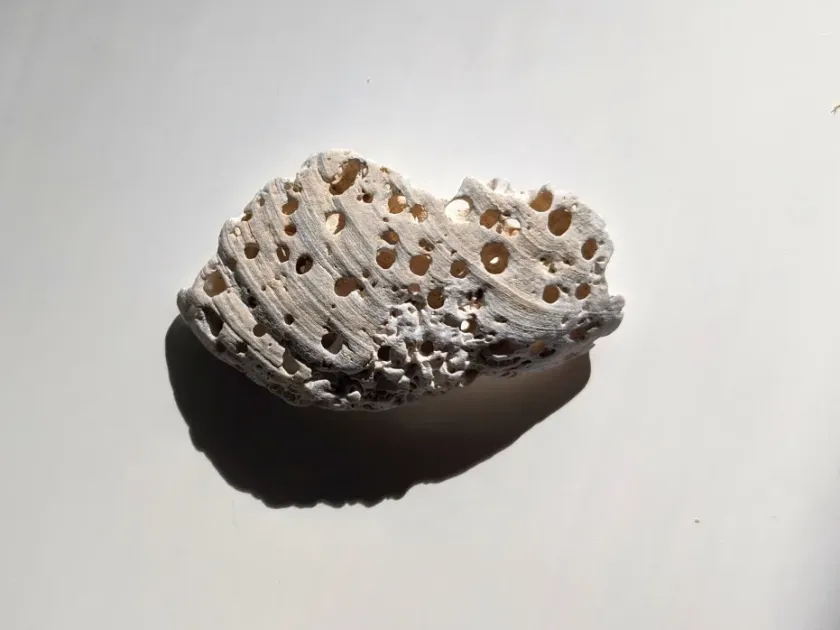
These sponges are characterized by their ability to bore into calcium carbonate substrates, such as shells and limestone. They appear as small, yellow or orange pores on the surface of their host.
The biology of Cliona involves a complex life cycle starting with a planktonic larval stage. Once a suitable substrate is found, the sponge settles and begins to excavate internal chambers.
They play a significant role in marine ecology as bioerosion agents, breaking down carbonate structures and recycling calcium into the marine ecosystem.
It is crucial to emphasize that Cliona has no relation to terrestrial agriculture. They do not feed on or impact any known land-based crops, as they require seawater to survive.
What it damages
Cliona specifically targets marine bivalves, such as oysters, mussels, and scallops. The sponge bores into their shells, causing structural weakness and increasing mortality rates.
In aquaculture, this activity leads to significant economic losses. Infested oysters become stunted and are often deemed unmarketable due to their unsightly and fragile shells.
Beyond live animals, these sponges are major destroyers of coral reefs and limestone formations. They weaken the framework of reefs, making them more susceptible to storm damage.
The damage caused by Cliona is strictly limited to calcified underwater structures. They lack the biological mechanisms to cause any harm to vegetative parts of crops.
Classification of Cliona as a plant pest is inaccurate. They are strictly marine organisms that do not interact with soil, stems, roots, or leaves of agricultural flora.
Control measures
Control measures for Cliona are restricted to marine farming environments. The most common approach is the physical removal of the sponges from the surfaces of the host shells.
Farmers often employ freshwater baths to kill the sponges. Because Cliona is highly dependent on high-salinity marine environments, freshwater is lethal to them within minutes.
Managing the density of bivalve populations is essential to prevent the spread of the sponge. Overcrowding often makes it easier for larvae to settle on healthy shells.
Regular maintenance of submerged structures and clearing dead shell debris is recommended. This reduces the available substrate for the sponge to colonize and thrive.
Monitoring the environmental conditions, particularly water flow and temperature, helps in managing the prevalence of boring sponges in aquaculture facilities.
Taxonomy
- Latin name
- Cliona
- Family
- Clionidae
- EPPO code
- CLIOSP
Discussion
No discussions yet — be the first.