
Red-backed vole
Clethrionomys rutilus
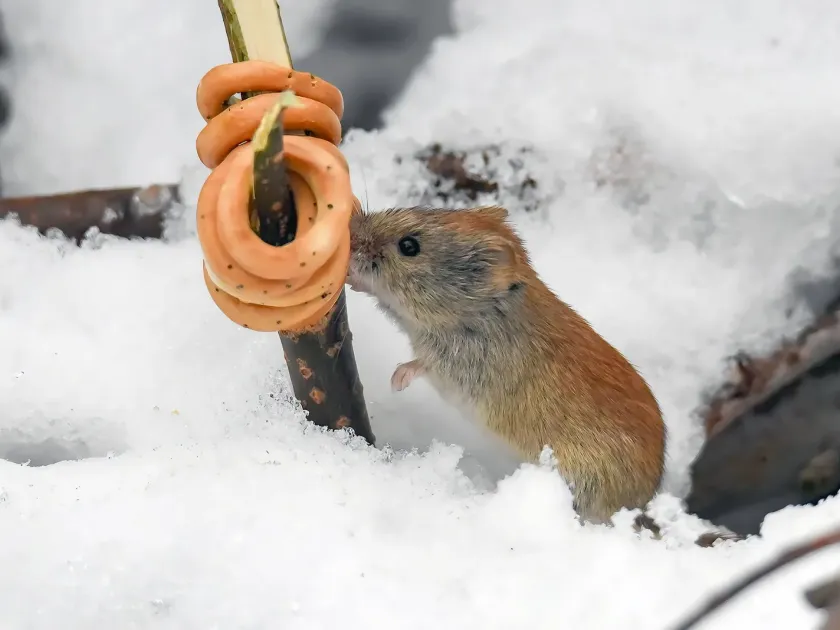
Description
How to identify
The red-backed vole (Clethrionomys rutilus) is a small rodent belonging to the Cricetidae family. It is easily recognized by its distinctive reddish-brown fur on the back and its relatively short, furry tail.
Measuring between 8 and 12 centimeters in length, this species is well-adapted to life in forested and boreal regions. Its physical characteristics allow it to move swiftly through dense undergrowth and leaf litter.
These rodents are primarily nocturnal but can be active during the day, especially in areas with low human disturbance. They are known for their high mobility and adaptability to changing environmental conditions.
Unlike some other vole species, they do not dig very deep burrows, preferring to nest in logs, root systems, or natural depressions. This makes them highly versatile in terms of habitat selection.
They have an incredibly high reproductive rate, which allows them to build up significant populations within a single season. This makes them a challenging pest for gardeners and orchard owners during population spikes.
What it damages
The primary concern for farmers is the damage to tree bark, particularly during winter. The red-backed vole feeds on the cambium layer of trees, often girdling young saplings and causing them to die.
In addition to trees, these rodents pose a threat to horticultural crops. They feed on stored root vegetables and can cause significant losses in stored harvest if not properly protected from rodent intrusion.
Grassland and pasture areas can also be affected by their activities. By feeding on the root crowns and bases of perennial grasses, they can cause patchy damage and decrease the overall forage yield.
Seeds are another important food source for this species. They frequently forage on newly sown crops or store seeds in small caches, which can lead to thinning of the crop stand.
The ecological impact of their feeding goes beyond direct consumption. The wounds created on trees and shrubs serve as entry points for various pathogens and fungi, significantly reducing the lifespan of the affected plants.
When it appears
While active throughout the year, the impact of the red-backed vole is most noticeable in the autumn and winter months. As temperatures drop and green food sources disappear, they turn to tree bark for survival.
During the spring, the focus of their activity shifts towards reproduction and foraging on early green growth. This is the period when they can cause significant damage to young seedlings and flower beds.
Summer is characterized by a wider distribution of the population as they forage in fields and gardens. They feed on a variety of succulent plants, fruits, and berries available during the warmer season.
Autumn is the time for cache-building, where they prepare for winter by storing seeds and vegetation. This is when human presence in gardens can inadvertently provide them with food supplies if waste is left exposed.
The winter months are critical for plant protection. Snow cover provides the voles with a safe environment to travel and feed on bark without being easily spotted by predators, making it their most destructive phase.
Signs of infestation
The most common sign of infestation is the presence of gnaw marks on the base of tree trunks. These marks are typically small, paired grooves left by the rodent's sharp front incisors.
Visual confirmation of small runways or paths through grass and debris is a clear indicator of vole presence. These paths often lead directly to nests or favorite feeding sites.
The presence of shallow burrows or holes in the soil, often located near plant bases, suggests an established colony. Small piles of chewed vegetation or seeds near these exits are also common signs.
If a tree shows symptoms of yellowing or sudden wilting in the spring, it is highly likely that the roots or the trunk collar have been severely damaged by voles over the winter.
Frequent sightings of natural predators like hawks, owls, or foxes within the orchard are strong indicators that the area supports a large population of rodents, serving as a sign for further inspection.
Control measures
Preventive maintenance starts with sanitation. Clearing tall weeds, leaf litter, and wood piles from around the orchard helps eliminate the protective cover that voles rely on.
Installing physical barriers is the most effective way to protect young trees. Hardware cloth or mesh guards placed around the trunk and sunk into the soil will prevent the rodents from accessing the bark.
When necessary, rodenticides can be used. These must be placed in tamper-resistant bait stations to ensure the safety of pets and wildlife while effectively reducing the rodent population.
Encouraging biodiversity by installing owl boxes or providing perches for raptors can offer long-term, natural population control without the need for intensive chemical intervention.
Regular monitoring of the site and early identification of damage allow for timely intervention, such as applying protective trunk wraps before the first frost, which is essential for orchard health.
Taxonomy
- Latin name
- Clethrionomys rutilus
- Order
- Rodents
- Family
- Muridae
- EPPO code
- CLETRT
Discussion
No discussions yet — be the first.