
Gray red-backed vole
Clethrionomys rufocanus
Description
How to identify
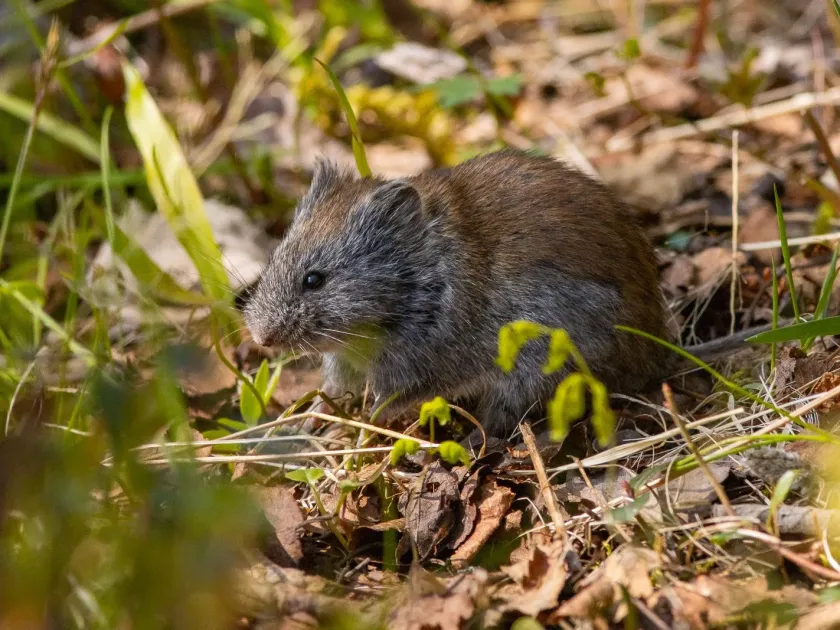
The gray red-backed vole (Clethrionomys rufocanus) is a small rodent in the Cricetidae family. Adults typically measure 10 to 14 centimeters in body length and feature a distinct reddish-brown coat on their backs.
These voles possess a relatively short tail and small, rounded ears that are mostly hidden by their fur. Their eyes are dark and prominent, and they are well-adapted for movement in dense ground cover.
Morphologically, this species is built for survival in cold and humid environments. Its thick, dense fur provides insulation against freezing temperatures, especially during the winter season.
Taxonomically, they belong to the group of forest voles. They are typically found in forest edges, clearings, and agroforestry zones, preferring areas with dense vegetation that provides natural shelter.
Their reproduction rate is quite high under favorable conditions. They reach sexual maturity rapidly, allowing a population to recover and expand quickly after harsh winters or successful control efforts.
What it damages
The gray red-backed vole is a significant threat to orchard trees, particularly young saplings. They frequently gnaw on the bark around the trunk, which disrupts nutrient flow and can kill the tree.
In addition to bark damage, these rodents may feed on the root systems of trees and shrubs, which can lead to the sudden collapse of healthy-looking plants during the spring growing season.
During the winter months, when other food sources are scarce, voles will target the buds and bark of various deciduous and coniferous trees, often causing severe damage in forest nurseries.
Agricultural crops stored in ground pits or poorly protected storage facilities are also at risk. The vole's ability to burrow makes it an effective thief of stored roots and grains.
The damage often remains hidden beneath snow cover until the thaw, at which point the extent of the destruction to the cambium layer becomes visible to the farmer or gardener.
When it appears
These voles remain active throughout the entire year, though their peak harmful impact on orchards occurs during the dormant season. Winter represents the most vulnerable time for trees.
As spring begins and sap starts to flow, the voles continue to forage on young shoots and buds. This is when the cumulative damage from the long winter months becomes most apparent.
During the summer, the voles' diet shifts toward grasses, seeds, and fruits. While this reduces the pressure on tree trunks, the population can reach very high levels if conditions are favorable.
Vole populations often follow cyclical patterns of expansion and decline. Monitoring their presence before autumn is essential to implement control measures before the first snowfall.
Environmental factors, such as snow depth and temperature, significantly influence the population density of this species, as deep snow provides excellent insulation and protection from predators.
Signs of infestation
The most common sign of a vole infestation is the presence of irregular gnaw marks on the bark of tree trunks, often appearing at or slightly above the ground level.
Careful inspection of the soil around the base of the tree may reveal small entry holes into burrows. Additionally, visible runways or pathways through the grass or under snow are key indicators of a colony.
Small dark droppings found near burrows or along their runways confirm the presence of voles. These paths often connect multiple nesting sites across an area.
Springtime discovery of trees that sway easily or appear wilted often points to root system damage caused by these rodents during the preceding months.
Looking for small nests made of dried grass and debris in mulch or near tree bases during the late fall can help identify areas where voles are planning to overwinter.
Control measures
Mechanical protection is the most reliable method for orchard defense. Wrapping tree trunks with hardware cloth or specialized plastic tree guards prevents voles from gnawing the bark.
Proper sanitation in the garden is essential. Clearing away fallen leaves, tall grass, and weeds from around the trunks removes the shelter that voles need for their winter nests.
- Use enclosed bait stations with rodenticides to prevent accidental poisoning of other wildlife.
- Install ultrasonic rodent repellents that create an environment uncomfortable for the rodents to colonize.
- Promote the presence of natural predators by installing owl boxes and maintaining habitats for weasels and snakes.
Autumn tillage of the soil in orchards can disrupt existing burrow systems and destroy winter nesting sites, forcing the population to relocate or reducing their overall survival rates.
Integrated pest management is recommended, combining mechanical barriers with habitat modification to keep vole populations below the economic injury level for your crops.
Taxonomy
- Latin name
- Clethrionomys rufocanus
- Order
- Rodents
- Family
- Muridae
- EPPO code
- CLETRF
Discussion
No discussions yet — be the first.