
Bank vole
Clethrionomys glareolus
Description
How to identify
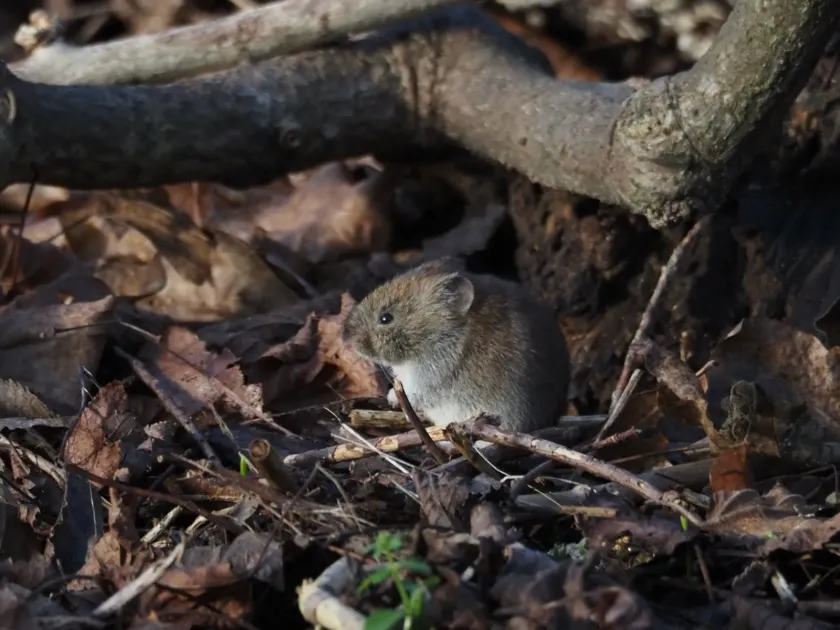
The bank vole, scientifically known as Clethrionomys glareolus, is a small rodent belonging to the Cricetidae family. It is easily recognized by its reddish-brown back and grayish-white belly.
Adult bank voles grow to approximately 10–12 cm in length. They possess small, partially hidden ears, a blunt nose, and a tail that is about one-third to half the length of their body.
Unlike many other vole species, bank voles are very agile and capable climbers, often scaling bushes and low tree branches to reach their preferred food sources.
They are prolific breeders, with females producing several litters throughout the breeding season from spring until early autumn. This rapid reproduction leads to high population density.
These rodents are active year-round, regardless of the season. They do not hibernate and remain active under snow cover during winter, which is when they cause the most damage.
What it damages
Bank voles are notorious for causing severe damage to woody plants, particularly during winter when other food sources are scarce in the orchard environment.
They consume the bark of young fruit trees, often ring-barking the trunk at the base. This destruction of the vascular tissue cuts off the nutrient flow, frequently leading to tree death.
Young saplings and nursery stock are the most vulnerable targets. Even established trees can be compromised if a high population of voles focuses on their root systems or lower stems.
In addition to bark, they feed on buds, young sprouts, and seeds. In agricultural settings, they can cause significant losses in vegetable gardens and storage facilities.
In forest plantations and ornamental gardens, bank voles destroy the bark of deciduous and coniferous seedlings, leading to poor growth and high mortality rates.
Signs of infestation
The most visible sign of bank vole activity is the presence of teeth marks on the bark of tree trunks, often found near the soil level or under snow remnants.
Small, circular burrow entrances in the ground indicate the presence of a colony. These tunnels are often hidden beneath organic mulch, dense grass, or woodpiles.
Surface runways or paths through thick vegetation are created by the constant movement of voles between their nests and feeding grounds in the summer.
Small, dark fecal droppings left in piles near burrows or at the base of trees are clear indicators that bank voles are currently active in the area.
During the spring, trees that show stunted growth, delayed leaf development, or yellowing foliage should be inspected for basal bark damage caused by winter activity.
Control measures
Protecting trees is the priority. Surround the trunks of young trees with wire mesh or plastic guards that reach at least 50 cm high to prevent gnawing.
Maintain a clean garden by clearing away grass, weeds, and brush piles. Reducing available shelter makes the area less hospitable and exposes rodents to predators.
In winter, pack down the snow around the base of trees. A hard, compacted snow layer creates a barrier that prevents voles from moving easily along the trunk.
Use rodenticides in accordance with local regulations, ensuring that bait is placed deep inside burrows where it is inaccessible to birds, pets, and children.
Encourage natural predators in the vicinity. Providing perches for hawks or owls and managing the habitat to support natural carnivores can help suppress the population.
Taxonomy
- Latin name
- Clethrionomys glareolus
- Order
- Rodents
- Family
- Muridae
- EPPO code
- CLETGL
Discussion
No discussions yet — be the first.