
Southern red-backed vole
Clethrionomys gapperi
Description
How to identify
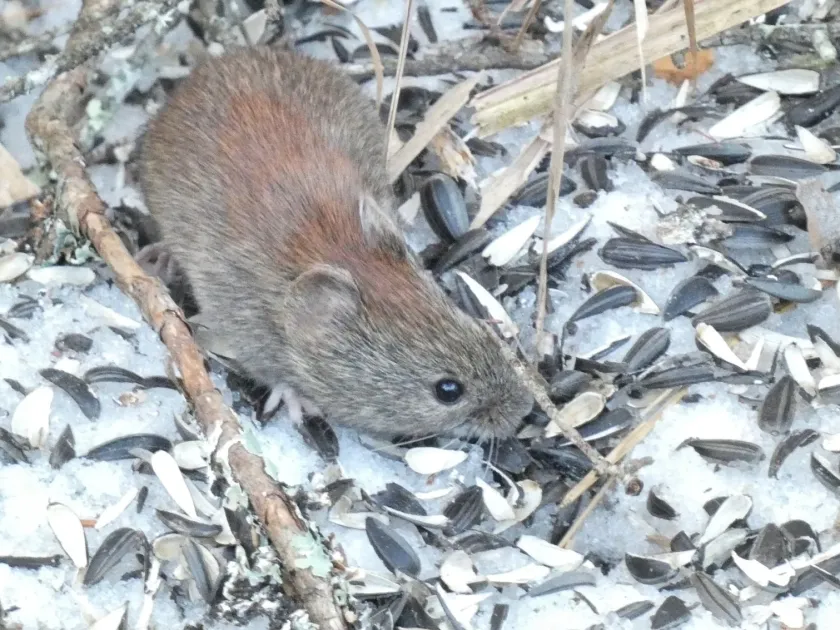
The Southern red-backed vole (Clethrionomys gapperi) is a small rodent characterized by a distinct reddish-brown stripe running along its back.
These rodents typically reach a body length of 8 to 12 centimeters with a tail that is about one-third of their total body length. They have prominent whiskers and dark, beady eyes.
The species is taxonomically classified under the order Rodentia and the family Cricetidae. They thrive in forests with dense cover but are highly adaptable to other environments.
Unlike some other vole species, they are known for being active during both day and night, maintaining high levels of movement throughout the entire year.
Their physical appearance makes them difficult to spot in thick vegetation, and their ability to climb allows them to reach elevated food sources in shrubs.
What it damages
The primary economic damage occurs when these voles feed on the bark of young fruit trees and ornamental shrubs during the dormant season.
By stripping the bark, they can girdle the tree trunk, which disrupts the flow of nutrients and often leads to the death of the plant during the following spring.
They are known to consume seeds, bulbs, and stored garden vegetables, making them a significant nuisance for both private gardeners and commercial nurseries.
In forest management, they cause losses by consuming the seeds and seedlings of coniferous trees, thereby inhibiting natural forest regeneration.
Their persistent gnawing behavior causes cumulative stress to plants, leading to weakened immune systems and susceptibility to secondary infections and pests.
When it appears
These rodents remain active year-round and do not hibernate, which means they are a potential threat even during the coldest winter months.
The peak of their damage usually occurs in late winter, when food sources are scarce and they rely on the bark of woody plants for survival.
Breeding activity typically begins in early spring and can continue through autumn, often resulting in rapid population spikes when conditions are favorable.
Summer months see a shift in their diet toward succulent vegetation, seeds, and fruits, which reduces the severity of bark damage on trees.
As autumn transitions into winter, they migrate to areas with more cover, such as woodpiles or dense garden debris, to establish winter shelters.
Signs of infestation
Visual evidence of a vole presence includes numerous shallow, winding surface tunnels in the lawn or soil, particularly under piles of leaves or mulch.
Gnaw marks on the base of tree trunks or shrub stems are definitive signs. These marks are usually small, parallel grooves made by the animal's sharp incisors.
The appearance of damaged bulbs or partially eaten vegetables in the garden indicates that voles have been foraging in the immediate vicinity.
Finding small, dark droppings near their runways or entry points into storage areas is a strong indicator of an active infestation.
Sudden decline or death of young saplings in the spring, often following the melting of winter snow, usually points to heavy vole damage on the roots or trunk.
Control measures
To protect young trees, use hardware cloth or wire mesh cylinders around the base of the trunk to prevent access to the bark.
Keep the base of trees clear of mulch, debris, and weeds, as these provide the cover that voles prefer for nesting and foraging.
Implement rodent-proof storage for all harvests and seeds to ensure that you are not creating a feeding site that attracts pests to your property.
Encourage local predators like owls, hawks, and snakes by maintaining a garden that is hospitable to them, as this helps keep vole populations in check.
In cases of severe infestation, targeted trapping or the use of approved rodenticides in tamper-resistant bait stations can be effective if used correctly.
Taxonomy
- Latin name
- Clethrionomys gapperi
- Order
- Rodents
- Family
- Muridae
- EPPO code
- CLETGA
Discussion
No discussions yet — be the first.