
Bank vole
Clethrionomys
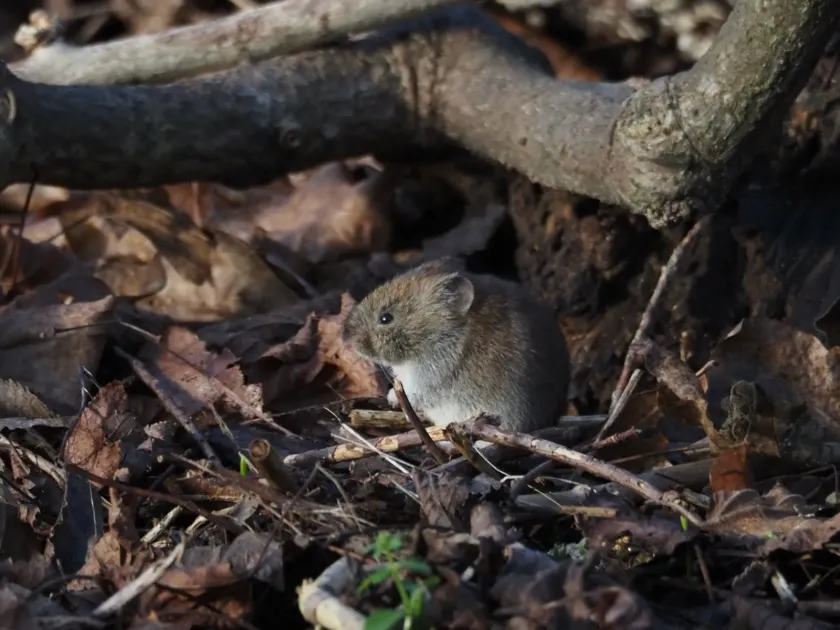
Description
How to identify
The bank vole is a small rodent belonging to the Cricetidae family. Adults typically measure between 8 and 12 cm in length, with a tail that is about one-third of their body size. They are easily recognized by their rich reddish-brown fur on the back, which fades to a lighter, greyish color on the underbelly.
These rodents have a compact body, a blunt snout, and small ears that are largely hidden by their fur. Unlike many other vole species, they are remarkably agile and capable of climbing trees and shrubs to reach food sources, which makes them particularly dangerous in orchards.
What it damages
Bank voles cause severe damage to fruit and ornamental trees, particularly during the dormant season. They feed on the bark of young tree trunks, often gnawing away at the base, which can girdle the tree and lead to its slow decline or sudden death.
In addition to bark, these rodents target the roots of perennial plants, tubers, and flower bulbs. They also consume seeds and young shoots in forest nurseries, significantly impacting the growth and survival rates of new plantations.
When it appears
Bank voles remain active throughout the entire year, as they do not hibernate. Their reproductive cycle is highly efficient, starting in early spring and continuing until late autumn, allowing populations to rebound quickly after winter declines.
During the winter, when herbaceous food sources are scarce, voles often retreat to the shelter provided by snow cover. They thrive in the subnivean space, where they have easy access to tree bark without being exposed to predators, leading to peak damage levels in late winter.
Signs of infestation
The most alarming sign of a bank vole infestation is the presence of gnawed bark at the base of trees, often at or slightly above the ground level. These irregular patches of missing bark are a clear indicator of feeding activity.
Other signs include the presence of extensive burrow systems and well-worn runs through the grass. You may also observe small piles of vegetation clippings near the burrow entrances, which are remnants of their feeding process.
Control measures
To protect your garden, it is crucial to keep the area around tree trunks clear of weeds, mulch, and debris, as these provide cover for voles. Installing physical barriers like wire mesh guards around the base of young trees is an effective preventative measure.
Biological control through maintaining habitats for natural predators, such as owls and hawks, can help manage populations. If the infestation is severe, the application of approved rodenticides inside bait stations should be carried out, ensuring that non-target animals are not put at risk.
Taxonomy
- Latin name
- Clethrionomys
- Order
- Rodents
- Family
- Muridae
- EPPO code
- CLETSP
Discussion
No discussions yet — be the first.