
Strawberry tortrix
Clepsis spectrana
Description
How to identify
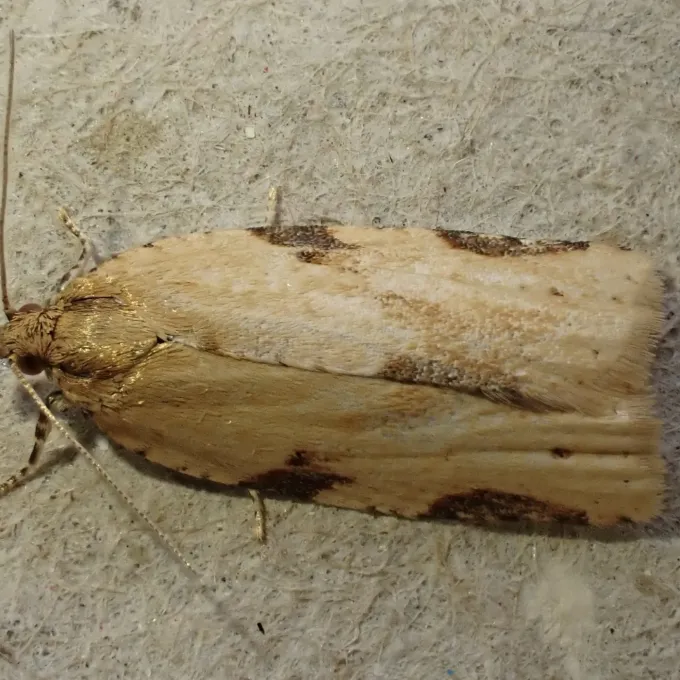
The strawberry tortrix (Clepsis spectrana) is a moth belonging to the family Tortricidae. The wingspan of the adult moth typically ranges between 16 and 22 mm, featuring a distinct ochre-brown color with a darker reticulated pattern on the forewings.
The larvae are typically greenish or brownish-green with a dark head capsule, making them identifiable when inspecting infested plant parts. They are known for their active movement when disturbed.
Adult moths are primarily nocturnal, spending their days resting in shaded areas of the foliage. They emerge from their pupal stage to mate and lay eggs during the warmer months of the year.
The eggs are deposited in batches on the upper surface of leaves, often covered by a protective transparent secretion that shields them from environmental stress and predators.
Overwintering occurs at the larval stage. Young larvae construct protective silk cocoons within rolled leaves or plant debris at the base of the plant, where they remain dormant until spring.
What it damages
This species is a highly polyphagous pest, meaning it attacks a diverse range of crops including strawberries, raspberries, currants, roses, and various vegetable plants like tomatoes and cucumbers.
Larval feeding causes the primary damage. Upon hatching, the larvae begin by skeletonizing the leaf tissue before moving on to consume larger areas of the foliage as they grow.
During the flowering stage, the larvae feed on the developing buds and blossoms. This behavior can lead to significant yield loss, as the reproductive organs of the flowers are often destroyed.
As the fruit matures, the larvae may feed on the surface of the strawberries, creating superficial cavities. These injuries often become entry points for secondary pathogens like fungal rots.
Severe infestations result in stunted growth and a general decline in plant vigor, as the cumulative damage to foliage reduces the plant's photosynthetic capacity.
When it appears
The development of the strawberry tortrix generally follows a two-generation cycle per year, with activity peaking during the spring and late summer months.
The first generation emerges from overwintering sites in late spring, usually around May, as temperatures rise sufficiently to initiate metabolic activity in the larvae.
The second generation of moths typically appears in mid-summer, around July or August. This generation is often responsible for the most noticeable damage to fruit crops.
Environmental factors, such as sustained warmth and moderate humidity, can accelerate the life cycle, potentially leading to overlapping generations and a more complex control situation.
Timing the monitoring efforts is crucial. The peak flight of adults can be tracked to predict when the subsequent larval hatch will occur, allowing for precise treatment.
Signs of infestation
The most prominent sign of infestation is the presence of leaves that have been rolled or tied together using thin silk webbing, creating a protective nest for the larva.
Fecal pellets (frass) accumulated inside the leaf nests or on the surface of the leaves are clear indicators of active larval feeding and infestation presence.
Wilting and premature drying of flower buds or blossoms, often associated with silk threads, provide a strong hint that a tortrix larva is feeding within the flower structure.
Young larvae produce characteristic "windows" on the leaves by consuming the upper and middle tissue layers while leaving the lower epidermis intact, which turns into a papery brown patch.
Visible surface damage on berries, particularly near the calyx, indicates that older larvae have moved from the foliage to the more nutritious fruit tissues.
Control measures
Cultural control practices are essential. This includes keeping the area free of weeds and crop residues, which can serve as alternative food sources and overwintering sites for the pest.
Biological control using Bacillus thuringiensis formulations is highly effective against young larvae and is considered safe for beneficial insects and pollinators.
Chemical control should be applied based on economic thresholds. If insecticide use is necessary, timing is key to target the larvae before they protect themselves inside leaf rolls.
Pheromone traps are excellent tools for both monitoring the presence of the pest and reducing the population of adult males to disrupt the mating cycle.
- Pruning and destroying heavily infested plant parts to reduce the localized population.
- Encouraging the presence of natural enemies such as braconid wasps and lacewings.
- Practicing proper crop rotation to break the pest's reproductive cycle.
Taxonomy
- Latin name
- Clepsis spectrana
- Order
- Lepidoptera (butterflies)
- Family
- Tortricidae
- EPPO code
- CACOCO
Discussion
No discussions yet — be the first.