
Solanum weevil
Cleopus solani
Description
How to identify
The Solanum weevil (Cleopus solani) is a small beetle belonging to the Curculionidae family. It is specifically adapted to feed on plants within the Solanaceae family, showing a strong host preference for potatoes in agricultural environments.
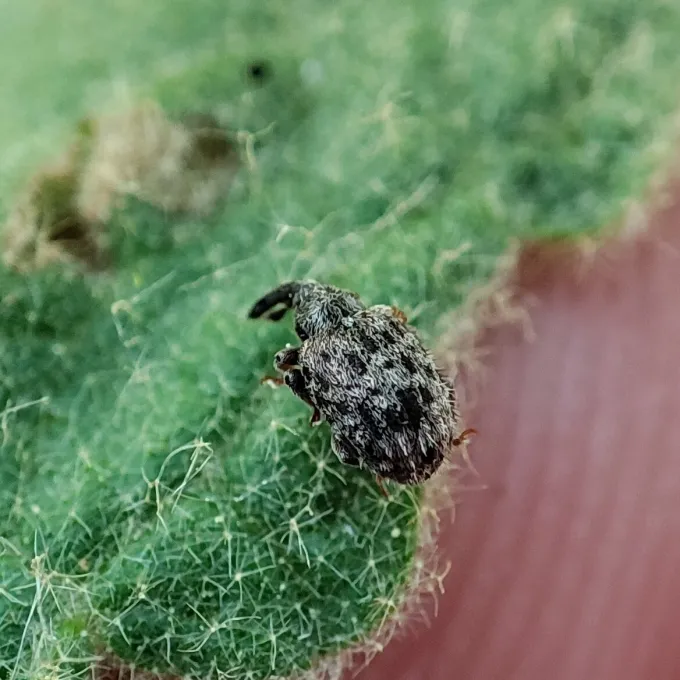
Adult weevils are characterized by their compact, oval body shape and brownish, often pubescent, appearance. Their coloration provides excellent camouflage against the textured surfaces of potato leaves, making them difficult for farmers to spot during routine inspections.
The biological cycle of this pest involves egg-laying directly into the leaf tissue. This strategic placement ensures that the hatching larvae have immediate access to a nutrient-rich food source, facilitating rapid growth during their larval stages.
Larvae are legless, fleshy, and exhibit a creamy-white or yellowish color. They tend to reside on the undersides of leaves, which protects them from direct solar radiation and many common predators, allowing them to feed undisturbed for long periods.
Pupation typically occurs either in the soil or within curled, damaged leaves. The adult beetles that emerge are capable of overwintering in sheltered locations, such as crop debris, and re-emerging when the next growing season begins.
What it damages
The primary economic host of the Solanum weevil is the potato plant. While they primarily damage cultivated crops, they are also known to thrive on wild Solanum species, which can act as secondary reservoirs for the pest population.
Adult weevils feed by chewing on the foliage, resulting in the formation of irregular holes. While individual feeding marks may seem minor, widespread adult activity can significantly reduce the overall photosynthetic capacity of the plants.
Larval damage is generally considered more severe. The larvae consume the leaf parenchyma while leaving the veins intact, leading to a skeletonized leaf appearance. This damage disrupts the plant's ability to produce energy, ultimately impacting tuber development.
Infested leaves often turn yellow, wither, and drop prematurely. Early senescence of the canopy is particularly detrimental during the critical tuber bulking stage, which can lead to substantial reductions in total yield and tuber quality.
The stress caused by heavy infestations makes plants more susceptible to secondary pathogenic attacks. Fungal and bacterial infections often exploit the damaged leaf tissues, exacerbating the overall decline of the crop health.
Control measures
Effective management of the Solanum weevil requires an integrated approach focusing on both cultural and chemical control methods. Crop rotation is the fundamental practice to prevent the long-term buildup of the pest in specific fields.
Sanitation plays a vital role in population suppression. Removing weeds belonging to the Solanaceae family from field borders and surrounding areas eliminates the alternative food sources that often bridge the gap between harvest and the next planting season.
If monitoring indicates that the population has crossed the economic injury threshold, chemical intervention is necessary. Broad-spectrum insecticides, when applied correctly, are effective against adults, although timing is critical to target the most vulnerable lifecycle stages.
- Deep autumn plowing to bury and destroy overwintering adults and pupae.
- Consistent inter-row cultivation to disturb larval development within the soil.
- Using certified disease-free seed potatoes to ensure vigorous early plant growth.
- Application of biological control agents where appropriate to maintain ecological balance.
Regular field scouting using visual observation or yellow sticky cards is essential for early detection. By combining these strategies, growers can manage the Solanum weevil effectively while minimizing the environmental impact of their crop protection program.
Taxonomy
- Latin name
- Cleopus solani
- Order
- Coleoptera (beetles)
- Family
- Curculionidae
- EPPO code
- CLEPSO
Discussion
No discussions yet — be the first.