
Cleopus
Cleopus
Description
How to identify
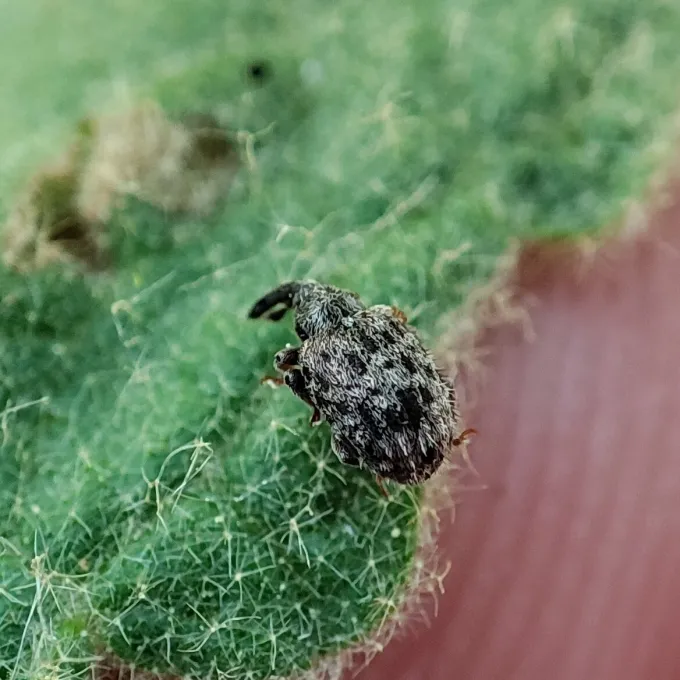
Cleopus is a genus of beetles belonging to the family Curculionidae (true weevils). They are typically small insects recognized by the characteristic elongated rostrum or snout found in most members of this family.
The adult body is generally oval or elliptical, covered with fine scales or hairs which provide cryptic coloration. Their colors range from brownish to grayish-brown, allowing them to blend seamlessly with the texture of plant foliage.
The larvae are vermiform (worm-like), legless, and typically have a whitish or yellowish appearance. Their development is largely concealed, occurring inside plant tissues or within tightly rolled leaves of the host plant.
Adults possess functional wings, enabling them to migrate over significant distances to locate suitable host plants. Their activity levels are strongly regulated by ambient temperature and relative humidity.
Identification of specific species within the genus often requires microscopic examination of morphological traits, including the shape of the pronotum, elytral sculpture, and genital structures, as many species appear morphologically similar to the naked eye.
What it damages
The primary hosts for Cleopus are plants belonging to the family Scrophulariaceae, with a particular affinity for the genus Verbascum (mullein). Some species are host-specific to certain wild or cultivated members of this family.
Adult beetles primarily feed on young leaves, creating small perforations or nibbling along the margins of the leaf blade, which disrupts the plant's photosynthetic capacity. Adult feeding damage is usually minor unless populations reach high densities.
Larval feeding is significantly more destructive due to their concealed lifestyle, often burrowing into stems or consuming flower buds and developing seeds. This can cause deformation, stunted growth, and physical injury to the plant's reproductive organs.
Extensive damage to flowering stalks by larvae reduces the plant's seed production. In ornamental gardening, such damage ruins the aesthetic appeal of mullein plantings and may cause premature wilting of the flowers.
Damaged tissues serve as entry points for secondary infections, including fungal and bacterial pathogens, which collectively can lead to the localized death of shoots or the entire plant in cases of severe infestation.
When it appears
The life cycle of Cleopus is closely synchronized with the phenology of its host plants. Typically, adults overwinter in leaf litter, the upper soil layer, or other sheltered microhabitats near the host population.
In spring, as temperatures rise, adults emerge from diapause to engage in supplemental feeding on the emerging foliage of Verbascum. This period often aligns with the onset of active plant growth.
Following mating, females deposit eggs, usually placing them singly or in small clusters on various parts of the plant. The oviposition period can be protracted, depending on regional climatic conditions.
Larval development proceeds through several instars before pupation occurs. Pupae are often found inside specialized cocoons constructed on the plant or within the soil, from which the next generation of adults eventually emerges.
Depending on the latitude and cumulative heat units, one or two generations may occur per season. Toward autumn, adults enter a period of reduced feeding activity as they prepare for winter dormancy.
Signs of infestation
The primary visual sign of Cleopus presence is the characteristic "shot-hole" or windowing damage on leaves caused by adult feeding.
The presence of deformed, twisted, or prematurely yellowing leaves can indicate larval activity within the plant tissue. In areas where larvae are present, one might observe stem swellings or localized tissue necrosis.
Inspecting flower stalks often reveals dried or aborted buds damaged by larvae before the flowers have had a chance to bloom. Occasionally, insect frass may be visible on the surface of affected plant parts.
Severe infestations result in general plant stress, inhibition of flower spike elongation, and significant degradation of ornamental quality. In rare cases, seed-producing plants may suffer complete loss of seed potential.
The adults are best detected during morning or evening hours when they are most active on the leaf surface, or by gently shaking infested foliage over a white collection cloth.
Control measures
The foundation of Cleopus management is cultural control. Regular monitoring and manual collection of adults during the post-winter emergence period can significantly suppress populations before they begin breeding.
Sanitation is a critical measure; removing plant debris in the autumn eliminates the overwintering sites for adults. Clearing leaf litter and light soil cultivation around the base of host plants disrupt the pest's life cycle.
Biological insecticides based on fungal pathogens or bacteria, such as strains of Bacillus thuringiensis, can be effective against larval stages while minimizing impacts on beneficial pollinators.
Chemical control is justified only during mass outbreaks. When necessary, contact or systemic insecticides should be applied, with strict adherence to pre-harvest intervals and considerations for protecting bees during the flowering period.
- Maintain appropriate crop rotation and spatial separation from wild mullein populations.
- Utilize pheromone traps for population monitoring to ensure the timely initiation of protective interventions.
- Promote natural biological control by conserving habitats for birds and predatory insects that prey on weevils.
Taxonomy
- Latin name
- Cleopus
- Order
- Coleoptera (beetles)
- Family
- Curculionidae
- EPPO code
- CLEPSP
Discussion
No discussions yet — be the first.