
Beet stem weevil
Cleonis stratus
Description
How to identify
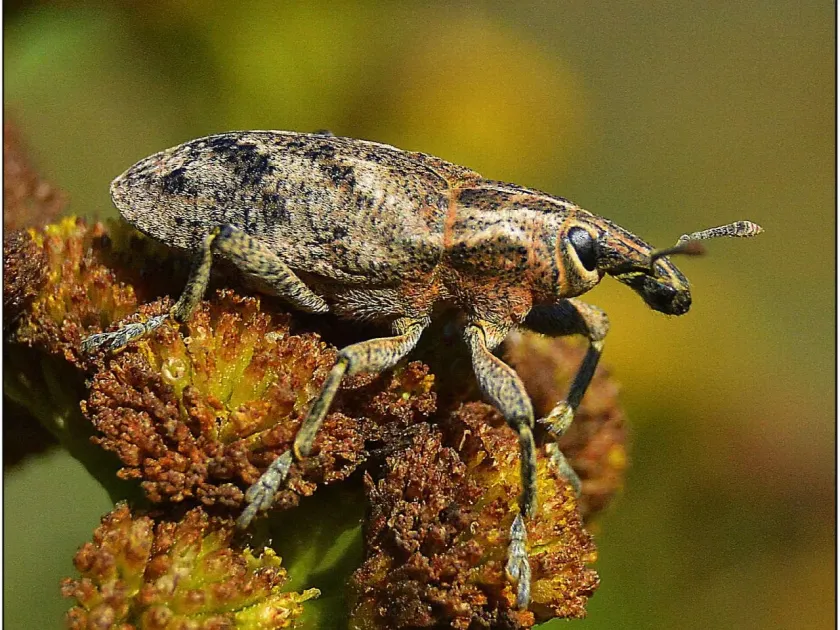
The beet stem weevil (Cleonis stratus) is a member of the Curculionidae family. The adult beetle is typically 12–16 mm long, featuring a mottled grey or brown appearance due to the dense covering of scales on its elytra, which provides excellent camouflage.
This insect possesses a characteristic robust snout, which is essential for its feeding and egg-laying habits. The larvae are legless, white-bodied grubs with a distinct brownish head, typically found deep within the tissues of host plants during their development.
The lifecycle of this pest is univoltine, meaning there is only one generation per year. Adults overwinter in the soil or under plant debris, emerging in early spring as soil temperatures rise, ready to feed on the emerging host crops.
Females deposit eggs individually into shallow cavities they chew into the stalks or leaf petioles of the host plants. A single female can produce a large number of eggs, which can lead to significant localized infestations if not managed correctly.
Pupation occurs within the soil at a depth of up to 15 cm. After a pupal period of several weeks, the new generation of adults emerges in late summer, feeds briefly on host plant foliage, and then seeks overwintering sites to complete the annual cycle.
What it damages
The beet stem weevil primarily attacks plants within the Amaranthaceae family, most notably sugar beet, fodder beet, and garden beet. It is a highly specialized pest that targets these crops during their vegetative stages.
Adult weevils cause damage by feeding on leaves and stems, creating irregular-shaped holes. While foliar damage is noticeable, the most severe economic impact stems from larval development within the plant's structural tissues.
As larvae tunnel through the stalks and petioles, they disrupt the vascular system, preventing the effective transport of water and nutrients. This structural damage weakens the plant, often causing it to droop, lodge, or suffer from stunted growth.
Secondary damage is a major concern, as the feeding tunnels act as entry points for various bacterial and fungal pathogens. These pathogens can cause severe rot in the crown and root, leading to significant yield losses and poor storage quality.
When infestation levels are high, the combined effect of structural damage and secondary infection can lead to the death of young seedlings or a substantial reduction in the size and quality of the final harvestable sugar beet roots.
Signs of infestation
Early identification of an infestation starts with spotting characteristic holes on the leaves, known as shotholes or irregular leaf edges, caused by adult beetles feeding during the daytime.
Careful inspection of the leaf petioles and the base of the stems may reveal small depressions or scars, which are indicators of egg-laying activity. These marks confirm that the population has begun reproduction in the field.
The stems of damaged plants often become hollow or brown internally due to larval tunneling. Plants that display wilting symptoms while soil moisture is adequate are likely experiencing internal vascular damage from the weevil larvae.
In cases of significant damage, plants may become brittle and break off at the base during windy conditions. This lodging is a clear sign that the internal structure of the stem has been compromised by the pest.
During post-harvest soil checks, empty pupal chambers may be found in the ground near the plant remnants, confirming that the pest has successfully completed its development and migrated to overwintering sites.
Control measures
Implementing a strict crop rotation plan is the most effective preventative measure. Avoiding the planting of beets in the same field for at least 3–4 years breaks the lifecycle of the pest and reduces the overwintering population density.
Deep autumn plowing is a highly recommended practice to disturb the soil, exposing overwintering larvae, pupae, and emerging adults to environmental stressors and predators, which significantly reduces their survival rate.
Chemical control focuses on applying systemic insecticides during the period when adults emerge from overwintering but before they begin laying eggs. This timing is crucial to effectively manage the population and protect the crop.
The use of insecticide-treated seeds provides a protective barrier for young plants, safeguarding them during their most vulnerable developmental stages. This strategy reduces the need for multiple foliar sprays throughout the growing season.
Sanitation practices, such as controlling wild Amaranthaceae weeds in and around the fields, eliminate alternative hosts and breeding grounds. By maintaining clean field borders, farmers can limit the number of weevils that migrate into the commercial crop.
Taxonomy
- Latin name
- Cleonis stratus
- Order
- Coleoptera (beetles)
- Family
- Curculionidae
- EPPO code
- CLEOST
Discussion
No discussions yet — be the first.