
Cleonis plumbeus
Cleonis plumbeus
Description
How to identify
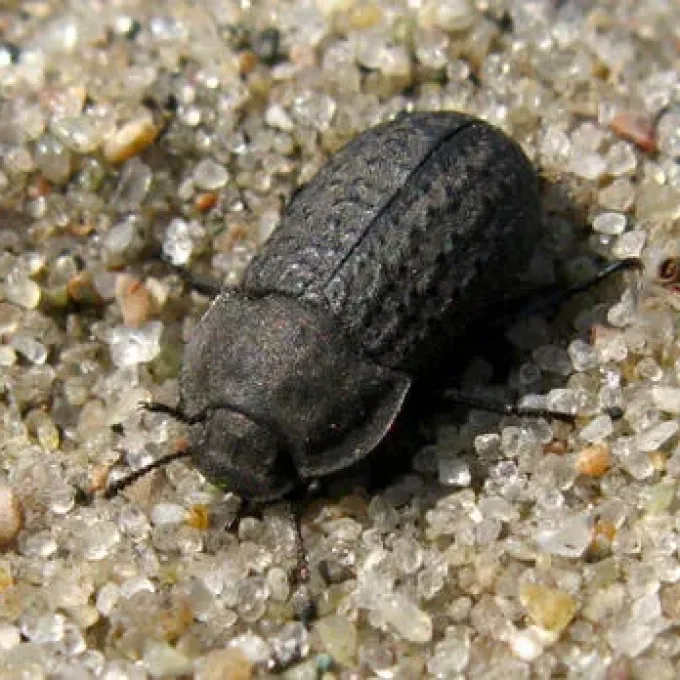
Cleonis plumbeus is a species of weevil belonging to the family Curculionidae. The adult beetle typically measures 12–16 mm in length and features a robust, elongated body covered in dense gray or leaden scales, providing excellent camouflage.
The insect possesses a characteristic snout (rostrum) of moderate length, bearing geniculate antennae. Its elytra are marked with distinct longitudinal grooves, and the overall coloration can vary slightly based on the environmental conditions.
The larvae are typical weevil larvae: legless, white, with a curved body and a dark brown head capsule. They spend their entire life cycle feeding within the tissues of host plants, making them difficult to detect early.
As a member of the order Coleoptera, this beetle is highly adaptable to various ecological conditions. It is known to thrive in areas where host plants from the Asteraceae family are prevalent, including agricultural fields and wild habitats.
Adults often exhibit thanatosis, a defensive behavior where they play dead upon sensing danger. This behavior is a survival strategy that makes detection during manual field scouting challenging for agronomists.
What it damages
The primary hosts for Cleonis plumbeus are plants from the Asteraceae family. Sunflowers are the most significantly impacted crop, though various thistles and other weeds also serve as important food sources.
Adult beetles feed on the leaves and stems of young plants, creating small feeding holes. While this causes minor mechanical damage to the plant surface, it can weaken the plant's overall vigor during the critical early growth stages.
The main damage is inflicted by the larvae. By boring into the core of the stem, they disrupt the vascular system, which hinders the transport of water and essential nutrients throughout the plant.
Affected plants often display signs of stunted growth, wilting, and reduced head development. Structural damage to the stem frequently leads to lodging, especially during windy weather, causing significant yield loss.
Furthermore, larval boreholes provide entry points for secondary pathogens, such as fungal and bacterial rots, which can lead to the total collapse of the stem and eventual plant death before harvest.
When it appears
Overwintered adults emerge in the spring as temperatures rise, typically coinciding with the early growth stages of sunflower seedlings. This period is critical for protecting the crop from initial colonization.
Following a period of supplemental feeding, the adults mate, and females begin laying eggs inside the plant stems. This cycle is prolonged, resulting in the presence of various developmental stages throughout the summer months.
Adult activity is highest during warm, dry weather. They move between wild weeds and cultivated fields, continuously expanding their range and causing ongoing damage to the stem tissues of the host plants.
Pupation takes place in late summer, usually within the hollowed-out stems or in the upper soil layer. The next generation of adults emerges shortly after, feeding briefly before seeking overwintering sites.
The pest overwinters as an adult in the topsoil or under plant debris, where it enters diapause. This strategy allows Cleonis plumbeus to survive extreme cold and re-emerge the following season.
Control measures
Effective management begins with robust agronomic practices. Crop rotation is essential; avoiding the cultivation of sunflowers in the same field for several consecutive years helps break the pest's reproductive cycle.
Sanitation practices, such as the removal of host weeds (thistles and related species) from field margins, are highly effective in reducing the local population of the pest before they invade the crops.
Deep autumn plowing of the soil is recommended after harvest. This mechanical action exposes overwintering adults to adverse conditions, including cold temperatures and natural predators, significantly reducing their survival rate.
Chemical control is required when population densities exceed the economic threshold. Applying systemic insecticides at the start of the beetle emergence phase can protect seedlings from early-season feeding and oviposition.
Regular field scouting is vital. Using sticky traps or sweep nets can help determine the timing and necessity of insecticide applications, ensuring that chemical usage remains targeted and cost-effective.
Taxonomy
- Latin name
- Cleonis plumbeus
- Order
- Coleoptera (beetles)
- Family
- Curculionidae
- EPPO code
- CLEOPL
Discussion
No discussions yet — be the first.